

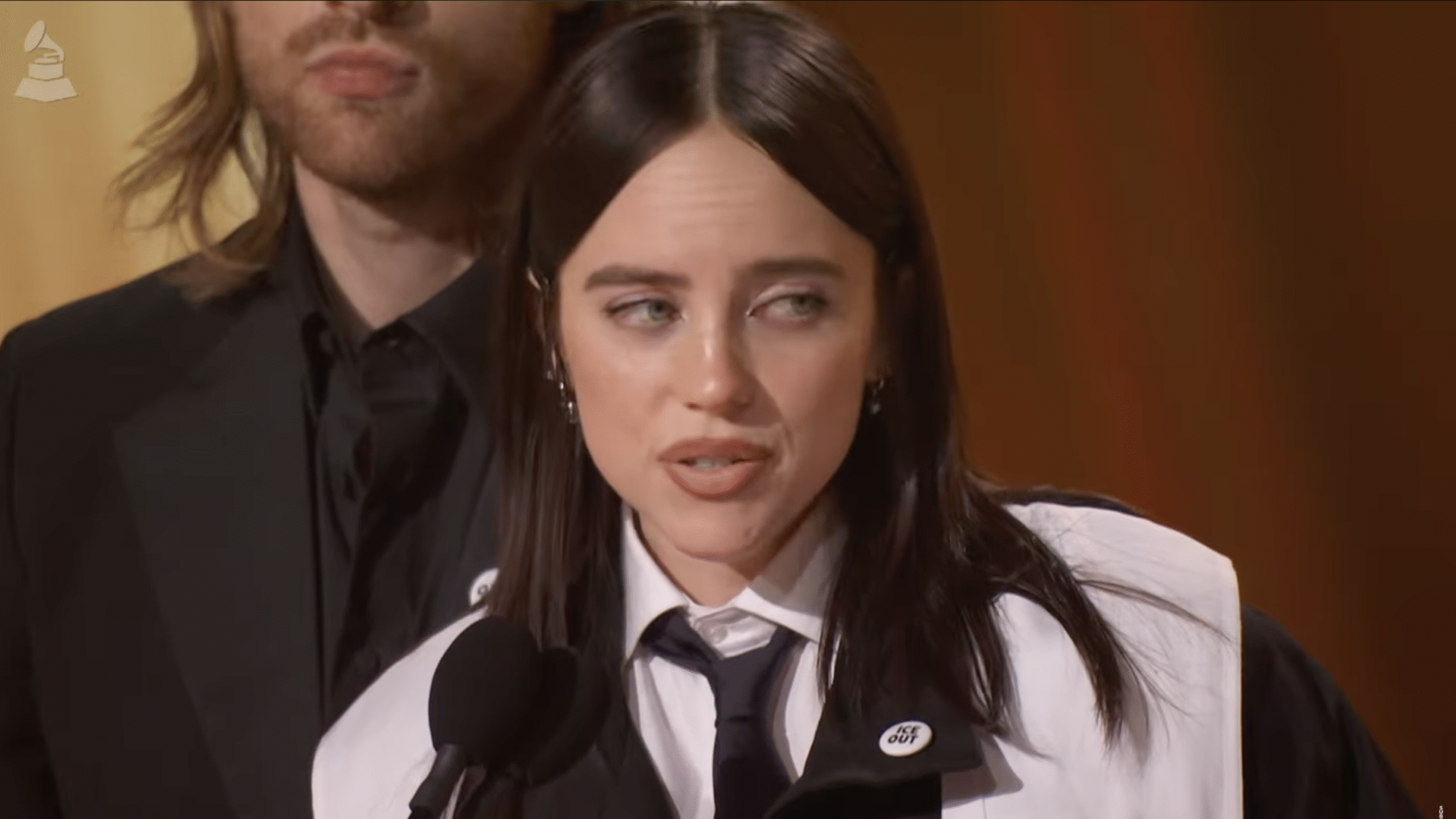
Billie Eilish accepted the Grammy for Song of the Year and used her moment to make a brief political statement, and some observers pointed out an uncomfortable contrast between the win and the personal safety issues surrounding her; the acceptance line and the surrounding reaction have become part of the conversation about celebrity, security, and public words.
Billie Eilish took the stage to accept the Grammy Award for Song of the Year, and she delivered a short, pointed remark during her speech. “As grateful as I feel, I honestly don’t feel like I need to say anything, but, that no one is illegal on stolen land.” That sentence landed in a moment already charged by the attention the ceremony generates.
Some commentators reacted to the juxtaposition of celebration and controversy by noting that the weekend brought intense public focus on both the award and the singer’s personal circumstances. Among the more pointed observations was the idea that while Eilish walked away with trophies, the dynamics of fame meant other serious issues remained unresolved. That line of thought pushed discussion beyond music to questions of safety, privacy, and the responsibility of the spotlight.
Fans and critics quickly took to social media to parse the acceptance remarks and to weigh in on the broader implications. Responses ranged from praise for using the platform to call attention to political causes to concern about the timing and context. The swirl of reaction underscored how award shows now function as cultural touchpoints where entertainment and larger debates collide.
Attention around a high-profile artist’s personal safety often complicates the public narrative after a big win, and this instance was no different. Observers pointed out the tension between celebrating artistic achievement and acknowledging genuine risks that can follow fame. That tension drives recurring conversations about security measures, legal protections, and how much of a public figure’s life is rightly subject to scrutiny.
Music industry insiders and security experts regularly note that a major awards weekend magnifies both adoration and potential threats, creating a difficult environment for artists. The heightened visibility brings an influx of attention that can be hard to manage, from overzealous fans to more dangerous intrusions. Those realities feed into debates about the balance between access for fans and protections for performers.
For many viewers, the short speech became a focal point for bigger questions about how artists use high-profile moments to express values or politics. Some applauded the decision to speak up briefly and directly, while others felt the platform could have been used differently or that remarks should consider broader contexts. The split in reaction highlights how a single line can polarize public opinion in today’s media environment.
At the same time, the awards themselves continue to shape careers and public perception, and the weekend’s headlines remind industry players that celebrity status brings both opportunity and vulnerability. Conversations about security protocols and the responsibilities of event organizers often resurface after high-profile incidents or close calls, prompting occasional policy reviews and renewed attention from managers and venues. Those institutional responses are part of the aftermath whenever a widely covered event intersects with personal safety concerns.
Ultimately, the mix of achievement, advocacy, and concern that followed the Grammy moment reflects the modern landscape where music, media, and personal risk are tightly intertwined. Public figures routinely walk that line, and audiences have become adept at reading both the applause and the unease that can accompany it. The result is a continuing, sometimes uncomfortable conversation about how best to celebrate talent while keeping artists safe and respected.

