

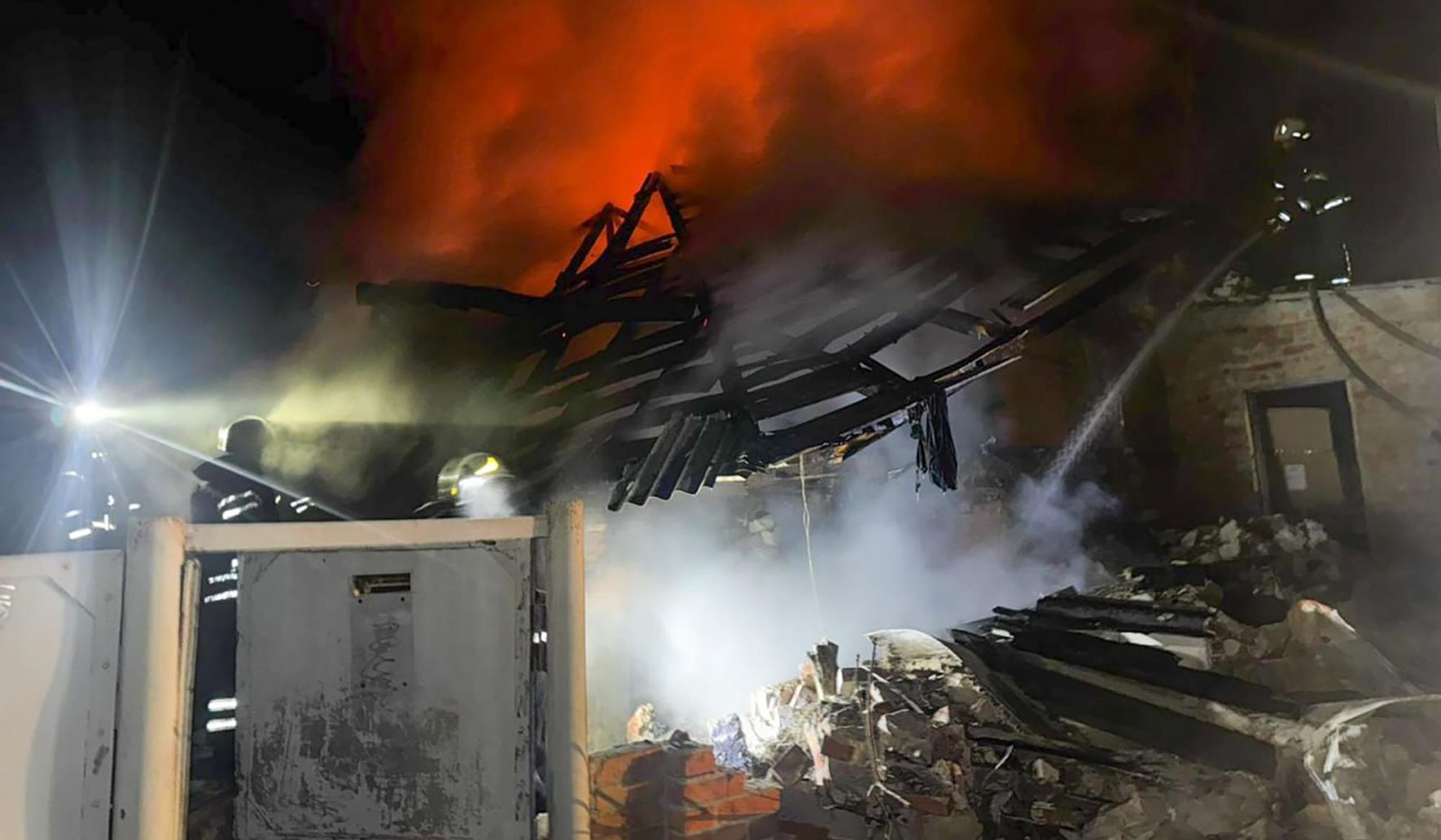
A Russian drone strike on a Kharkiv home killed a father and his three young children and left the pregnant mother critically wounded, underlining the war’s brutal toll on civilians and the urgent need for a firm response.
The scene in northeastern Kharkiv is a grim reminder that this conflict keeps targeting ordinary families. Reports say a drone struck a private residence overnight, turning a household into a casualty site and shattering lives in an instant. Neighbors and first responders are still dealing with the shock and the practical fallout for the local community.
A Russian drone smashed into a home in Ukraine’s northeastern Kharkiv region overnight, killing a father and his three small children and seriously wounding their mother, who is 35 weeks pregnant. That single sentence captures the raw horror: a father and three children gone, a mother gravely hurt and carrying a child at full term. The human detail strips away euphemisms and leaves only the terrible reality of civilian suffering.
Local hospitals were plunged into a scramble to treat the wounded, while emergency services cleared debris and searched for survivors. Medical staff in Kharkiv and surrounding towns are stretched thin, dealing with injuries that often outpace available resources. The pregnant woman’s condition is especially perilous, and nearby clinics must coordinate with larger trauma centers if the situation worsens.
There’s no sugarcoating what this means strategically or morally for Ukraine and for nations watching from afar. For those who back Ukraine, every strike like this is proof that Russia is escalating attacks that hit noncombatants. From a Republican perspective, the only responsible posture is to call this out clearly and back it with measures that reduce the Kremlin’s capacity to repeat such attacks.
Defense and deterrence matter more than ever when drones and missiles can cross borders and target homes. That means pushing harder on military aid that limits Russia’s ability to strike civilian infrastructure, while also tightening sanctions that squeeze funding for these operations. It also means equipping Ukraine with the air defenses and intelligence tools necessary to intercept drones before they reach populated areas.
Beyond arms and sanctions, there’s a civic duty to document and expose atrocities so accountability can follow. War crimes do not become less criminal because they happen far from home. Collecting evidence, supporting investigations, and keeping public attention on these attacks increases pressure on international bodies and governments to act decisively rather than drift into complacency.
The psychological fallout is another dimension that will last long after headlines fade. Communities that lose children and breadwinners face years of trauma, economic strain, and social disruption. Rebuilding will require sustained aid for shelter, healthcare, and mental health services, plus practical assistance to restore schools and jobs so neighborhoods can recover a sense of normalcy.
For policymakers, this moment should harden convictions and sharpen policy. Words of condemnation are necessary but insufficient; the hard work is providing tools that stop future attacks, ensuring victims receive care, and keeping the international spotlight on civilian protection. If the goal is to end attacks on families and towns, the response must be strategic, persistent, and backed by real capability.

