

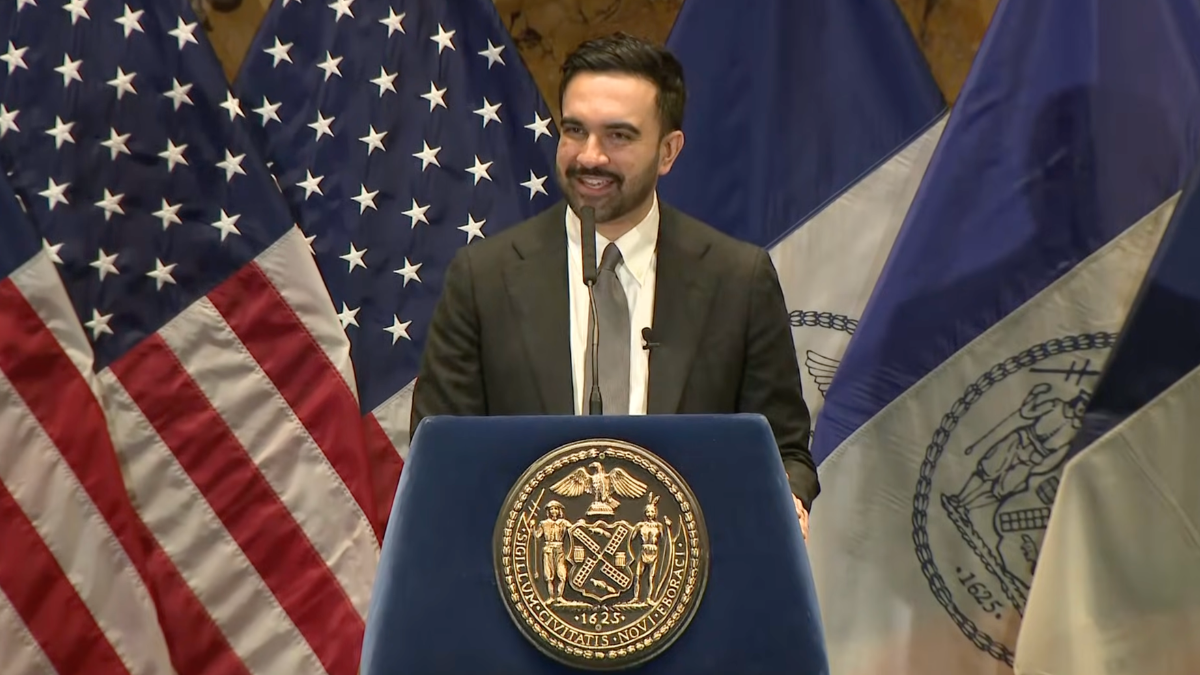
This article reviews how Mamdani used Islamic doctrine to frame civic duty and to challenge the legitimacy of lawful, constitutional authority, and it examines the political and legal implications of that approach.
Mamdani tied religious teaching to questions of civic responsibility in a way that shifted the conversation from civic law to spiritual obligation. That move reframed duty and obedience through religious lenses rather than through constitutional texts and civil codes. The result was a clear challenge to the idea that lawful, constitutional authority is the final arbiter of public order.
From a Republican viewpoint, invoking religion to redefine civic duty raises immediate concerns about the supremacy of the Constitution. The Constitution is meant to establish the rules that govern all citizens equally, regardless of faith. When religious doctrine is used to delegitimize institutions that operate under constitutional authority, it risks creating parallel sources of legitimacy that compete with the rule of law.
There is a real danger when civic obligations are presented as primarily religious mandates rather than civic responsibilities enforced under law. That framing can create pressure to privilege particular interpretations of faith over neutral civil standards. It also invites selective compliance, where obedience becomes contingent on agreement with religious interpretations instead of consistent legal obligation.
Using religion as a basis to undercut constitutional authority can also deepen divisions and polarize governance. Political actors may be incentivized to appeal to religious identity to gain leverage against institutions they find inconvenient. That strategy corrodes public trust and makes governing by consensus and compromise much harder.
Legal institutions and public officials must be able to operate without being threatened by claims that their authority is illegitimate on theological grounds. Courts, legislatures, and executives derive their powers from constitutional processes and popular consent expressed through elections. When those foundations are publicly questioned on religious bases, it weakens the mechanisms that sustain orderly transitions and accountable government.
Republican voters and leaders tend to stress law and order, constitutional fidelity, and individual liberty rooted in equal treatment under the law. From that perspective, redefining civic duty through a single religious lens undermines the pluralism the Constitution protects. It places religious interpretation above civic procedures designed to protect the rights of all citizens, including religious minorities.
The practical consequences are more than theoretical. If segments of the population accept religious authority as overriding constitutional structures, enforcement becomes inconsistent and selective. That can lead to confusion about which rules to follow and can increase the risk of civil unrest when competing authorities claim legitimacy.
Responding to this challenge requires clear, unapologetic defense of constitutional authority without denigrating faith. Governments and civic leaders must reaffirm that the Constitution sets the framework for civic obligations while protecting the free exercise of religion within that framework. Maintaining that balance preserves both religious freedom and the rule of law.
At the same time, citizens need honest debate about where obligations originate and how they are enforced in a pluralistic republic. Lawmakers and judges should emphasize neutral principles that apply to everyone rather than allowing theological claims to dictate public policy. That approach safeguards constitutional processes and ensures that civic duties remain grounded in law, not in the selective use of religious doctrine.
Ultimately, the tension highlighted by Mamdani’s invocation of Islamic doctrine is a test of whether constitutional governance can withstand competing claims of legitimacy. Keeping civic obligation rooted in constitutional authority protects the institutions that guarantee liberty and order for a diverse nation. That protection matters because it preserves a system where disagreements are resolved through law and democratic processes rather than by appeals to exclusive religious legitimacy.

