

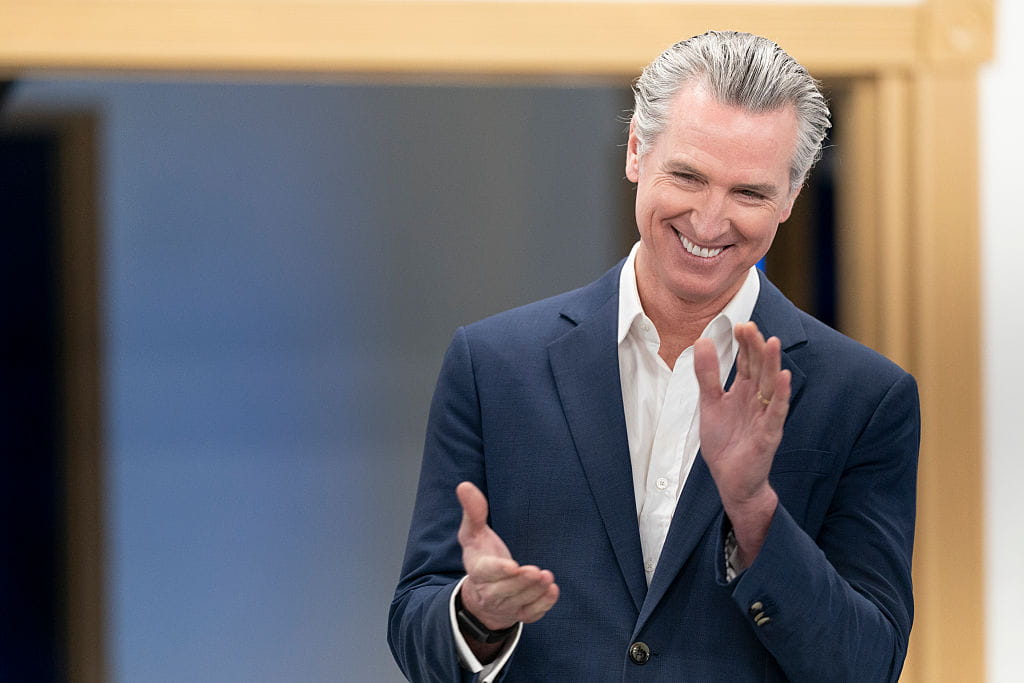
The California Democratic Party’s convention in San Francisco exposed a crowded, fractious field vying to replace Gov. Gavin Newsom, with eight hopefuls and thousands of delegates but no clear endorsement settled.
The weekend convention in San Francisco on Feb. 21-22 made one thing obvious: Democrats have too many cooks and not enough cohesion. So many candidates showed up that the party couldn’t even land on a single endorsement, which says a lot about where their priorities lie. The scene felt less like serious vetting of leadership and more like a personality contest.
At the event, eight gubernatorial hopefuls (eight!) spent their time firing off attacks and trading predictable lines. They offered bitter words against President Donald Trump and leaned on trite slogans instead of concrete plans. Delegates filled the room, but the spectacle highlighted division more than direction.
California’s real problems are concrete: housing that’s out of reach, rising homelessness, and public safety concerns that voters feel every day. Yet the conversation at the convention often drifted to national grievances rather than solutions that actually help people in neighborhoods across the state. When candidates focus on culture and soundbites, real governance gets short shrift.
The failure to land an endorsement is more than procedural drama; it’s a sign the party establishment can’t marshal consensus. Without a united front, Democrats risk turning a primary into a bruising free-for-all that weakens whoever emerges. That fragmentation benefits opponents who can point to the left’s infighting while offering a message of order and accountability.
Voters tend to reward clarity and competence, not theatrical denunciations of political rivals or recycled talking points. Republicans see an opportunity when the other side is distracted by internal squabbles and identity battles. Practical, local-focused proposals will resonate more than broad national critiques when people weigh who can manage a state as large and complex as California.
There’s also a messaging mismatch at play. The delegation-heavy convention atmosphere amplifies loud voices and factional talking points instead of pragmatic plans. Backroom coalitions and delegate politicking don’t always translate into broader appeal at the ballot box. When a party can’t coalesce around a single message, voters get mixed signals about priorities and competence.
Meanwhile, policy debates that matter to everyday Californians get sidelined. Conversations about reforming the state’s bureaucracy, streamlining permitting for housing, or addressing mental health services took a back seat to theater. The result is a field that looks ready for headline-grabbing lines, but not necessarily for governing when the cameras are off.
The convention made clear that the Democratic bench in California is crowded but not unified, and that’s a weakness, not a strength. A party that spends more time fighting within than building a practical agenda hands an opening to those promising stability and common-sense fixes. If the goal is to win and govern, delegates and candidates will have to choose substance over spectacle moving forward.

