

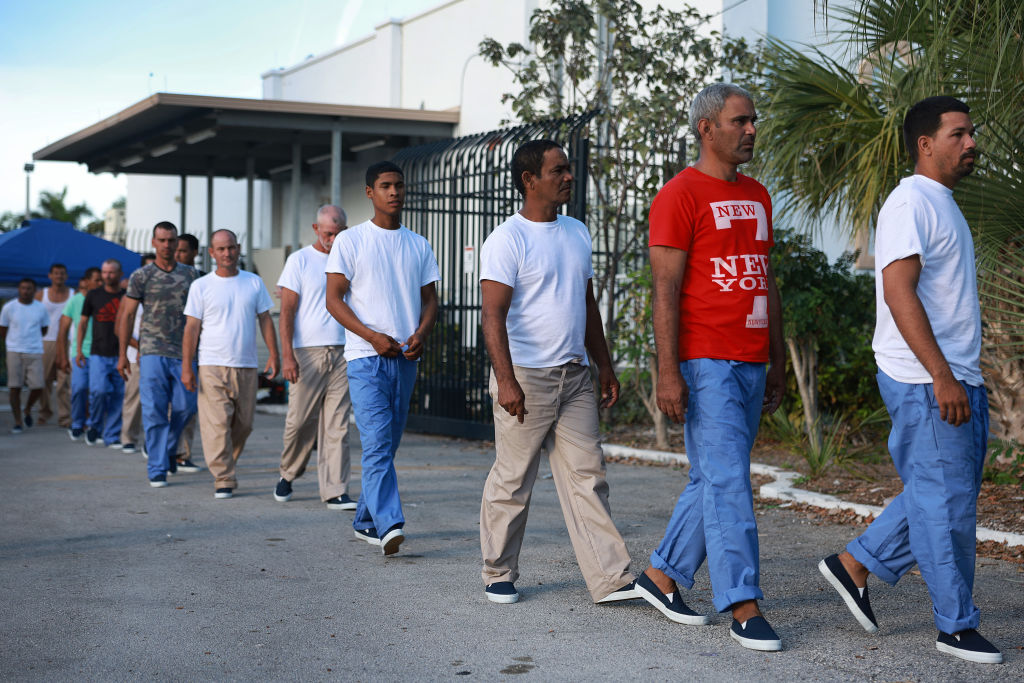
Florida enforces strict immigration measures that require local law enforcement to cooperate with federal authorities and ask patients about immigration status at hospitals, reflecting a state-first approach under Governor Ron DeSantis.
Florida has put in place some of the toughest immigration rules in the nation, insisting local police work with federal authorities and even directing hospitals to ask patients about their immigration status. These moves are part of a broader effort to assert state authority over border-related challenges and to manage the local impact of illegal immigration. Supporters say the policies protect taxpayers and public safety; critics warn they risk eroding community trust.
From a Republican perspective, enforcing immigration laws is about upholding the rule of law and protecting citizens who follow legal processes. Governor Ron DeSantis has been clear that the state will not support those who choose to cross […], and his stance reflects a larger conservative argument: if the federal government fails to secure the border, states must step up. That argument resonates with voters who see unchecked migration as a strain on schools, hospitals, and public services.
Mandating that hospitals ask patients about immigration status is controversial but intentional from a policy standpoint. Proponents argue it helps state agencies allocate resources and prevents misuse of services intended for residents, while opponents say it could deter vulnerable people from seeking urgent care. The debate centers on balancing public health obligations against enforcement priorities, and it raises real questions about access to emergency treatment and communicable disease control.
Requiring local police to coordinate with federal authorities is similarly framed as a public safety move rather than a targeting effort. Lawmakers and law enforcement officials who back the policy say sharing information helps remove dangerous individuals and dismantle criminal networks that exploit open borders. Critics counter that the policy undermines community policing by making undocumented residents less willing to report crimes, but Republicans emphasize that enforcing existing laws protects everyone.
Putting these rules into practice takes planning and resources at the local level, from training first responders to setting up intake procedures in hospitals. County and city officials must figure out how to comply without disrupting essential services, and some have pushed back or sought legal clarity. That friction is part of the larger tug-of-war between state mandates and local capacity, and it shows how enforcement choices have real administrative consequences.
Politically, Florida’s hard line plays to a constituency that prioritizes secure borders and clear consequences for illegal entry. DeSantis’ approach positions the state as a model for conservative immigration policy, aiming to influence national debates and pressure federal leaders to act. At the same time, these measures are a campaign talking point, signaling to voters that state leaders are willing to use every available tool to control migration impacts.
Legal challenges are inevitable whenever states move aggressively on immigration, and courts will be a major forum for sorting out the limits of state power. Constitutional questions about federal preemption and civil rights claims will be tested as groups file suits against enforcement directives. Republicans argue that the courts should respect a state’s duty to protect its residents when the federal government ignores border security responsibilities.
The human consequences are immediate and complex: some migrants may be deterred from crossing, while others who are already part of Florida communities could face new barriers to routine services. Families, school districts, and employers will feel the ripple effects, and local agencies must decide how to balance enforcement with humanitarian and public health obligations. The debate is as much about practical trade-offs as it is about principle.
Looking ahead, Florida’s policies will keep testing the boundaries between state action and federal responsibility, especially if similar measures spread to other states. The choices lawmakers make now will shape how communities handle migration pressures and whether states continue to use aggressive enforcement as a policy response. For Republicans who prioritize order, these steps are presented as necessary corrections to a federal system they see as failing to secure the border.

