

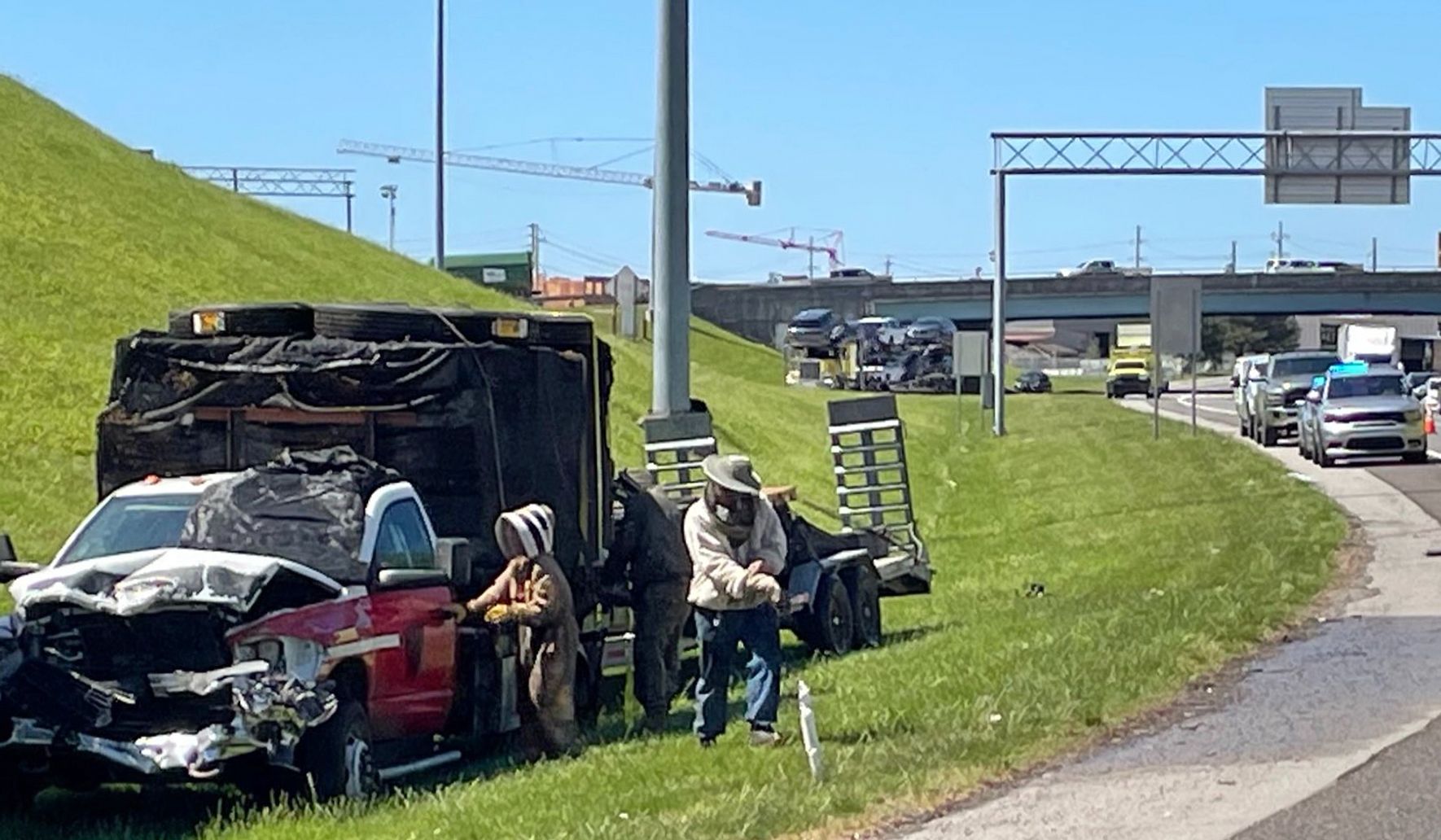
On an East Tennessee interstate Friday, a truck hauling more than one million bees crashed, forcing drivers to slow and leaving crews scrambling to secure the swarming insects and protect the public.
The crash sent a dense cloud of bees into the roadside and onto the highway shoulder, creating a surreal scene of workers in protective gear, onlookers in cars, and bees buzzing among traffic. Motorists had to brake and weave cautiously while responders worked to contain the swarm and clear the wreckage. Officials and beekeepers moved quickly to prevent injuries and keep the situation from growing worse.
Emergency teams, state highway crews, and local beekeepers coordinated at the scene to stabilize the load and collect loose colonies. Protective clothing, specialized boxes, and gentle handling techniques were used to transfer bees from damaged transport crates into secure carriers. Traffic control measures kept cars at a distance while crews removed debris and worked to retrieve as many bees as possible without provoking the insects.
Transporting large numbers of bees is inherently risky because a single disturbed queen or a damaged hive can trigger swarming behavior that spreads bees unpredictably. Long-haul bee shipments typically involve dozens of hives stacked and secured in a truck, so a crash that jars or breaks those boxes can release thousands of insects at once. Beekeepers at the scene focused on locating queens and calming the swarms, since reuniting a queen with workers is the most effective way to reconstitute a colony.
To calm the bees, handlers relied on standard beekeeping tools and techniques that include smoke, slow movements, and containment boxes designed to minimize agitation. Teams worked methodically to avoid crushing equipment or leaving frames exposed, all while ensuring responders and passing drivers remained out of harm’s way. Local law enforcement set up temporary lane closures to give the recovery effort room and to reduce the risk of additional crashes or bee-related injuries.
The environmental stakes are high when incidents like this happen because honey bees are essential pollinators for crops and natural ecosystems. Losing thousands or millions of bees in a single accident can ripple through regional pollination patterns and economic activity for growers who depend on rented hives. That reality lends urgency to swift salvage operations and to efforts to transfer surviving bees back into viable colony structures.
Witnesses described a chaotic but controlled scene, with wary drivers capturing images from a safe distance and social posts showing crews in bright suits moving carefully among boxes. While the spectacle drew attention, handlers stressed that trained beekeepers and emergency personnel were managing the situation and that the priority was safety for people and the bees. Those on the ground worked into the afternoon to sort damaged frames, secure live colonies, and transport salvaged hives to holding locations for assessment.
Beyond the immediate clean-up, incidents like this prompt questions about the safety standards for hauling live insects and how to prevent similar accidents. Properly secured boxes, routine inspections before long trips, and driver training specific to live cargo can reduce risks, experts say. For now, the focus remained on recovering as many bees as possible and returning the highway to normal traffic flow.
Responders set up temporary holding areas where recovered hives were evaluated for queen status, disease, and structural damage before being moved to beekeeper facilities. Where queens could not be found, some colonies were combined carefully to preserve worker numbers and maintain brood care. The work was slow and exacting, but it reflected the best available practices for salvaging valuable pollinator resources after a roadside emergency.
Cleanup involved hauling away wreckage, disinfecting any contaminated equipment, and documenting losses for insurers and agricultural agencies. Investigators later examined the truck and roadway conditions to determine what caused the crash, while beekeepers assessed long-term impacts on the colonies involved. In the hours after the crash, crews continued to monitor the area for straggling bees and to advise motorists about lingering hazards on the shoulder.

