

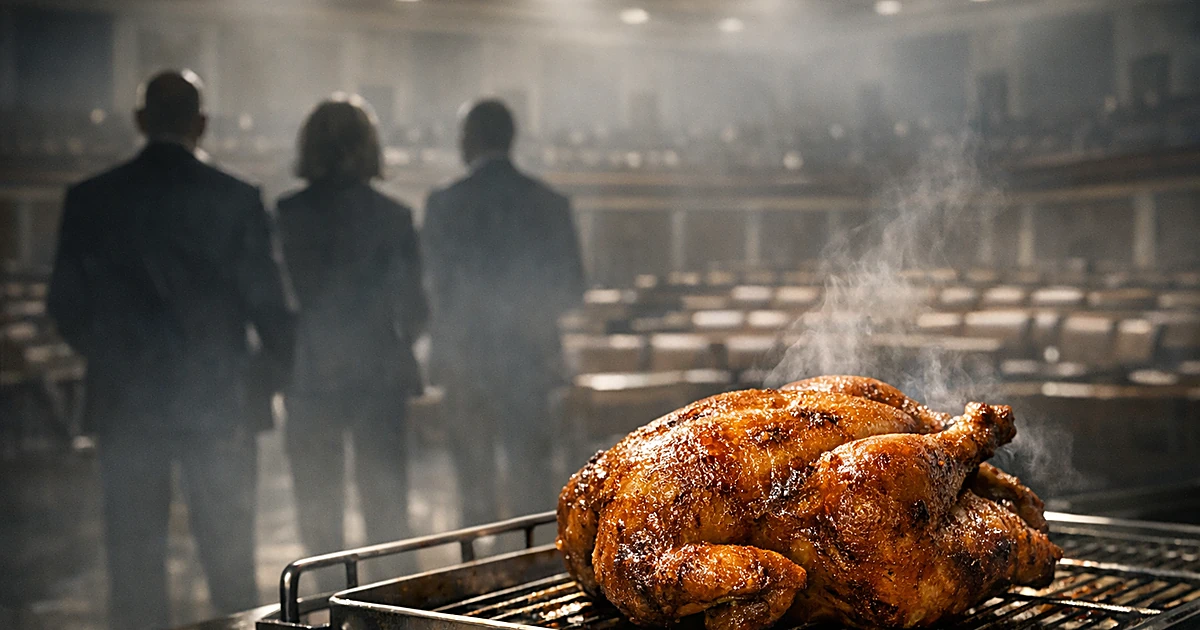
The House overwhelmingly approved a bill to let SNAP recipients buy rotisserie chickens, passing 384-35, while House Minority Leader Hakeem Jeffries voted against it and said he preferred broader SNAP reform; the measure, backed by Sen. John Fetterman and a bipartisan group, now heads to the Senate amid wider fights over benefit cuts and new work requirements.
The House voted 384-35 to allow food stamp recipients to buy rotisserie chickens with their benefits. Among the 35 who opposed the measure was House Minority Leader Hakeem Jeffries. The result was decisive and bipartisan in itself.
The proposal, called the Hot Rotisserie Chicken Act, was introduced this month by a bipartisan group led by Sen. John Fetterman. Fetterman famously called the $4.99 Costco rotisserie chicken “America’s best (and delicious) affordability play.” Lawmakers from both parties supported the narrow change.
Jeffries’s office said he opposed the measure because it was too narrow and preferred a broader fix to SNAP rules. His spokesperson framed the objection around the need for comprehensive reform instead of an industry-specific carve-out. That explanation shaped his decision to vote no.
“SNAP recipients should be able to use their benefits to buy any hot or prepared food at the supermarket. Leader Jeffries supports comprehensive legislation sponsored by Congresswoman Grace Meng that would modernize outdated policies to allow that to occur. We need full-scale reform, not simply a piecemeal exemption carved out to support a single industry.”
Current SNAP rules exclude hot prepared meals in order to encourage home cooking. Fetterman’s bill made a narrow exception for one of the cheapest, most common hot items sold in supermarkets. The change was meant as a practical step to help families stretch food dollars.
Some lawmakers preferred a broader bill from Rep. Grace Meng that would allow SNAP to cover all hot, prepared meals. Meng argued that Fetterman’s legislation “singled out one industry, choosing only rotisserie chicken over a range of choices.” That debate framed the vote for many Democrats.
The practical reality was that Meng’s wider proposal was not on the House floor when members voted. A large majority opted for the incremental improvement rather than holding out for a sweeping rewrite. Jeffries, by contrast, declined the narrower path and stuck with the demand for a comprehensive package.
That choice has prompted criticism from across the spectrum, with some observers saying it prioritized principle over immediate benefit for struggling households. Critics note that grander reforms can stall while a clear, targeted change sits ready to help people now. The contrast between rhetoric and outcome matters in this case.
The rotisserie chicken provision now moves to the Senate as part of an amendment to a larger farm bill. At the same time, broader pressures on SNAP continue: the Trump administration cut $187 billion from SNAP and new work requirements are about to take effect. Those requirements start producing benefit losses beginning Friday in New Jersey and in June in New York.
“The biggest issue on the table is we are gutting SNAP, the largest piece of the food safety net that exists in the United States.”
Greg Silverman, executive director of the West Side Campaign Against Hunger, criticized the narrow focus on a single item and said recipients should be able to buy the foods they need, calling a single-item fix “ludicrous.” His point underlines a broader complaint that small changes don’t address the larger squeeze on the program. Still, his critique did not stop the House from acting on the narrow carve-out.
Neither Jeffries’s preference for a sweeping Hot Foods Act nor Silverman’s broader objections produced an immediate policy change. The narrower reform cleared the House even while the preferred comprehensive alternatives remain stalled. That is the practical political trade-off at the center of this debate.
For tens of thousands of New Yorkers facing benefit cuts in June, votes like this have real consequences. Jeffries represents parts of Brooklyn where many families rely on SNAP for daily meals. By voting against the rotisserie chicken provision, he denied his constituents a targeted, near-term gain their neighbors in other districts supported.
Jeffries has also faced criticism for avoiding straight answers on other issues, leaving room to maneuver on sensitive political questions. When asked whether Democrats would support another government shutdown tied to healthcare subsidies, he declined a yes-or-no answer while others answered directly with “no.” That episode helped shape perceptions of his leadership style.
At the same time, Jeffries has spent political capital on redistricting fights and party positioning, moves that focus on long-term power rather than immediate household needs. Those investments are about seats and leverage, not necessarily about bridging the daily gap for a family choosing between raw and cooked chicken.
The Democratic caucus remains divided over strategy and timing, and the rotisserie chicken vote is one small example of that tension. Many in the party voted for the targeted fix, while the minority leader opted for the broader approach. The result is a clear, immediate policy proposal headed to the Senate with mixed political backdrops.
Three hundred and eighty-four members supported letting SNAP cover rotisserie chickens; thirty-five opposed it, including the House Democratic leader. The bill now awaits the Senate, where its fate will determine whether families can use benefits on a hot chicken sitting in the grocery aisle. In the meantime, the vote stands as a tangible choice that split lawmakers along pragmatic and philosophical lines.

