

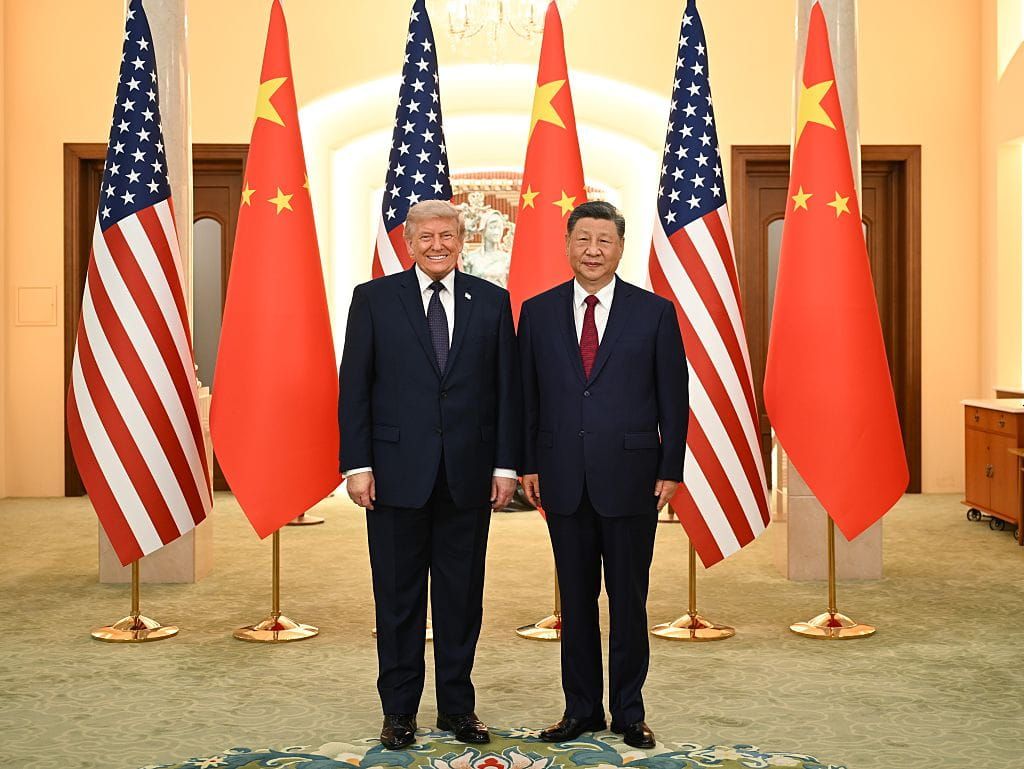
Trump Calls China Summit a Great Success. Chinese Communist Party leader to visit US in September.
Washington and Beijing recently moved from brinkmanship to a pragmatic exchange that surprised a lot of Washington insiders. The White House framed the talks as leverage-driven diplomacy where the United States pressed for clear wins on security and trade. The outcome left Republicans saying strength and clear demands earned tangible concessions.
“Presidents Donald Trump and Xi Jinping agree: Opening the Strait of Hormuz and keeping Iran nuke free is in the best interest of the US and China alike.” That sentence captures the rare convergence of strategic interests that came out of the meeting. It’s a straightforward statement about mutual benefit on a specific regional security issue.
The agreement on the Strait of Hormuz sends a signal that deterrence works when paired with credible force and firm diplomacy. Republicans will say this proves a posture of strength brings results without begging or appeasing. It also shows that America’s allies and partners expect decisive leadership from Washington.
Calling the summit a “great success” isn’t just spin when concrete steps follow the rhetoric. The administration emphasized gains on energy flow, sanctions enforcement against bad actors, and clearer rules of engagement in contested waters. For conservatives, measurable outcomes matter more than bland talk.
Behind the scenes, trade and tech issues remained on the table with equal intensity. The U.S. pushed back on intellectual property theft and forced technology transfers while offering calibrated relief on tariffs tied to enforcement milestones. That kind of conditional bargaining is the Republican approach: rewards earned, not handed out.
Economic leverage played a big role in getting Beijing to the table on Iran and regional security. China’s supply chain interests and need for stable oil routes create incentives it cannot ignore. Republicans see this as proof that economic strength and clear red lines change behavior.
Security cooperation over the Gulf may be limited in scope, but it matters. Keeping Iran from obtaining nuclear weapons is a nonpartisan imperative, and getting China’s nod—however cautious—reduces the chance of miscalculation. The administration capitalized on shared vulnerabilities to secure a narrow but important agreement.
Talks about a September visit by Xi Jinping set the clock for follow-up and verification steps. That visit will be watched closely by Congress and the American public for specifics and any enforcement mechanisms. Republicans will demand tough benchmarks and visible reciprocity before accepting further concessions.
On technology and trade, the message from the U.S. delegation was clear: access must come with fair rules. American firms should compete on a level playing field, not be coerced into transferring core technologies. Expect Republicans to push harder on export controls and investment screening.
Human rights and ideological differences weren’t ignored, even if they weren’t front-and-center in the press spin. The administration signaled it would keep pressure where it must, using sanctions and visa restrictions when necessary. Republicans insist national interest can be pursued alongside principled stands.
Domestic politics shaped the optics and the demands coming out of the summit. With elections looming, the administration wanted demonstrable wins that reinforce an America-first posture. Republicans will highlight the summit as an example of tough negotiation delivering results rather than hollow diplomacy.
Allies in the region and NATO partners will be watching how commitments are verified. The U.S. must maintain military readiness and intelligence-sharing to back diplomatic agreements. Republican strategy favors clear, enforceable steps and the capability to act if partners renege.
Energy security remains central to the deal’s practical effects because global markets react fast. Securing the Strait of Hormuz keeps crude flowing and prevents price shocks that harm American consumers and allies. The Republican case is simple: stability at sea equals stability at home.
There are risks, of course, including how strictly China will adhere to any informal understandings. Republicans will press for legal, verifiable mechanisms rather than vague promises. Verification and consequence are the parts of diplomacy that preserve U.S. leverage.
The summit outcome also resets bargaining power on future trade talks and technology controls. If China wants more access to American markets, it must accept rules that protect U.S. companies and national security. Republicans will hold that position firm.
What matters now is follow-through: timelines, inspections, and congressional oversight. The September visit creates a deadline that can be used to lock in progress or expose backtracking. Republicans will demand accountability at every step, not just applause for a summit photo op.

