

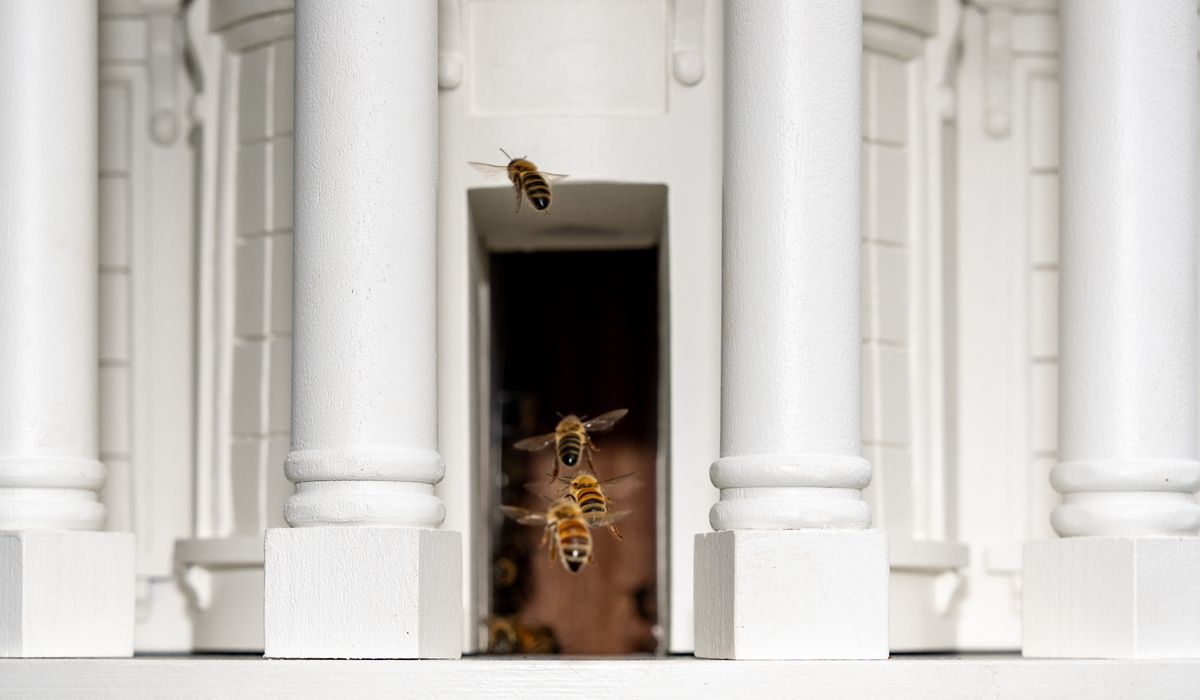
The White House grounds saw a notable swarm of bees on Friday, with insects covering the North Lawn and spilling into nearby areas.
The swarm arrived quietly but visibly, forming dense clusters in trees and low shrubs across the North Lawn. Passersby noticed the buzzing and the unusual sight of so many bees gathered in one place. Such scenes draw attention because they mix a bit of spectacle with an understandable concern about safety and the environment.
Bees swarm as a normal part of colony reproduction, often when a new queen leaves with a portion of the workers to find a fresh nesting spot. During swarming the insects are focused on relocating and tend to be less aggressive than when defending a hive. Timing and weather can make some swarms more conspicuous, and public spaces like large lawns can become temporary staging areas.
On public grounds, the typical response is caution plus coordination with professionals who handle bees. Officials often clear the immediate area and call local beekeepers or pest specialists trained in live removal. These experts aim to capture and relocate the swarm rather than destroy it, since bees are valuable pollinators and most swarms are nonviolent if left undisturbed.
For people nearby, the best move is to give the swarm space and avoid quick movements that could stress the insects. Those with known allergies should move indoors until the bees have settled or been safely removed. Observers can watch from a safe distance; swarms commonly move on within hours or days once a scout bee finds a suitable home.
Landscape features on large estates and parks often attract swarms because trees and open lawn provide ideal temporary perches. The White House grounds, with their mix of mature trees and managed plantings, can offer a convenient waypoint for migrating honeybee groups. That makes sightings at high-profile locations more likely during peak swarming season.
Beekeepers who collect swarms use specialized boxes and gentle techniques to coax the cluster into a portable hive. When successful, the rescued colony is transported to a permanent site and becomes a productive apiary asset. This approach helps both agricultural needs and local ecosystems while avoiding conflict with human activities.
There are broader takeaways whenever bees show up in public places: urban and suburban areas are part of the landscape of pollinators, and respectful coexistence benefits everyone. Awareness campaigns often stress recognition versus panic, and they teach basic steps for staying safe. Officials at public sites usually have protocols in place to balance access with responsible wildlife management.
For journalists and photographers, a sight like this also raises questions about reporting and privacy on official grounds. Capturing the moment is tempting, but crews should follow any instructions from site staff to avoid interference. Responsible coverage focuses on facts, context, and the expert voices who explain what a swarm means ecologically and practically.
Ultimately, a swarm on a well-known lawn is a reminder that natural processes continue even in controlled or ceremonial spaces. Seeing bees up close highlights their role as pollinators and the practical steps people take to move them safely when their path crosses ours. With common-sense precautions and help from trained handlers, these incidents usually resolve without harm to people or the insects.

