

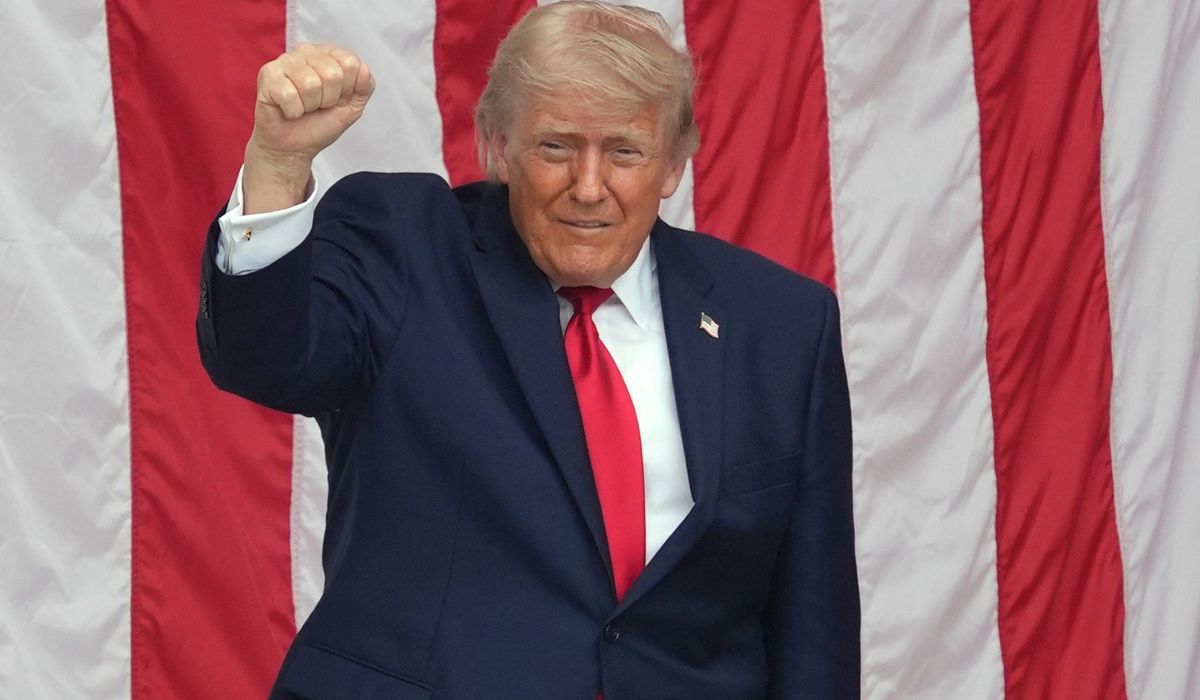
President Trump’s doctor reported that the president is in “excellent health” and “fully fit” to serve after a medical exam Tuesday at Walter Reed National Military Medical Center, a conclusion that calms concerns and reinforces his capacity to lead.
The doctor’s statement that the president is in “excellent health” and “fully fit” came after a routine medical exam Tuesday at Walter Reed National Military Medical Center. That simple, medical-sounding update matters because fitness for the job of commander in chief is not just a campaign talking point; it is a concrete measure of a leader’s ability to handle national security and crisis response. Supporters see the report as confirmation that his energy and judgment remain intact.
For Republicans who have watched opposing narratives about fitness take center stage, the physician’s conclusion offers a clear counterweight. The language used was clinical and definitive, leaving little room for ambiguous interpretation. Political debates will continue, but a vetted medical opinion tends to quiet speculative chatter and forces critics to focus on policy rather than conjecture.
Beyond politics, there’s a practical side to this news: chief executives must be physically capable of performing demanding duties at a moment’s notice. Command decisions, international diplomacy, and emergency responses all require alertness and stamina. When a president’s doctor says he is “fully fit,” it reassures allies, staff, and the American public that the office remains steady.
Timing always matters in politics, and an official health update at Walter Reed carries gravity because that institution is a recognized center for presidential care. The setting itself signals thoroughness and protocol rather than a PR-driven checkup. Voters tend to trust assessments that come from established medical channels instead of partisan commentators.
Republicans who back the president will use this report to argue that governance should be judged by results and capability, not by rumor. The focus shifts back to economic plans, foreign policy positions, and conservative judicial priorities. A medically cleared president can redirect political energy toward legislative goals and the campaign trail.
Critics may still raise questions about transparency or timing, and that is their right in a free society. Yet a formal medical evaluation conducted at a top military medical center carries weight that speculative talk shows cannot match. If further details are needed, medical professionals can provide them in appropriate clinical terms rather than through political spin.
Public confidence in leadership hinges on trust in institutions, including the medical institutions that care for presidents. An authoritative statement from a presidential physician strengthens that trust and helps stabilize public perception during heated political moments. It is reasonable for citizens to expect clear, professional communication on matters of health that affect national leadership.
There is also an operational benefit: clear health status allows staff and agencies to plan without uncertainty. Federal operations and national security measures require continuity and predictability at the top. When the president is confirmed to be capable and alert, team members can focus on execution rather than contingency rumors.
At the same time, Americans across the political spectrum should expect consistent disclosure practices so the public stays informed. Routine evaluations, transparent summaries from medical teams, and straightforward language help maintain confidence. The recent statement at Walter Reed fits that pattern and keeps the conversation grounded in medical fact rather than partisan conjecture.
In the end, the physician’s concise conclusion that the president is in “excellent health” and “fully fit” restores a baseline of clarity to a debate that often gets noisy. That clarity benefits governance, the electorate, and national stability. With medical approval on record, the president can proceed with his duties while opponents and supporters alike respond through the normal mechanisms of politics.

