

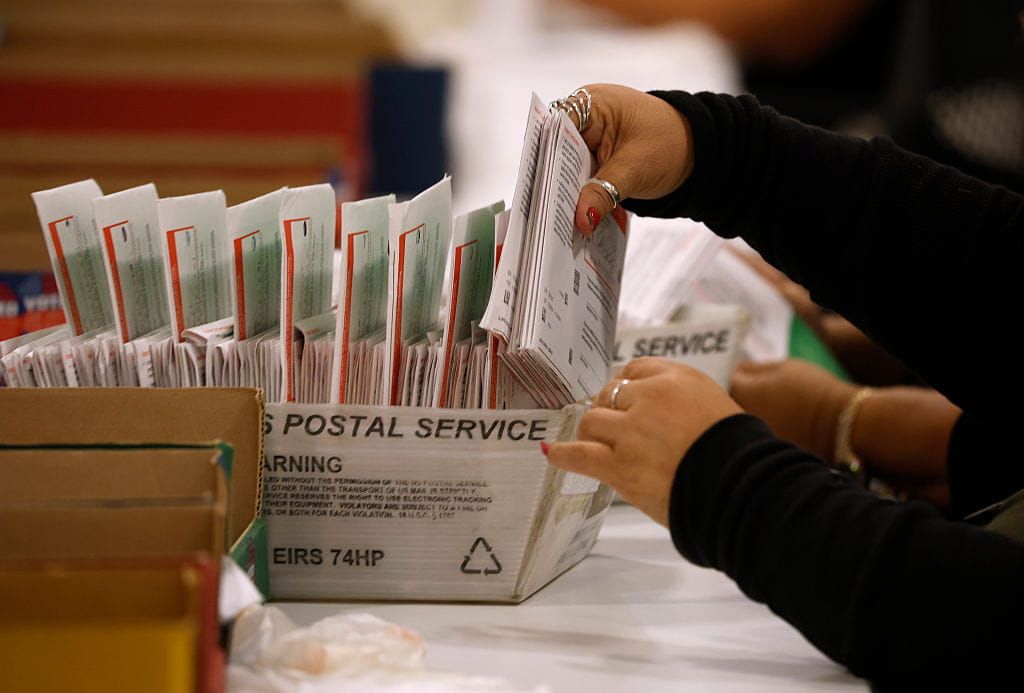
The Supreme Court’s recent move left Trump’s challenge to broad mail-in voting rules stalled, and it underscores how post‑Election Day counting has become routine across the country.
The high court’s action on Jun 30, 2026, effectively denied a path for a swift reversal of expansive mail-in ballot practices that many voters and officials now treat as settled. The decision left practical questions about ballot handling and deadlines unanswered for conservatives who wanted clearer, stricter standards. Counting votes after Election Day is the new normal.
From a Republican viewpoint, the ruling is disappointing because it sidesteps core concerns about transparency and equal treatment of voters. When courts decline to step in decisively, state election systems keep operating under policies that vary widely and often favor last-minute counting. That patchwork fuels distrust among voters who expect uniform rules and predictable timelines.
Legal fights over absentee and mail-in ballots have been a recurring feature of modern American elections, and this episode is no exception. The Supreme Court’s refusal to grant relief in this instance signals a reluctance to redraw the playing field at the eleventh hour. For those worried about ballot integrity, that reluctance feels like a loss of a needed referee on the field.
Republicans argue that consistent deadlines and firm chain-of-custody rules are basic safeguards, not partisan tricks. When states allow ballots to arrive days after Election Day and still count them, it invites questions about verification and equal opportunity. The lack of a uniform federal standard leaves room for gamesmanship and inconsistent enforcement.
Supporters of broad mail-in options counter that expanding access increases turnout and helps voters who cannot appear in person. That argument has merit for convenience, but convenience should not override clear, enforceable rules that protect the ballot from error and abuse. The Court’s posture suggests it prefers leaving these tradeoffs to the states rather than imposing a single national rule.
What conservatives need now is a strategic plan that doesn’t rely solely on emergency appeals at the Supreme Court. Litigation can be part of the response, but durable reforms require state-level campaigns to tighten procedures and increase transparency. That includes promoting voter ID for absentee ballots, standardized return‑by dates, and public chain‑of‑custody logs that make the process auditable.
Political messaging also matters. Republican leaders should make a practical case for reforms framed around fairness, efficiency, and confidence in outcomes, not grievance. Voters are more receptive to improvements when they hear concrete proposals that preserve access while enforcing clear deadlines. The goal should be rules that everyone can see are fair and applied uniformly.
Congress has a role too, but federal solutions face steep hurdles in a polarized Capitol. Still, lawmakers could push for baseline standards that respect states’ abilities to run elections while preventing extreme variations that undermine trust. A limited, narrowly tailored federal law could set minimum requirements on receipt deadlines and verification without micromanaging local procedures.
The media narrative after the court action will matter, since many voters still trust outlets to explain dense legal decisions. Reporters and commentators should highlight that the court’s move was a decision about judicial restraint as much as it was about mail‑in ballots. Republicans should press that point while also offering actionable remedies to reassure skeptical citizens.
Looking ahead, campaigns and election officials must be better organized to prevent confusion when ballots come in after Election Day. Clear public timelines, robust ballot-tracking systems, and transparent, publicly observed post‑Election processes would reduce the opportunity for dispute. Those are practical, nonpartisan improvements that Republicans can champion while making a constitutional case for uniform treatment.
Ultimately, the Supreme Court’s action on Jun 30, 2026, is a reminder that courts are not a substitute for politics. If voters want different rules, they must build coalitions at the state and federal levels to change them. That requires hard work, persuasion, and a focus on reforms that strengthen confidence in how votes are cast and counted.
The debate over mail‑in ballots is likely to continue, and Republicans should remain clear, direct, and results‑oriented in their response. Emphasize integrity, push for uniform procedures that respect both access and security, and avoid getting trapped in endless appeals that produce little practical change. Clean, consistent rules will do more to restore trust than courtroom theatrics ever will.

