

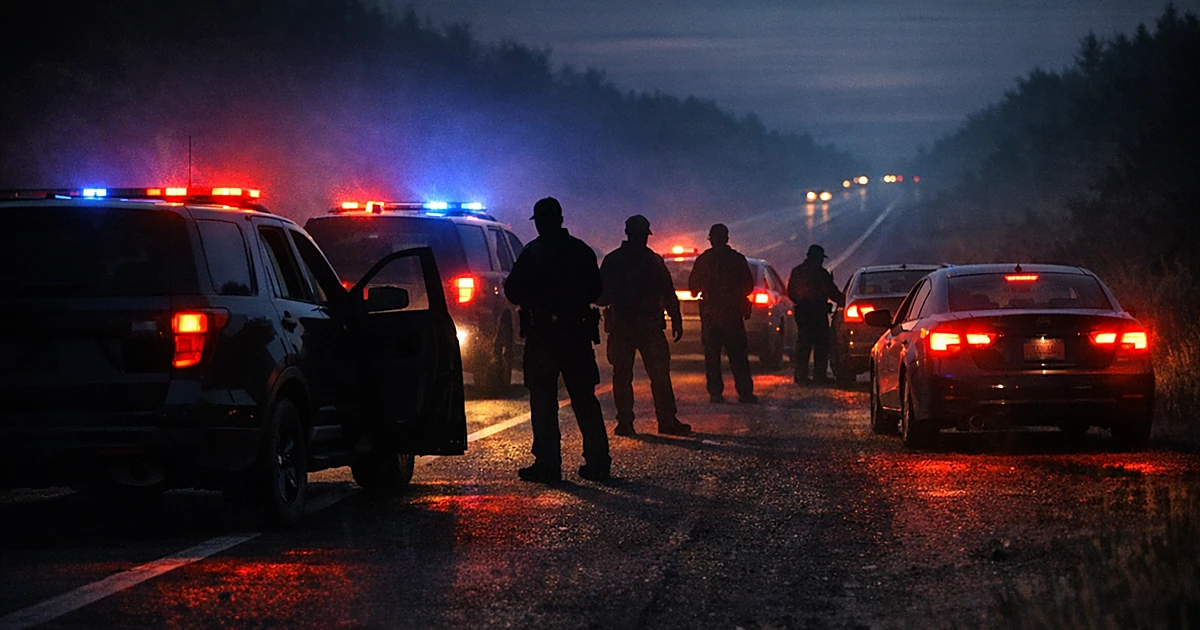
President Trump quickly overturned a Department of Homeland Security pause on ICE vehicle stops after two fatal shootings, publicly ordering agents back onto the roads while insisting operations remain careful and focused.
The president announced his reversal via Truth Social, creating a sharp, public break with Homeland Security Secretary Markwayne Mullin, who had paused routine traffic stops following two deadly encounters. The shootings—one in Biddeford, Maine, and one in Houston, Texas—occurred within a single week and touched off intense scrutiny of street-level enforcement.
The administration paused most vehicle stops after those incidents, citing the need to review tactics and reduce risks when officers act on the street. Within twenty-four hours, the White House confirmed the president had overruled that suspension, signaling a rapid return to the enforcement posture his team favors.
Trump framed the decision squarely in political and operational terms, emphasizing that traffic stops are a core ICE tactic and rejecting moves that would curb enforcement. He made his position unmistakable in a social media post that included the lines: “We must be strong, tough, and smart, and we CANNOT give up one of I.C.E.’s most important and effective Crime Fighting tools, THE TRAFFIC STOP! Once we do, we are playing right into the criminal’s hands. The Radical Left Dumocrats would like to see this done, but it won’t happen on my watch. I.C.E., be judicious, fair and smart, and go back and do your very important job. Keep those Crime Stat Records coming! Remember, you are loved and respected in America.”
The shootings intensified pressure on DHS from politicians and constituents, including Maine’s delegation, and prompted Secretary Mullin to limit routine stops while investigations proceeded. That short pause was politically charged and interpreted by many inside the party as a sign that enforcement could be portrayed as weak if it continued to be restricted.
For ICE, traffic stops are practical: they allow arrests away from neighborhoods, reduce the chance of large public clashes, and lower the likelihood of dramatic footage that fuels opposition. Agency officials have long argued vehicle stops protect both agents and bystanders compared with knocking on doors or approaching targets in crowded areas.
Critics pointed to the human cost when two motorists were killed and later found not to be the intended targets, making the tactic politically combustible. The broader record cited by oversight outlets notes at least ten deaths during encounters with immigration agents since the president intensified deportation efforts, with at least four involving people in vehicles.
Those figures matter to both sides of the debate because they show real operational risk when arrests are attempted on the street. Supporters argue that the tactic’s effectiveness in making quiet arrests outweighs the risks when properly managed, while critics say any pattern of mistaken lethal force calls for stricter limits and accountability.
The political stakes are clear: the president campaigned on removing millions of illegal immigrants and built his message around toughness on immigration ahead of the 2026 elections. A sustained retreat on a central enforcement tool would undercut that message, so the swift reversal was as much about politics as it was about law enforcement doctrine.
Senators and local officials who reacted to the killings pushed for action from DHS, illustrating competing pressures within the Republican coalition on how to balance enforcement and public safety. The episode exposed an internal tension: lawmakers responding to constituent outrage versus a White House intent on maintaining an aggressive operational tempo.
Trump’s instruction that agents be “judicious, fair and smart” acknowledges the seriousness of the shootings while insisting operations continue. That mix of insistence on results and a nod to restraint places responsibility on field commanders to tighten procedures and avoid repeat tragedies.
Questions remain about the specific circumstances that led officers to fire and why both victims turned out not to be the targets, and those investigations will matter for future tactics. Meanwhile, removing routine vehicle stops entirely would hand a strategic advantage to advocacy groups that want to make enforcement politically untenable, and the president chose not to cede that ground.
The interplay between political messaging and operational reality will shape how ICE carries out traffic stops going forward, and whether the agency can maintain discipline across thousands of agents. The administration’s approach treats the tactic as indispensable while acknowledging the need for careful execution and oversight.


1 Comment
There is ABSOLUTELY nothing wrogn with the ICE shootings of these people who tried to run the ICE Agents down. I can guaratee you, if you try to run down a police officer, Federal, State or Local, chances are you are going to get shot.