

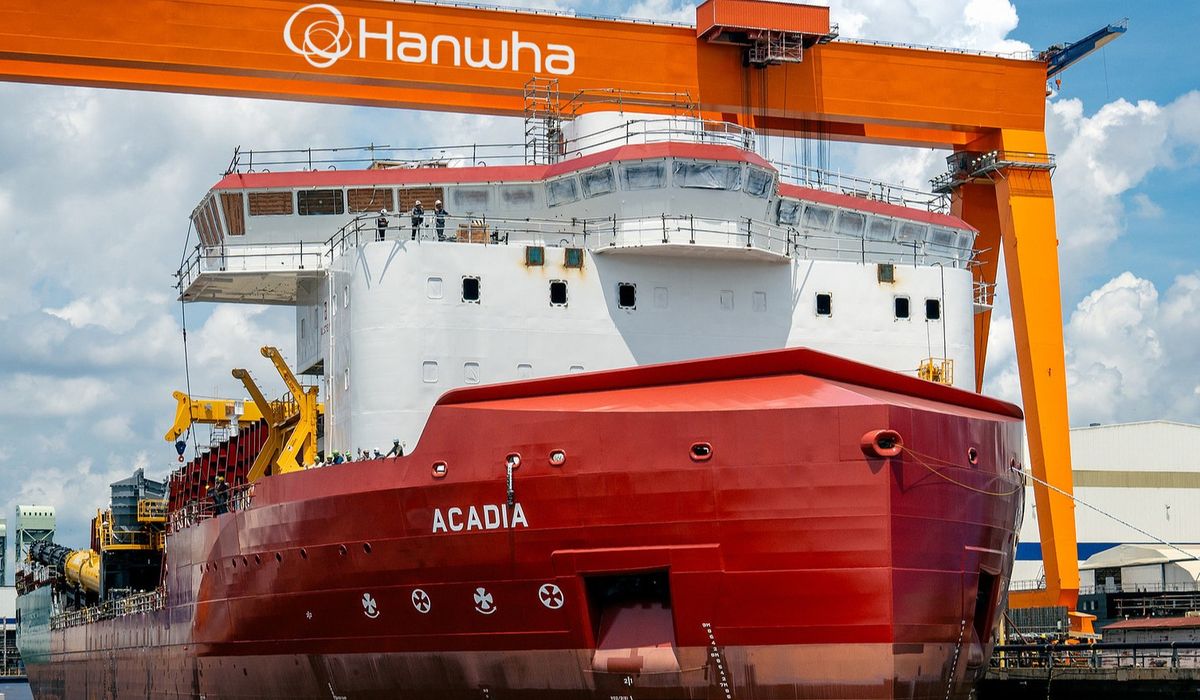
The Trump administration picked Hanwha Philly Shipyard to build next-generation Missile Range Instrument Vessels that will track flight and telemetry data for the Golden Dome missile program.
The move puts a domestic shipyard at the center of a major tracking and telemetry effort tied to a high-profile missile system. It signals a focus on bolstering America’s ability to observe and record missile flight data with purpose-built vessels. That combination of industrial capacity and national defense priority matters for allies and adversaries alike.
Hanwha Philly Shipyard will handle the construction of specialized ships known as Missile Range Instrument Vessels, a class designed to carry sensors, telemetry receivers, and tracking radars. These vessels collect in-flight data that engineers and operators use to assess performance and reliability. Accurate telemetry and tracking reduce uncertainty and speed up development cycles for complex weapons such as the Golden Dome missile.
Choosing a U.S.-based yard keeps engineering, oversight, and sensitive work under American control. That strengthens supply chain resilience and protects critical technology from foreign access or influence. It also aligns with a broader policy of reshoring defense capabilities that Republicans have backed as a practical matter of security and sovereignty.
From a defense standpoint, reliable telemetry is non-negotiable; you cannot fix what you cannot measure. MRIVs provide the mobile platforms needed to chase test flights across sea lanes and gather second-by-second data. For a program like Golden Dome, having dedicated platforms reduces the chance of gaps in coverage during key flight tests.
The shipyard job load also matters politically and economically. Building multiple MRIVs creates skilled trades work, from welders to electronics technicians, and supports local subcontractors. That kind of industrial activity feeds regional economies and strengthens the domestic defense industrial base without outsourcing core capabilities.
Operationally, MRIVs are complex integrations of naval architecture and mission systems, requiring tight coordination between shipbuilders, prime contractors, and military stakeholders. The vessels must house sensitive instrumentation, provide stable sensor platforms, and supply secure communications back to test ranges. Managing those technical and programmatic interfaces is exactly the sort of capability a seasoned shipyard and its partners must demonstrate.
Politically, the decision reflects priorities that favor strong, visible steps toward maintaining technological edge and deterrence. Critics can argue about cost or procurement choices, but the core fact remains: better tracking data yields better decisions. For lawmakers who prioritize defense readiness, investing in telemetry platforms is a clear line item with tangible outcomes.
For program managers, MRIVs reduce risk by expanding where and how tests can be monitored, improving confidence in design changes and troubleshooting. Repeatable, high-fidelity data shortens development timelines and lowers long-term program costs by catching issues earlier. That kind of efficiency is central to delivering capabilities on schedule and on budget.
This contract choice also sends a message about industrial policy: the U.S. will use homegrown yards to build assets that are both maritime and highly technical. It reinforces a national posture that ties military investment to job creation and technological control. Those are straightforward priorities for a defense agenda focused on readiness and resilience.
Expect the program to emphasize rapid integration of sensors, secure data links, and modular payload spaces so the MRIVs can adapt as testing needs evolve. The ships will be tools for engineers and operators to extract the maximum insight from each flight event tied to systems like Golden Dome. With the right execution, those platforms will be measurable upgrades in how the U.S. tracks, validates, and fields advanced missile capabilities.


1 Comment
I have a bit of a problem with this. When there are all American owned shipyards the Hanwha Philly Shipyard is owned by the Hanwha Group, a South Korean company. Maybe the American owned shipyards cannot handle this contract, I don’t know, and I know Trump wants foreign investment in the US but I have a problem with foreign owned companies getting defense contracts over American owned companies if the American owned companies can handle the contract.