

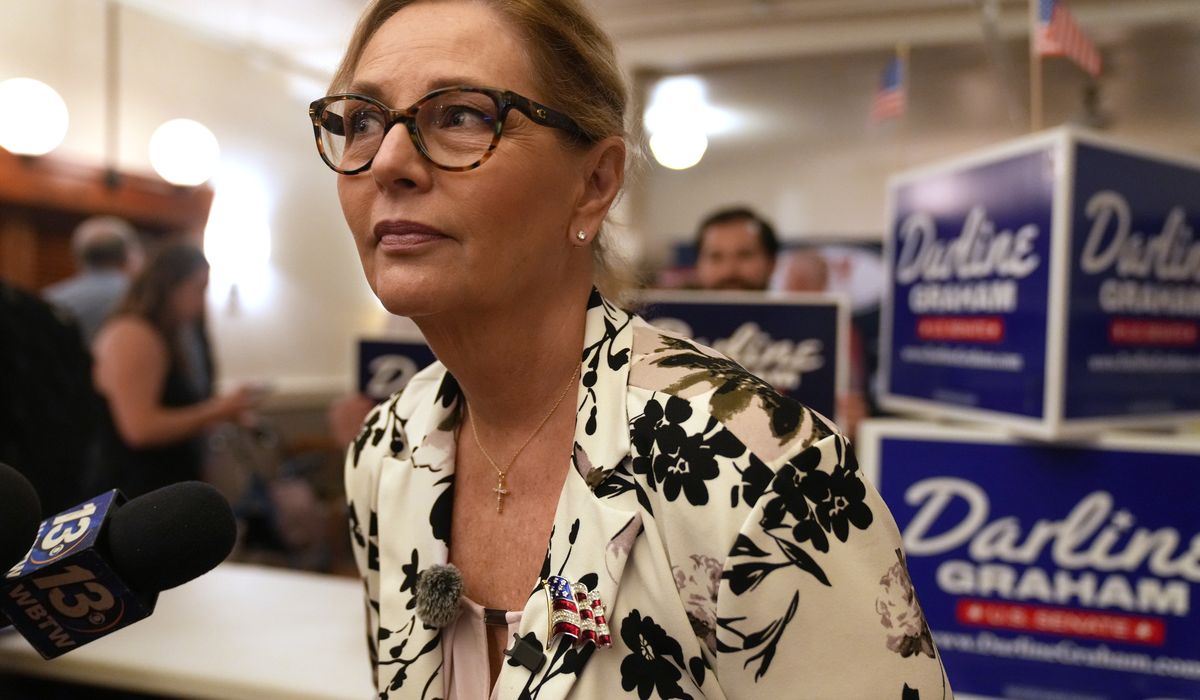
Sen. Darline Graham, the sister of the late Lindsey Graham, placed first in the Republican primary to fill his seat for a six-year term after the powerful senator’s unexpected death, and the result has set a straightforward course for Republican voters and party leaders as they consider continuity, conservative priorities, and what comes next in the contest to replace him.
The primary outcome put Darline Graham out front, and Republicans are talking about steady leadership at a time when steady leadership matters. In conservative circles the message is simple: keep the agenda intact, reinforce the party’s goals, and pick a senator who will show up and deliver. Voters who backed Graham emphasized familiarity and a shared set of priorities rather than novelty.
Campaign conversations focused less on flash and more on experience and party unity. That tone fits a seat vacated under sudden circumstances, where the next holder will be judged on how quickly they restore normalcy. For many primary voters, the idea of continuity carries weight: a six-year term is long enough to shape policy and short-term disruption is costly.
Republican strategists will now map the path forward with an eye on turnout and base enthusiasm. In primaries, second-place finishes can spark coalitions, while first-place winners have the advantage of momentum and name recognition. How the party consolidates behind the top finisher or navigates any follow-up contests will matter for the general political picture.
Local leaders and activists are already talking about priorities a replacement should tackle from day one. They want someone who defends conservative principles on spending, national security, and judicial appointments, while keeping an eye on state interests. That mix of national and local focus is what appeals to primary voters who want both principled stands and practical results.
Media coverage of the race has been energetic, but grassroots energy often decides the real outcome. Door-to-door volunteers, town hall appearances, and straightforward appeals remain the most reliable ways to connect with undecided voters. Republican operatives know that organizing on the ground can flip tight races that look settled on paper.
With the seat now in play for the full six-year term, senators from the state will be watched closely by allies and opponents alike. The transition will test how quickly a successor can build relationships in Washington and deliver for constituents at home. For the Republican base, the expectation is that the new senator will be a practical conservative who advances the party’s agenda without needless drama.
Party meetings and caucus planning are already underway to prepare for governing alongside a new face in the upper chamber. Colleagues in the party will expect cooperation, clear communication, and a willingness to plug into existing policy teams. That collaborative approach matters when a single senator can influence committee work and the broader legislative schedule.
The weeks ahead will show whether the momentum from the primary converts into broad support across the state. Republican voters will be looking for clear signs that the candidate can win the general election and represent their values effectively. For now, placing first in the primary gives Darline Graham a clear headline and a responsibility to prove that headline leads to results.

