

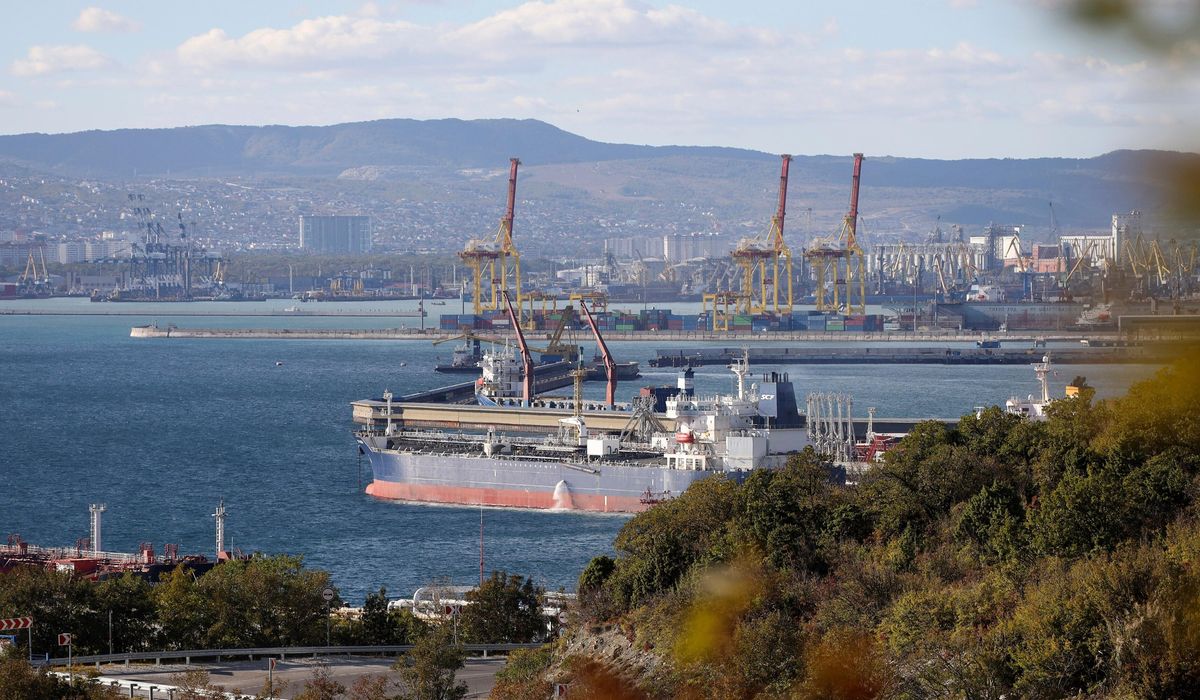
Ukrainian forces struck a Russian naval base overnight, targeting air defenses, piers and seaport infrastructure, a move President Volodymyr Zelenskyy confirmed that signals continued pressure on Russian logistics and military posture in the region.
“Ukrainian drones and missiles overnight hit air defense positions, piers and seaport infrastructure at a Russian naval base, Ukrainian President Volodymyr Zelenskyy said Wednesday.” That line sets the scene: precision attacks on naval-support nodes, not only ships. The focus on infrastructure shows Ukraine is aiming to degrade Russia’s ability to project power from its ports.
The strike underscores how modern conflicts mix drones and missiles to threaten bases once thought safe. From a Republican perspective, this is proof that smart weapons and clear strategy change the battlefield. It also highlights why allies must keep equipping partners who can act decisively.
Damage to piers and seaport facilities does more than sink one vessel; it affects resupply, maintenance and staging for future operations. Disrupting logistics forces an adversary to reroute or slow down, and it raises costs for every mission. That’s a strategic win even when the details stay murky.
Air defense positions being hit matters because they are the shield behind which naval assets shelter. Puncturing that shield opens windows for follow-up strikes and complicates Russian planning. Whatever the losses, the psychological effect on crews and commanders is real.
President Zelenskyy’s statement is a public confirmation meant to shape both domestic and international perception. It tells Kyiv’s people and partners that Ukraine is striking where it hurts, and it signals to Moscow that its bases are vulnerable. Republicans typically read that as validation for sustained military support to capable partners.
Critics will want exact casualty and materiel counts, but such clarity rarely comes immediately in wartime. Open-source analysts and intelligence agencies will sort through satellite imagery and sensor data in the days ahead. Even without full confirmation, repeated targeting of naval hubs is a clear pattern worth watching.
This episode also underlines the evolving nature of naval warfare, where land-based missiles and unmanned systems can contest control of littoral zones. Boats alone no longer guarantee sea control; the coastal infrastructure matters just as much. For policymakers, that reinforces the value of layered defenses and resilient logistics.
From a Republican viewpoint, showing strength through partners is smarter and more sustainable than committing large numbers of our own forces. When allies like Ukraine can deny basing and movement to an aggressor, it magnifies the effect of every dollar of assistance. That principle has guided calls for robust, targeted aid that fills capability gaps.
There will be debates inside capitals about escalation risk and proportionality, and those arguments should be taken seriously. But deterrence depends on credible consequences for aggression, not endless talk about them. Actions that raise the cost of hostile behavior shape choices better than empty threats.
Operationally, Ukraine’s ability to coordinate drone swarms and missile strikes points to growing command-and-control and targeting sophistication. That means training, intelligence sharing and modern munitions are working together. Republicans will note that efficient use of supplied systems is exactly the sort of return on investment defenders want to see.
Russia will respond in kind, and we should expect retaliatory strikes or tightened maritime security around key ports. Moscow also faces political fallout at home when high-value facilities are damaged. The war of attrition now includes reputational and logistical battles as much as front-line engagements.
Allies watching this episode must consider how to harden ports, disperse assets and build redundancy into naval logistics. That is a sober, practical task that reduces risk over the medium term. It is also the kind of long-term planning Republicans favor to avoid repeated crises.
Intelligence communities will be parsing the strike to determine who led, what platforms were used and how future attacks can be anticipated. Those technical answers will inform procurement and training choices for NATO and partner militaries. The takeaway for conservative strategists is to keep equipping those who can deliver meaningful effects on the battlefield.
On the diplomatic front, public statements and backchannel efforts will continue to try to manage escalation while maintaining pressure. But military realities on the ground often do more to shape negotiations than rhetoric alone. That fact points to the need for firm, consistent support for allies under attack.
As more details emerge, expect sober assessments of the strategic balance in the Black Sea and adjacent regions. The incident is not just military theater; it’s a test of policy coherence among Western partners. For Republicans, the lesson is straightforward: back the capable, make aggression costly, and keep U.S. strategy clear and strong.

