

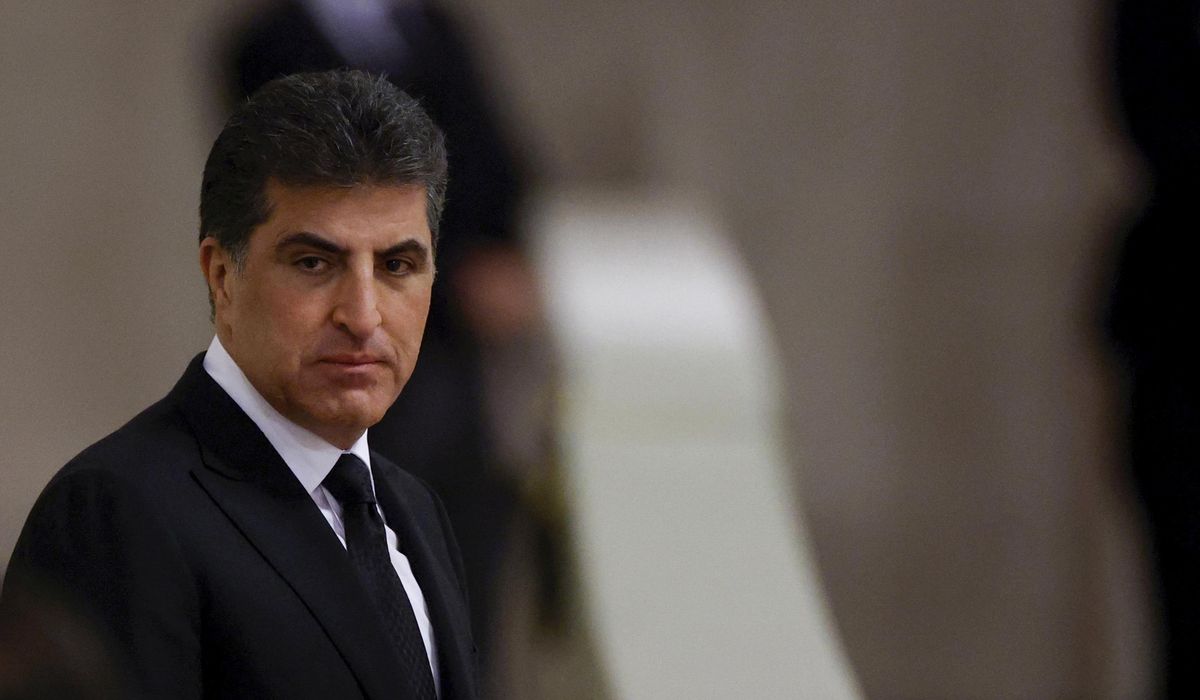
The president of Iraqi Kurdistan on Monday condemned Iranian attacks on the office of the region’s prime minister and the residence of the region’s security agency chief.
Iranian strikes on Kurdish regional targets represent a serious breach of sovereignty and a direct threat to civilians and local institutions. The attacks reportedly hit the prime minister’s office and the home of the security agency chief, signaling a willingness to strike high-profile political and security figures. Local leaders described the attacks as reckless, and the devastation has raised alarms across the region.
Kurdish authorities say the strikes were unprovoked and aimed at intimidating the regional government and its security apparatus. These facilities are central to day-to-day governance and public safety, making them legitimate symbols of the region’s autonomy. When a neighboring power targets those symbols, it undermines fragile political arrangements and increases the risk of miscalculation.
For Americans who favor firm foreign policy, this is a moment to speak clearly about deterrence and support for allies who face aggression. Weakness invites further aggression, and the Kurdish region has long been a stabilizing partner in a volatile neighborhood. Republican policymakers should press for concrete measures that protect allies and punish cross-border attacks without getting sucked into unnecessary ground commitments.
Practical steps include enhancing intelligence sharing, tightening sanctions against entities that facilitate attacks, and increasing defensive aid that improves the Kurdish region’s ability to protect critical sites. Training, surveillance systems, and counter-drone capabilities could blunt the impact of future strikes. These are force-multiplying options that let partners defend themselves while limiting direct American exposure.
The strikes also carry a diplomatic price tag. Tehran needs to be isolated politically when it chooses coercion over negotiation, and regional capitals should be encouraged to coordinate their response. That coordination should convey that state-to-state aggression will carry lasting costs, including targeted economic measures and restrictions on diplomatic channels that enable such operations. A coherent regional pressure campaign reduces the chance that Tehran repeats this behavior.
On the home front, U.S. policymakers must consider the broader implications for energy security and regional logistics if conflict escalates. Disruptions in supply routes and increased risk for commercial shipping could affect global markets well beyond the immediate neighborhood. Republicans who prioritize stable markets and reliable supply chains should therefore view protection of friendly regional governments as directly tied to American economic interests.
Humanitarian concerns should not be ignored while strategists work through sanctions and defensive measures. Civilian populations in border regions bear the first and worst consequences of escalatory strikes, including displacement and loss of basic services. Assistance that supports emergency medical response, shelter, and essential infrastructure helps stabilize communities and reduces the breeding ground for extremism.
This episode also tests international institutions and alliances. The United Nations and NATO partners can play roles in documenting violations and coordinating responses, but meaningful impact requires political will from capitals, not just statements. For those who believe in principled strength, that means backing diplomatic tools with credible policies that protect partners, deter aggression, and preserve regional balance without surrendering control over how we respond.

