

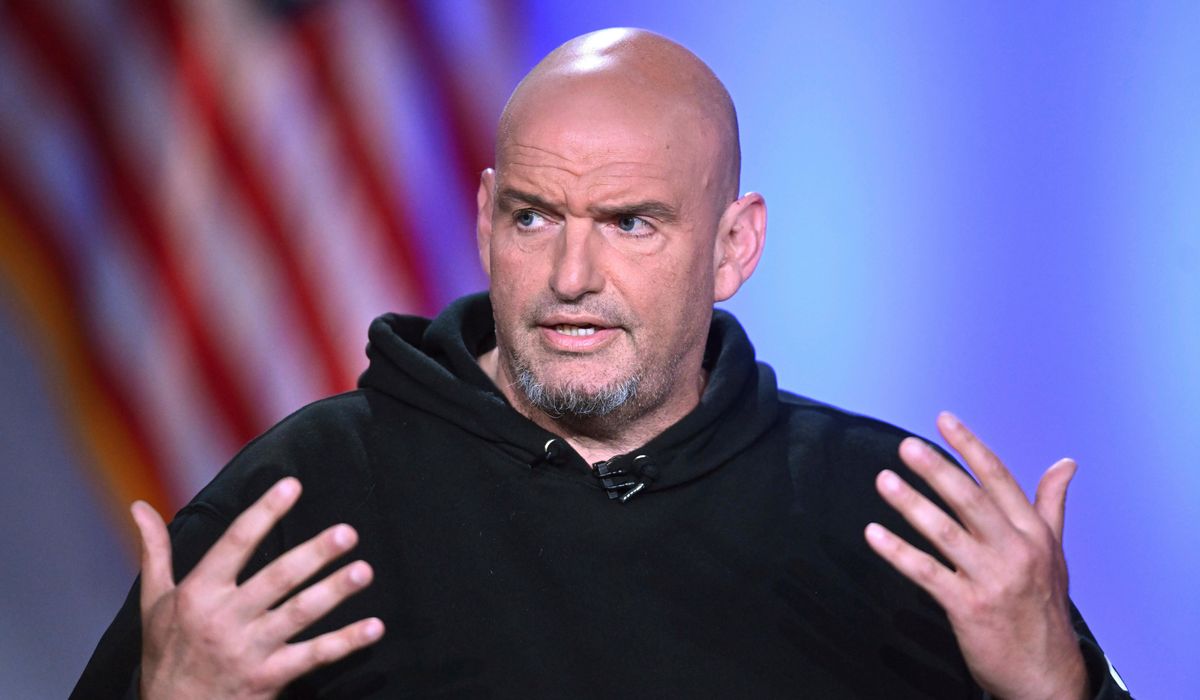
Poll data shows Pennsylvania Republicans express clearer favorability for Sen. John Fetterman, described as a moderate Democrat, than for the state’s GOP senator, Dave McCormick.
A new poll landed like a splash of cold water for Pennsylvania’s Republican establishment, reporting that many registered Republicans have a warmer view of Sen. John Fetterman than they do of the state’s GOP figure, Dave McCormick. The finding is blunt and a little embarrassing: voters who should be natural allies are, at least on paper, more comfortable with a moderate Democrat. That has to prompt hard questions about message, candidate quality, and party stewardship.
Understanding why Republican-leaning voters might tilt toward Fetterman requires looking at impressions, not just policy checklists, and Fetterman projects a mixed image that some interpret as pragmatic rather than ideological. Voters who prioritize common-sense solutions and steady presence can see a moderate Democrat as less threatening than a candidate who looks like an outsider or a political novice. That dynamic gives Democratic incumbents room to breathe in places where the GOP has failed to deliver a sharp, appealing contrast.
On the other side, McCormick’s struggles highlight what happens when a campaign doesn’t land its message or when local concerns get drowned in national noise, and those are operational problems the state party should own. Republicans in Pennsylvania still care most about jobs, energy, law and order, and secure borders, and when those priorities are not communicated in simple, persuasive terms, voters notice. The party can win back trust by making concrete connections between its ideas and everyday pocketbook issues.
There is also a candidate quality angle: people prefer someone they believe understands their life and stakes, and perceived authenticity beats scripted talking points every time. That is a lesson for Republicans who pick candidates based on resume instead of relatability and local credibility. Parties that value personality and connection in addition to policy will be better positioned to compete where voters value the feel of real leadership.
Demographics and geography matter too, especially in Pennsylvania where suburban and exurban voters swing elections and often decide which side carries the day, so the GOP has to tailor messages without compromising core principles. If suburban voters are leaning toward a Democrat they see as moderate, Republicans need to be clearer about the trade-offs and sharper about the consequences of the alternative. That means focusing on practical policy wins and avoiding purely symbolic fights that fail to move the needle for swing voters.
We should also treat polls like what they are: snapshots, not prophecy, but they are useful because they highlight weak points and open the door for course correction. When a poll shows uncomfortable results, the right response is not denial but a clear, disciplined plan to fix the causes. That starts with stronger fieldwork, better listening to local concerns, and consistent messaging that emphasizes competence and real-world outcomes.
Practical steps to change the trajectory are straightforward and practical: recruit candidates who connect with voters, train spokespeople to make a persuasive case on core issues, and relentlessly tie opponents to policies that cost voters money or safety. Winning back skeptics means winning arguments about who will improve everyday life, and a party that can make that argument in plain language will always have an advantage. It is less about slogans and more about measurable improvements in people’s lives.
At the end of the day the poll forces a choice: adapt or repeat the same mistakes and hope for a different result, which is not a strategy anyone should trust. Republican leaders in Pennsylvania can take this as a reality check and act decisively, because the cost of ignoring voter preferences is a weakened bench and missed opportunities down the ballot. Time and effort invested now in sharpening the party’s pitch and picking the right messengers will determine whether this poll becomes an outlier or the start of a trend.

