

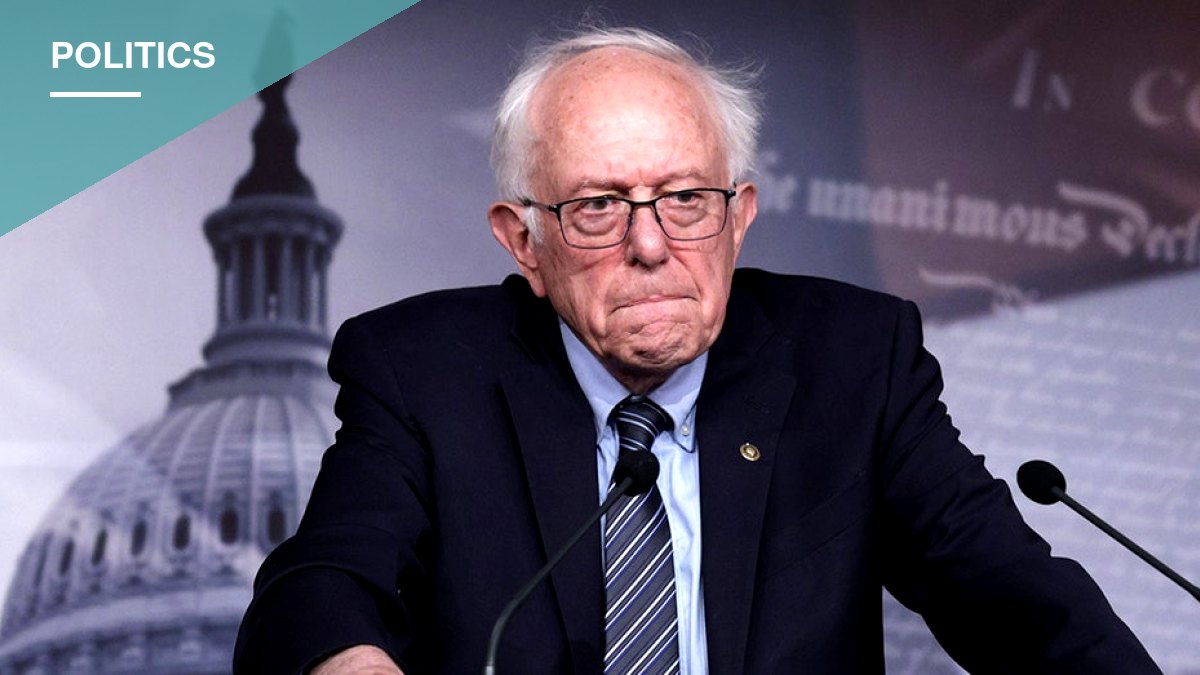
Sen. Bernie Sanders, I-Vt., and Rep. Greg Casar, D-Texas, introduced legislation Thursday that would impose criminal penalties of up to 20 years in prison on individuals and a “corporate death penalty” on companies that develop advanced artificial intelligence systems deemed to exceed human cognitive capabilities.
The Ban Artificial Superintelligence Act would pause advanced AI development and create a new Cabinet-level federal agency with authority to oversee the physical destruction of noncompliant tech systems. The bill’s framers explicitly compare the development of advanced AI to the unlawful development of nuclear weapons, modeling the proposed penalties directly on existing federal statutes governing nuclear weapons development.
Under the bill, the new agency would be empowered to monitor frontier AI systems, physically supervise the removal of dangerous code, and oversee the destruction of noncompliant hardware and infrastructure. The legislation specifically bans any AI model capable of planning or executing the “disempowerment of humanity,” including systems that can subvert shutdown commands, execute unauthorized cyberattacks, or undermine the U.S. government.
Companies found violating the law would lose their legal authority to conduct business in the United States. Individual engineers, researchers, or executives found in violation could face up to 20 years in federal prison.
Critics Warn of a Gift to Foreign Rivals
Sanders and Casar frame the bill as a necessary check on what they describe as “AI oligarchs.” But technology policy experts warn that imposing sweeping criminal liability on American firms would cripple domestic innovation while leaving foreign competitors free to advance unimpeded.
“If the United States stops developing advanced AI, China is unlikely to follow. Surrendering the lead in a potentially transformative technology would carry serious economic and national security costs,” said Daniel Castro, president of the Information Technology and Innovation Foundation.
Gary Marcus, an AI expert who has testified before the U.S. Senate, said a “permanent, unilateral ban on all research into superhuman AI is too broad.” He called the proposal “not the right approach” and said it amounted to “a guarantee” that the U.S. would fall behind in AI development, though he acknowledged some elements of the bill were “defensible.”
Industry groups raised similar concerns about the practicality of the enforcement mechanism. Aden Hizkias, associate policy director at the Chamber of Progress, a tech industry coalition, called the bill an example of “knee-jerk policymaking.”
“AI is an incredible tool that can improve millions of lives, but as AI skepticism grows, it’s on companies to earn trust and prove they are good neighbors. That means transparent construction agreements, bringing their own power generation, and making sure they’re meeting environmental standards,” Hizkias said.
Fox News Digital reported that it reached out to Sanders’ office for comment on concerns that the legislation would hand an advantage to foreign adversaries such as China and Russia but did not receive a response before publication.

