

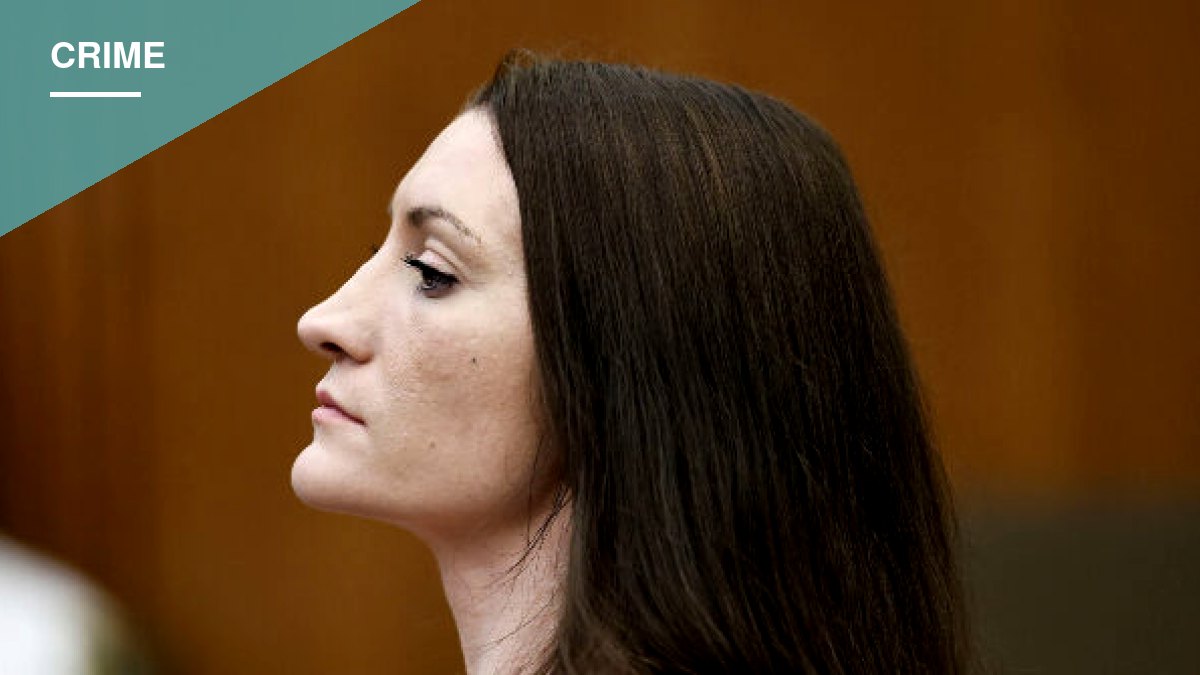
An anonymous member of the jury in the Lindsay Clancy murder trial has spoken publicly for the first time about how her position shifted during deliberations, telling CBS Boston that she initially believed Clancy was “guilty and criminally responsible” before ultimately voting to acquit by reason of insanity.
“Originally, I felt as though she was guilty and she was criminally responsible for it,” the juror said. “And maybe I still believe that in a certain way.”
Judge William Sullivan declared a mistrial in the case last Friday after the twelve-member panel — nine women and three men — could not reach a unanimous verdict following seven days and more than 36 hours of deliberations. One juror’s holdout prevented the other eleven from finding Clancy not guilty by reason of insanity.
Three other jurors, Roni Carlson, Kellie Farina and Paula Devlin, have since publicly criticized that holdout juror. But the anonymous juror who spoke with CBS Boston offered a different account of the deliberations, saying tensions ran in more than one direction.
“A majority of the people — it doesn’t matter what side — were very firm in their stance and their beliefs from the beginning. This stand-alone juror was not the only one that was unwilling to see things from the other side,” she said.
“So, I’m gonna kind of defend that individual,” she added. “There were some big personalities in that room.” She said she felt “the majority of the room was trying to kind of sway that person from the very beginning.”
The juror said she does not typically follow news coverage and had not been closely tracking public reaction to the case. She said her own shift toward acquittal came down to reasonable doubt about Clancy’s mental state at the time of the killings.
“There was not a single moment throughout that presentation of that case that you could say, ‘Oh, yep. 100 percent, I’m certain she did it or that she didn’t do it.’ There’s too much gray area,” she said.
She said she came to believe that getting Clancy “the help that she desperately needed” was the only path to justice for the couple’s three children, Clancy’s ex-husband Patrick, and her parents.
The juror also addressed her own suitability for the panel, agreeing she may have been a “prime juror” for the case because she has no children. “Typically women are harsher on other women and I don’t have children,” she said. “So it wasn’t as, like, emotional for me.”
Clancy had acknowledged strangling her three children — five-year-old Cora, three-year-old Dawson, and eight-month-old Callan — at the family’s home in 2023, but argued that postpartum psychosis left her unable to understand what she was doing.
The juror said the hardest piece of evidence to sit through was the 911 call Patrick Clancy made after finding his children’s bodies. “I will never be the same after that 911 call,” she said. “It was horrifying, just to imagine living through that and being the person to find their children in that scenario.”
She said that after the trial ended, she became aware of online theories suggesting Patrick Clancy was responsible for the deaths. “If these people could have heard that visceral, blood-curdling scream, I don’t think I could name a single actor or actress that could have performed that,” she said.
Reflecting on Lindsay Clancy’s mental state, the juror said: “I think that this was a woman who, you know, she was not mentally healthy. She was someone that was in the throws of a significant mental health crisis. So I really just felt like she was so deep in it that she couldn’t see her way out. And this was the only option.”

