

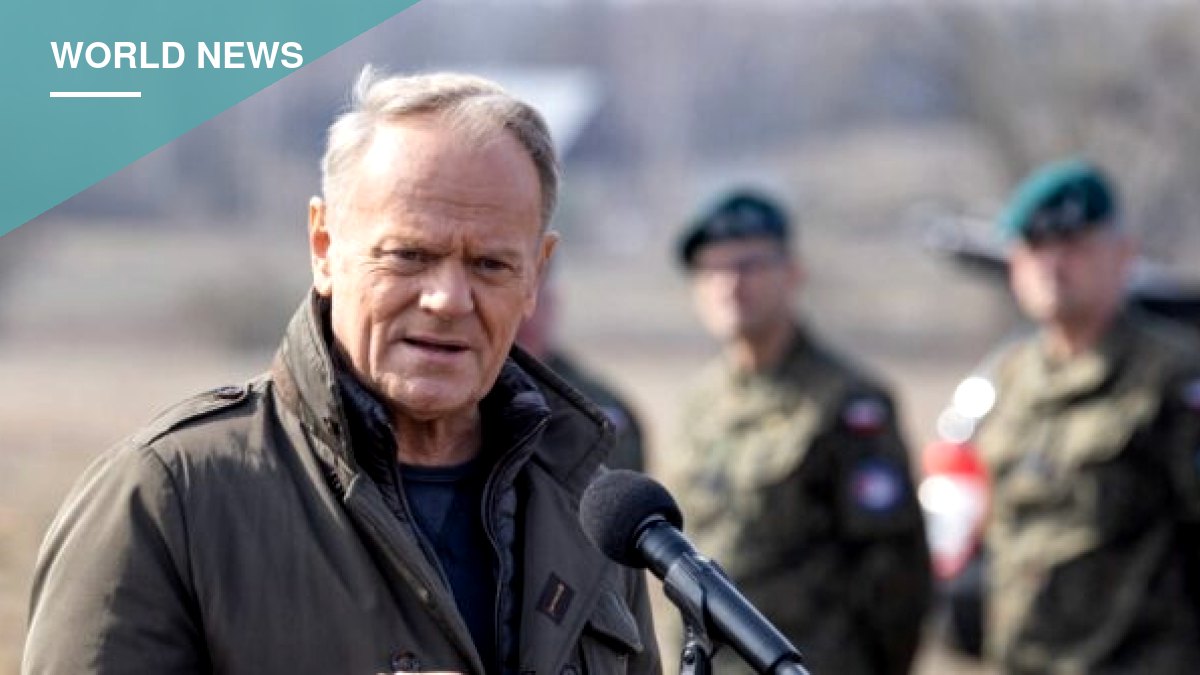
Polish Prime Minister Donald Tusk said Thursday that two recent incidents near Ukraine’s borders with Poland and Moldova signal that Russia is preparing to intensify provocations at crossing points along Ukraine’s frontier with Europe.
Speaking in Bratislava during a meeting of central European countries and Ireland, Tusk said two people died when Russian drones struck the Starokozache border crossing between Ukraine and Moldova on Tuesday night. A day later, he said, a “direct threat” to a Polish-Ukrainian crossing point was averted only through cooperation between Warsaw and Kyiv. Tusk did not offer further detail on the Wednesday incident or present evidence tying it to Russia.
Tusk said the warning followed a Thursday briefing from CIA Director Jim Ratcliffe, who had recently traveled to Moscow, on the risks Russia poses to the region in coming months.
“Russia already decided to engage in provocative attacks on border crossing points, for example in Moldova,” Tusk said. “We expect similar actions regarding border crossings with Ukraine in other countries as well, including Poland.”
He added that Ratcliffe’s briefing indicated Poland and the rest of Europe should prepare for “various scenarios” both on the Russian-Ukrainian front and in countries along the EU’s eastern flank. Ukraine borders Poland, Slovakia, Hungary, Romania and Moldova, in addition to Russia and its ally Belarus.
A Pattern Along Moldova’s Border
Moldova, a former Soviet republic that has been an EU membership candidate since 2022, has faced a string of incidents near its southern border crossings with Ukraine in recent weeks.
On Aug. 20, an explosion in a parking lot on Ukrainian territory about 150 meters from Moldova’s Giurgiulesti crossing sparked a vegetation fire that spread roughly 100 square meters into Moldovan territory. The same day, border police found a crater about a kilometer inside Moldova containing debris from a drone type used by Russia in Ukraine.
The following day, Moldova temporarily closed its Mirnoe border crossing after nearby Russian strikes on Ukraine. On Aug. 25, authorities suspended activity at the Vulcanesti crossing after an Iranian-made Shahed drone struck the Ukrainian side. Moldova’s border police have urged residents who hear drone noise or explosions to stay calm and take shelter.
After Tuesday’s fatal strike at Starokozache, Moldova’s pro-Western president, Maia Sandu, condemned Russia, saying its “brutal war is reaching our border.”
“To deny the danger while Russian drones and missiles sow death and put Moldova in danger, and to criticize your country’s efforts to strengthen its defense system, is to choose betrayal over the safety of your own people,” Sandu wrote on Facebook.
Romania has also reported increased pressure on its territory. President Volodymyr Zelenskyy said last week that a border crossing with NATO-member Romania on the Danube was “deliberately damaged,” along with export infrastructure — Moscow has repeatedly targeted Ukraine’s river ports during the war. Romania has recorded an almost threefold increase in drone incursions so far this year compared with all of 2025, and more than double the drones and drone debris found on its territory.
Intelligence Cooperation With Washington
Tusk has warned for weeks that Russia could mount a limited military action or a broader hybrid provocation against Poland or the Baltic states — Estonia, Latvia and Lithuania.
“In the last few hours, I received a fairly detailed report directly from the CIA director regarding possible incidents in the coming months — and this is exactly what I’ve been saying and warning about for many months now,” Tusk said.
Ratcliffe visited Moscow in late August for talks with Russian intelligence counterparts; Polish politicians have speculated that a possible Russian threat to NATO was among the topics discussed. On Tuesday, Tomasz Siemoniak, the Polish minister overseeing intelligence services, met with Ratcliffe at CIA headquarters in Virginia to discuss Poland’s security and cooperation with the United States.
Separately, an American delegation including William Cappelletti Jr. of the Department of Defense and Thomas DiNanno of the State Department is visiting Poland this Thursday and Friday to review potential sites for a permanent U.S. military base — something Warsaw has long sought as a firm guarantee against Russian aggression. Poland’s high defense spending and large U.S. arms purchases have reportedly persuaded the Trump administration to consider a permanent base there even as it scales back its broader military footprint in Europe.

