

A small but persistent fleet of Iranian tankers is slipping past the US naval blockade in the Strait of Hormuz and delivering sanctioned liquefied petroleum gas to China, according to a months-long investigation by the advocacy group United Against Nuclear Iran (UANI).
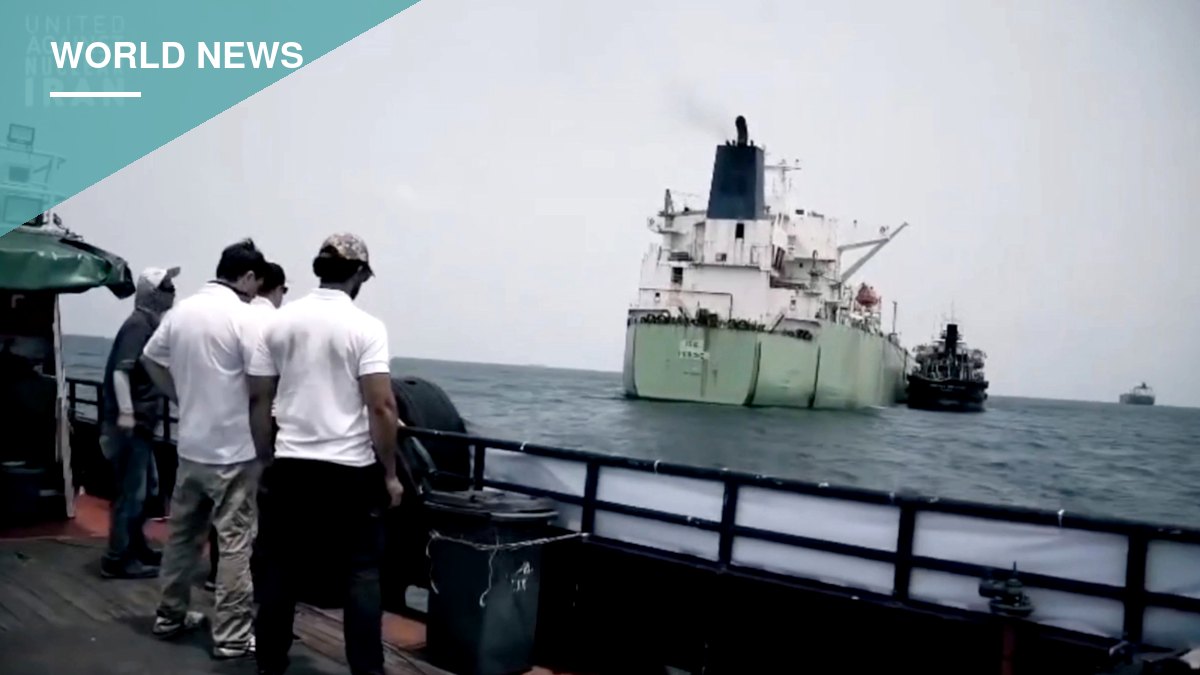
UANI investigators covertly filmed one of the vessels, identified as the SOGL, in September as it moved through a Malaysian offshore anchorage on its way to China, where the group says it ultimately unloaded its cargo at Xinzhou Port.
The organization says at least nine small tankers carrying Iranian oil or LPG have breached the US blockade since Washington reimposed it on July 14, after an earlier version of the blockade, first imposed April 13, was briefly lifted in mid-June when diplomatic talks with Iran failed to hold.
“What this shows us is that some vessels are managing to breach the US maritime blockade,” said Jemima Shelley, a senior analyst at UANI. “Most vessels aren’t, but since the reinstatement in mid-July, we have seen only nine small tankers being successful in their breach of the US blockade and departing the Gulf of Oman laden with oil or LPG.”
A Malaysian Waypoint
Central to the smuggling route is the Eastern Outer Port Limits Anchorage (EOPL), an offshore waiting area roughly 70 kilometers off Malaysia’s coast that has become, in Shelley’s words, a “key node in Iran’s oil trade to China.” Tankers use it to wait, resupply, and transfer cargo ship-to-ship before the final leg to Chinese buyers.
UANI says it chartered a supply vessel on September 16 and traveled 100 nautical miles into the anchorage, where it filmed the SOGL — a Handymax tanker carrying roughly 500,000 barrels of Iranian LPG loaded in late August at Assaluyeh Port, Iran — receiving bunkering services from a smaller ship. Shelley said local authorities appeared to be “looking the other way.”
Rather than transfer its cargo at the anchorage as other vessels reportedly do, the SOGL instead sailed north into the South China Sea and discharged its Iranian LPG directly at Xinzhou Port, according to UANI.
How the Smugglers Operate
Shelley described tactics common to Iran’s so-called ghost fleet: tankers switch off their AIS transponders, fly false flags to appear stateless, and route through complicated shell companies. Vessels typically load in Iran, transit the Persian Gulf, the Strait of Hormuz, and the Gulf of Oman, then conduct ship-to-ship transfers — a maneuver Shelley called “very high-risk” when the cargo is flammable LPG rather than crude.
“The US blockade’s first course of action is to try to attempt to turn around these vessels, which is their main technique for enforcing the U.S. blockade,” Shelley said. “However, sometimes they do have to use military force and this would be incredibly high risk on far more volatile cargo such as LPG.”
Despite the leaks, Shelley credited the blockade with cutting off Iran’s larger crude exports almost entirely. “The US blockade is an overwhelming success at preventing vessels laden with Iranian oil and petrochemicals from leaving the Gulf of Oman,” she said, adding that “no Iranian crude oil has managed to depart and be a successful export for Iran” since the July reinstatement — a significant blow to the regime’s revenue. She said US forces are focused mainly on large tankers carrying crude, sometimes up to two million barrels, leaving smaller opportunistic LPG shipments to occasionally slip through.
China’s Role
The SOGL was added to the US Treasury’s Office of Foreign Assets Control sanctions list on October 8, identified by IMO number 9208227, over its alleged transport of Iranian petroleum products since 2025. Records show the ship has flown multiple flags, including those of Comoros and Zimbabwe, and has been linked to a company called Gravion Maritime Co.
China remains the overwhelming buyer of Iranian energy exports despite the sanctions regime. “For years, China has made up 80% of Iran’s liquid cargo exports, and we have seen that only grow since the beginning of the Iran War,” Shelley said. “Now China is importing almost 100% of Iran’s oil and LPG exports.”
She said Iran’s floating storage of oil, once a cushion that helped it weather the blockade, has since dropped to between zero and seven million barrels as enforcement has tightened.
Separately, Bloomberg reported that the G Summer, a US-sanctioned LPG carrier with roughly 7,000 cubic meters of capacity, was tracked transmitting signals from the Arabian Sea beyond the American blockade line in April. The vessel broadcast that it had an “all Chinese crew” aboard; shipping analytics listed Iran as its last cargo port and Galle, Sri Lanka, as its reported destination.
Fox News Digital, which first received the UANI footage, said it has reached out to US Central Command for comment.

