

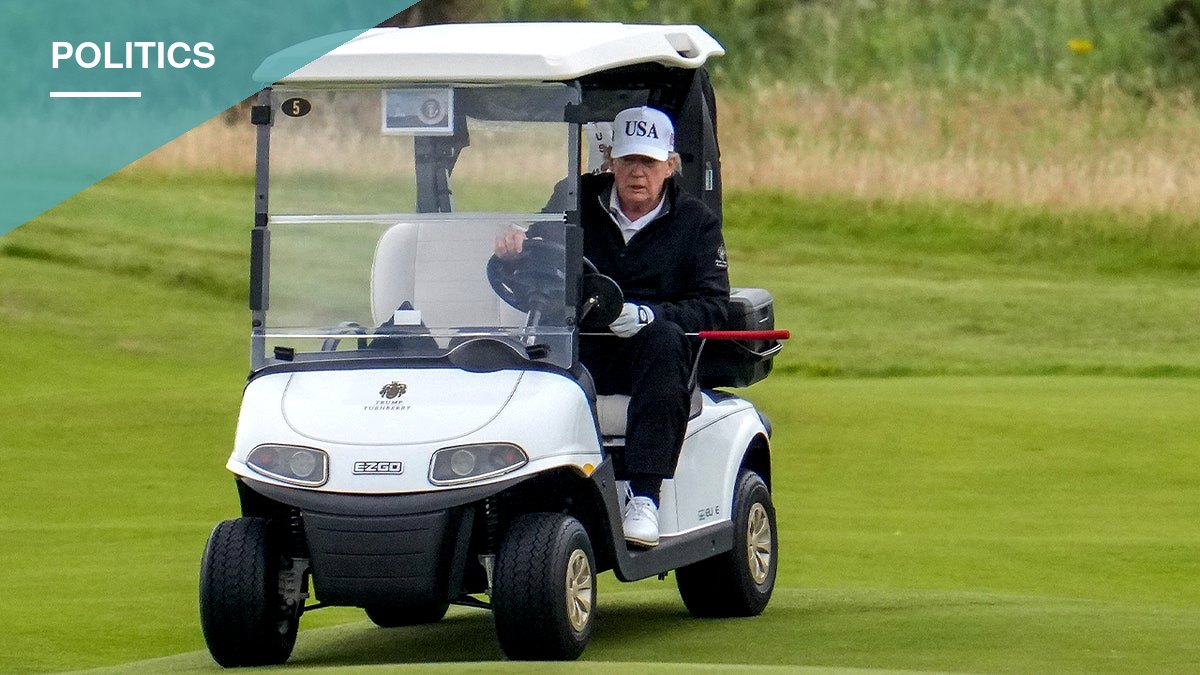
As President Trump prepares to meet Chinese President Xi Jinping in Washington, D.C. this week, a member of Congress representing Georgia’s 12th Congressional District is using a very different event — the Presidents Cup golf tournament outside Chicago — to draw attention to what he describes as unfair Chinese competition in American manufacturing.
The Presidents Cup, which pits American golfers against an international squad, is being held at Medinah Country Club near Chicago, Illinois. President Trump has accepted the role of honorary chairman for the event and plans to attend. Golfers at the tournament will use golf carts built by Club Car, a manufacturer headquartered in Augusta, Georgia, alongside another Georgia-based manufacturer, E-Z-GO.
The lawmaker argues that the golf cart industry illustrates a broader pattern of Chinese trade practices harming American manufacturers nationwide.
Imports Surged, Investigation Followed
According to figures cited in the lawmaker’s account, more than $522 million worth of low-speed personal transportation vehicles — commonly known as golf carts — were imported into the United States from China in 2023, more than double the amount imported in 2021.
American manufacturers raised concerns that Chinese producers were benefiting from government subsidies and selling their products in the U.S. market at unfairly low prices. The Department of Commerce investigated those complaints and found evidence supporting them, determining that Chinese producers had received countervailable subsidies and that Chinese-made golf carts were being sold in the United States at less than fair value.
The lawmaker says those findings have translated into real consequences on American factory floors, including reduced shifts, workforce reductions, declining production and declining profitability across the domestic industry.
Enforcement and Circumvention Concerns
In response to the Commerce Department’s findings, the U.S. established antidumping and countervailing-duty remedies against the unfairly traded Chinese imports. But the lawmaker contends that trade enforcement only works if it is actually enforced, and he says Chinese producers have found ways around American trade remedies — including by altering supply chains, relabeling products, or routing goods through third countries.
The lawmaker says he has joined colleagues in Congress in pressing the Commerce Department to investigate potential circumvention of the existing trade remedies, in order to ensure the protections function as intended for American workers.
A Broader Message Ahead of the Summit
The lawmaker frames the golf cart dispute as a test case for the broader U.S.-China economic relationship, arguing that the United States can engage diplomatically with China while still insisting that trade rules be applied fairly. He points to prior experience in industries such as steel, solar panels and automobiles as evidence that once domestic manufacturing capacity is lost, it is extraordinarily difficult to rebuild.
As the Presidents Cup showcases golfers from the United States and around the world this week, the lawmaker says it is also worth recognizing the American workers and manufacturers in Augusta, Georgia, who build the equipment supporting the tournament — and, he argues, deserve a level playing field against foreign competitors.

