

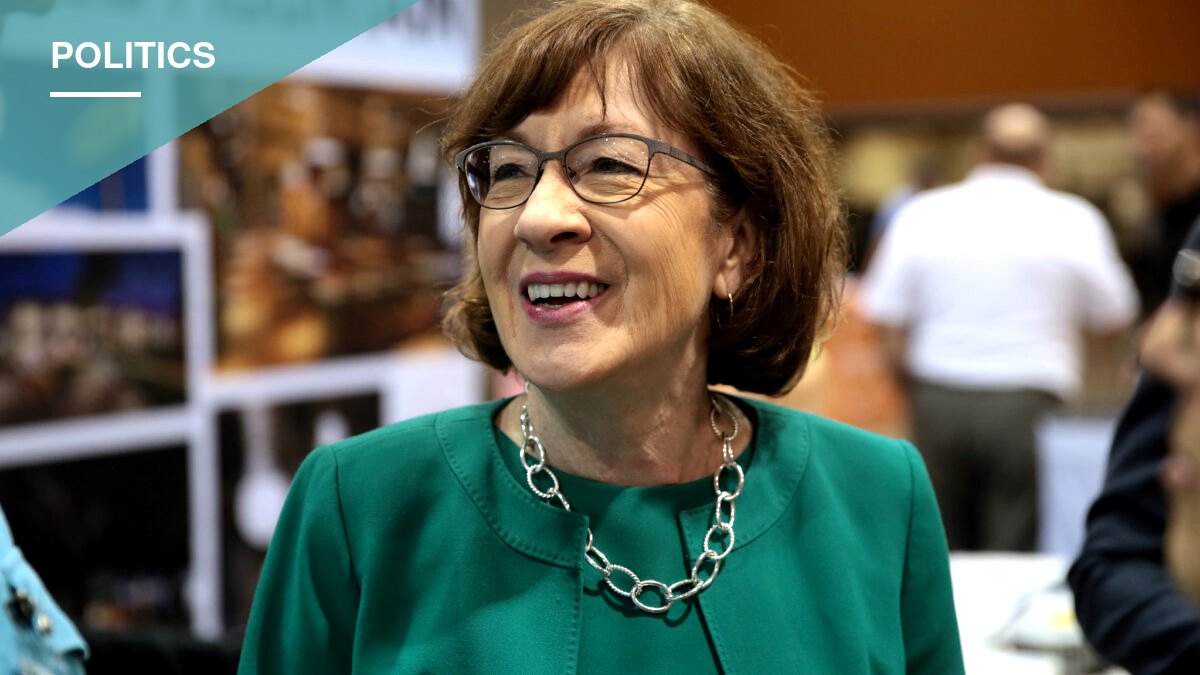
ProPublica published a report Tuesday alleging that Sen. Susan Collins, R-Maine, and her 2020 campaign were involved in a pay-to-play scheme with a Hawaiian defense contractor, and that the investigation into it was later shut down amid the Trump administration’s actions against certain FBI personnel. Collins’ office has flatly denied the allegations, and the FBI’s underlying investigation did not result in charges against anyone on her team.
According to ProPublica, a staffer for Collins’ 2020 campaign met with Martin Kao, the CEO of Navatek, a defense contractor seeking government contracts in Maine. The report claims Kao would funnel campaign donations through a shell company in exchange for contract help, and that Kao wanted assurance Collins would know the money’s source.
Kao is not a neutral witness. He has pleaded guilty to five counts of money laundering, three counts of wire fraud, one count of bank fraud, and making false submissions to the Federal Election Commission. ProPublica itself acknowledges Kao’s credibility problems, writing that he was “a felon trying to avoid a lengthy prison sentence” who “hoped to do less time by revealing the entire scheme.”
Annie Clark, deputy chief of staff for Collins, said the senator’s campaign “was never the target of the FBI investigation.” Clark said Kao began making the allegations against Collins’ office — including claims of extortion, pay-for-play, and bribery — only after pleading guilty and while awaiting sentencing, as a way to deflect blame from himself.
The FBI agents behind the probe
ProPublica’s account also leans heavily on former FBI agent Kevin Gounaud, described in the report as an experienced member of the bureau’s anti-corruption unit who worked alongside fellow agent Michelle Ball. The two agents reportedly “zeroed in” on Collins even though Kao allegedly had dealings with more than a dozen members of Congress and their staff, according to ProPublica’s own reporting.
ProPublica frames the agents as having become “casualties of Trump’s retribution campaign” when their investigation was halted. But Gounaud’s record includes seeking assignment to Crossfire Hurricane, the FBI’s 2017 investigation into the Trump campaign, and later recommending a criminal investigation into Elon Musk in February 2025 over Musk’s directive that federal employees report on their weekly work activities. That recommendation is documented in emails released by Sen. Chuck Grassley, R-Iowa.
A pattern worth noting
ProPublica has faced criticism before over its reporting on conservative figures. In coverage of Justice Clarence Thomas, the outlet was accused by former Trump administration official Mark Paoletta of relying on judicial-ethics sources funded by the same donors that back ProPublica, and of omitting that the Judicial Conference of the United States had already ruled in 2012 that Thomas had not failed to disclose required travel information. Paoletta also reported that ProPublica knew the price of a football ticket Thomas failed to disclose — $65, below the $415 reporting threshold — but left that detail out of its story.
Separately, ProPublica reportedly prepared a story claiming Defense Secretary Pete Hegseth was not accepted to West Point in 1999, then pulled the article before publication after Hegseth produced his acceptance letter.
Whether any member of Congress has engaged in improper dealings with corporate donors is a legitimate question for scrutiny. But in this case, the central allegations against Collins rest on the account of a convicted felon and a former agent with his own record of pursuing high-profile conservative targets — while the FBI’s actual investigation produced no charges against her campaign.

