

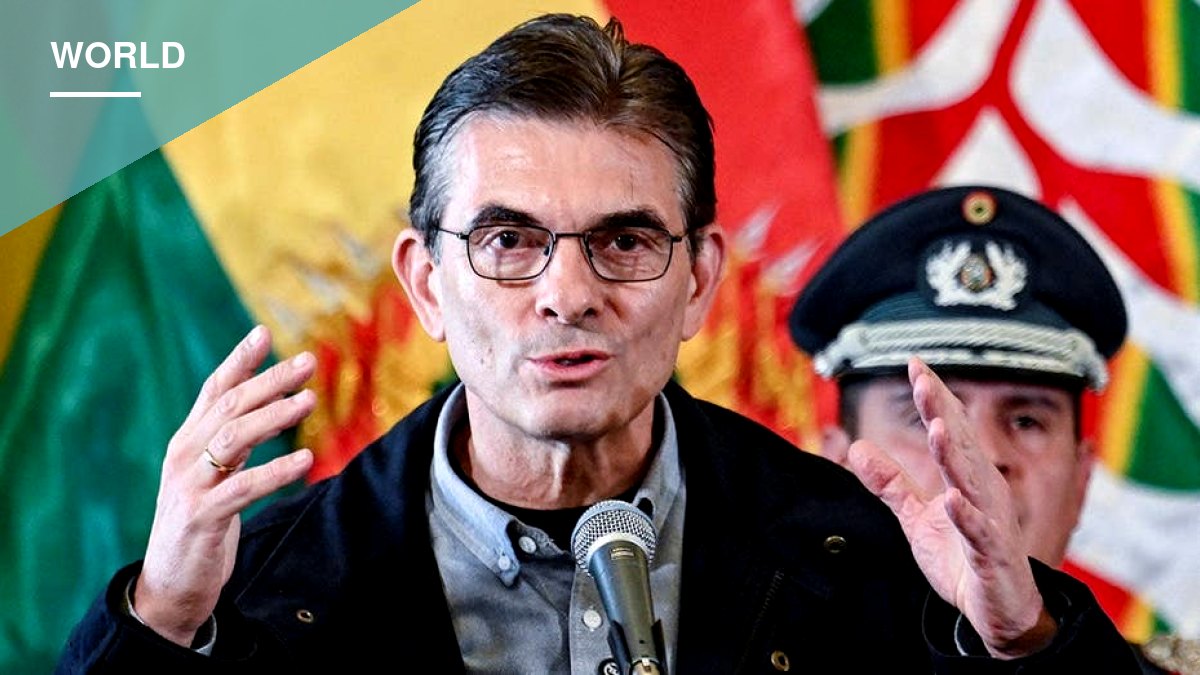
Bolivia’s new president, Rodrigo Paz, says his country is charting a sharp economic turn after nearly two decades of rule by the Movement Toward Socialism, pledging to open Bolivia to private investment while rebuilding the central bank’s depleted reserves.
In an opinion piece for Fox News, Paz wrote that when he took office, Bolivia’s Central Bank held only $51 million in reserves. Ten months later, he said, that figure had climbed to nearly $1.2 billion, with his government aiming to keep rebuilding it. He acknowledged that inflation remains high and fuel shortages continue to strain the population.
“Bolivia is putting its economic house in order,” Paz wrote, describing his economic philosophy as “capitalism for everyone” — access to capital, freedom to invest and build businesses, and room for entrepreneurship.
“Ideology does not put food on the table. Employment does. Production does. Investment does. Economic growth does.”
A Reset With Washington
Paz described recent talks in New York with Secretary of State Marco Rubio as reflecting “an important change” in relations between the two countries. He said Bolivia is seeking cooperation with the United States built on mutual respect, economic opportunity, security and investment, as the Trump administration renews its focus on the Western Hemisphere.
“Bolivia intends to engage constructively in that conversation while pursuing its own national interests,” Paz wrote.
Resources Without Repeating Old Mistakes
Paz pointed to Bolivia’s natural gas, agricultural capacity, forests and strategic minerals — including lithium, copper and tin — as major assets for global investors. But he was careful to frame the opening as conditional, writing that Bolivia does not want to repeat the pattern of countries that exported raw resources for decades while remaining poor.
“Bolivia is open for business. But opening our economy does not mean selling our future.”
He said Bolivia is seeking long-term partnerships centered on employment, training, technology, infrastructure and value creation inside the country, rather than simply extracting minerals for shipment abroad. His pitch to American and international investors, he wrote, is that Bolivia wants companies willing to “build, produce, employ, train, and grow alongside Bolivian workers and businesses.”
Social Commitments Alongside Growth
Paz said a stronger private sector does not mean abandoning social responsibility, citing goals of better jobs, stronger institutions, improved education, greater security and protections for forests, the Amazon and Indigenous communities. He also pointed to Bolivia’s young people, saying the country’s future depends on whether they can find work and opportunity at home.
“Not everything has been resolved. We are only beginning,” Paz wrote. “But Bolivia will not remain on its knees. We will stand up, move forward, and build again.”

