

An ophthalmologist is warning that several routine daily habits may be quietly damaging eye health long before age-related vision problems become obvious.
Dr. Douglas Lazzaro, a professor of ophthalmology at NYU Langone Health, told Fox News Digital that while genetics and aging remain the leading drivers of conditions like glaucoma and cataracts, a handful of everyday mistakes can accelerate their progression. Glaucoma damages the optic nerve, while cataracts cloud the eye’s lens, blocking light and blurring vision.
Unprotected Sun Exposure
Lazzaro pointed to research suggesting that long-term ultraviolet exposure may contribute to macular degeneration and worsen cataracts. In his own practice, he said cataracts are now appearing five to 10 years earlier than they did three decades ago, a shift he believes may be tied to UV exposure. He recommends wearing sunglasses in bright conditions to protect both the lens and the retina.
Reading in Poor Lighting
Straining to read in dim light can make it harder to focus, particularly as people age. “As we get older, our eyes have more difficulty seeing under certain lighting conditions,” Lazzaro said, noting that older adults often struggle more to adjust to darker environments. “If you’re going be reading, and it’s not a bright, sunny day outside, or you’re not inside with bright lights, you should increase the lighting,” he advised.
A Poor Diet
A nutrient-poor diet may raise the risk of diabetes and cardiovascular disease, both of which can damage vision. “Diet is important,” Lazzaro said. “There’s certainly a lot of known data about poor diets [contributing] to poor cardiovascular health, and that same thing can apply with the eye.” He noted that high cholesterol and high blood pressure can worsen diabetic eye disease even when patients are unaware those conditions are affecting their sight. Researchers are also studying whether gut health influences retinal health, though that link is still being explored.
Dehydration
Dry eye, marked by red, itchy, irritated eyes from reduced tear and oil production, becomes more common with age and can be worsened by dehydration. Lazzaro said staying hydrated helps keep the cornea properly moisturized. “We always tell our patients, particularly in the summer, if they’re going out on a hot day … make sure to hydrate, because not only will it dry out the body … but it can dry out your corneas,” he said.
Poor Sleep
Lazzaro said there is “good evidence” that inadequate sleep, especially among people with sleep apnea, is linked to increased eye pressure and higher rates of glaucoma and certain vascular eye conditions. “They also have an increased incidence of vascular phenomena in the eye … People who don’t sleep well have fluctuations in their circulation at night,” he said.
Rubbing Your Eyes
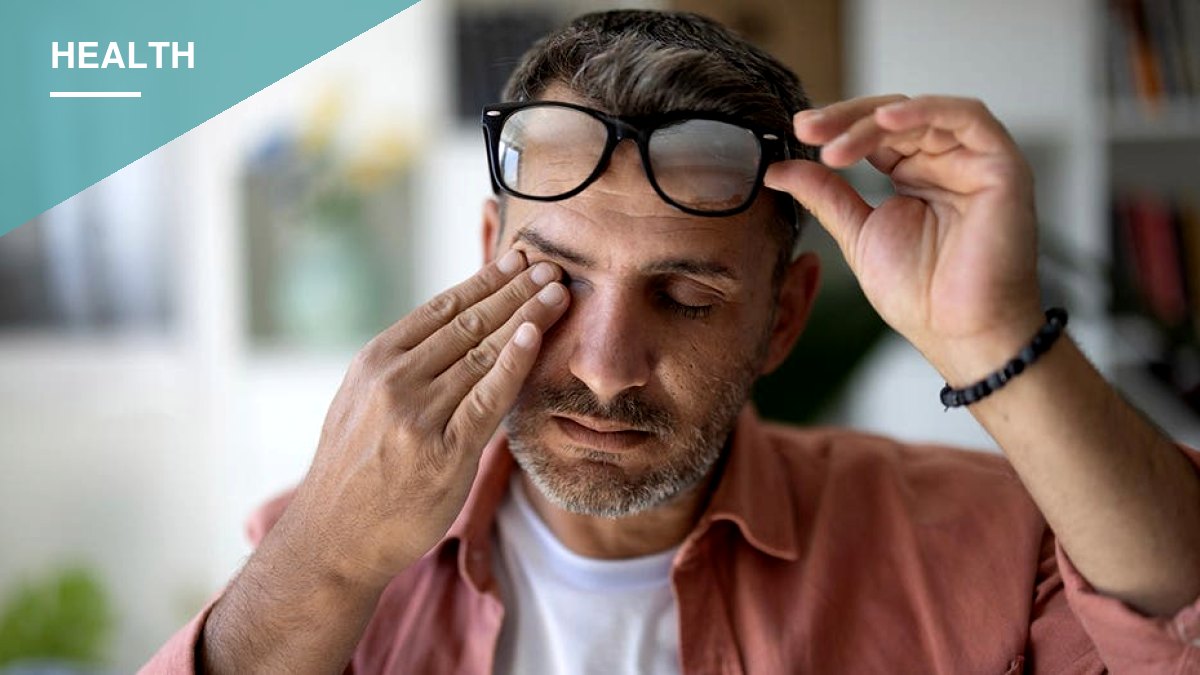
Frequent eye rubbing is considered a risk factor for keratoconus, a progressive disease in which the cornea domes and bulges into a cone shape, though experts disagree on whether rubbing directly causes it. Lazzaro noted that patients with keratoconus often rub their eyes frequently, and repeated rubbing can potentially alter the cornea’s shape — a key reason he “strongly” advises against the habit.
Skipping Eye Exams
Because glaucoma often develops without symptoms, a comprehensive eye exam is frequently the only way to catch it early. “Its nickname is ‘the silent thief of sight,'” Lazzaro said. “Sometimes the only way you know you have glaucoma is by going to the ophthalmologist. It’s a disease that we see with increasing frequency as we get older.”
Lazzaro recommends annual eye exams for adults rather than waiting for age-related vision changes to appear, including presbyopia, the gradual loss of near-focus ability that commonly develops in middle age. “Patients will come in at some point, usually between 40 and 50, and say they can’t see up-close anymore; it happened overnight,” he said. Annual visits should also include screening for skin cancer and eyelid tumors, which become more common with age. “Most of them can be removed locally without a big problem if diagnosed early,” he added.

