

The State Department announced sanctions Thursday against BICSA, a Havana-based bank controlled by Cuba’s communist government, for providing services to Iran’s Karafarin Bank, which the United States has sanctioned since 2020.
Secretary of State Marco Rubio said BICSA — Banco Internacional de Comercio S.A., founded by the Castro regime in 1993 to handle import-export and other banking functions — has serviced Karafarin Bank since at least 2022. Karafarin was among 18 major Iranian banks sanctioned by the United States in October 2020, during President Trump’s first term, in an effort to cut off Iran’s illicit access to U.S. dollars.
“President Trump has been absolutely clear: under his administration, the United States will not tolerate terrorism, organized crime or extra-hemispheric forces spreading anti-American influence in our region,” Rubio said in announcing the sanctions. “For too long, Communist Cuba has been allowed to operate as an outpost for malign actors and terror groups – including the Islamic Republic of Iran, the world’s number one state sponsor of terrorism – to target the United States.”
Cuba has long been designated a State Sponsor of Terrorism by the U.S. government over its support for Iran and other groups, including Hezbollah, Hamas, and Colombia’s FARC and ELN.
Rubio added that the administration “will continue to aggressively identify and eliminate the Cuban regime’s financial and security interconnections with Iran and other dangerous and hostile states and actors,” and said the U.S. “will not tolerate a rogue state hosting hostile foreign military, intelligence and terror operations less than a hundred miles from the American homeland.”
Havana Pushes Back
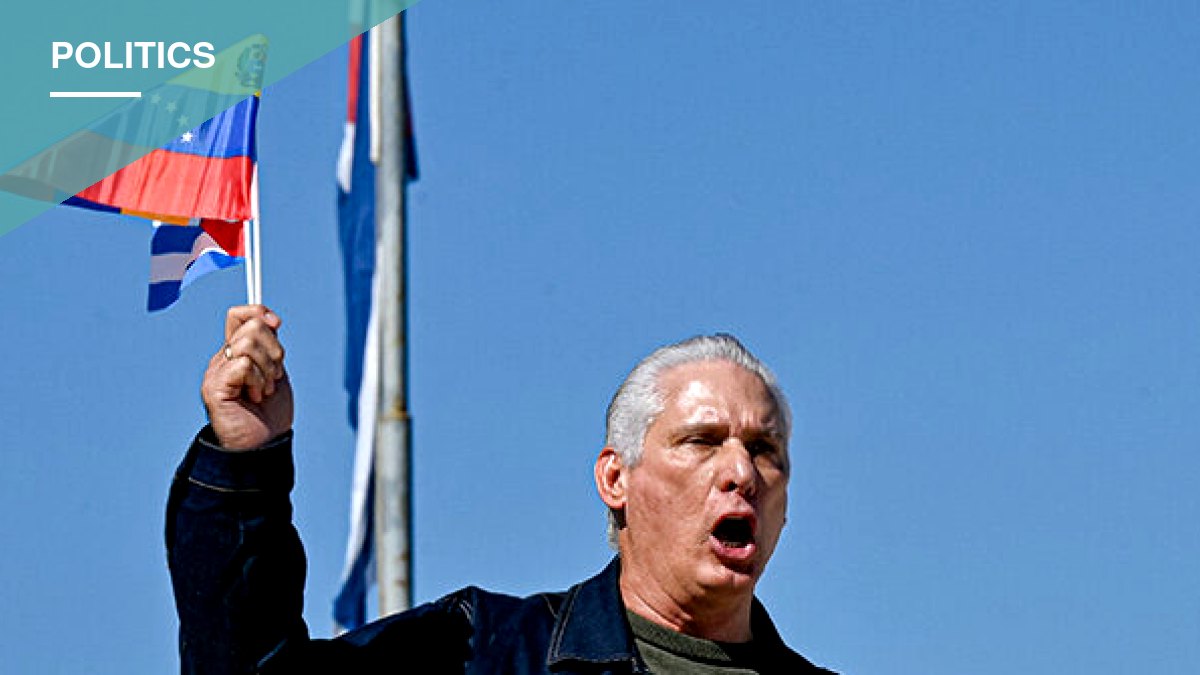
Cuba’s government rejected the move. Miguel Díaz-Canel, the island’s president, called it part of an ongoing “economic and multifaceted war” against Cuba. “Today the target is the BICSA Bank, in an additional effort to attack the Cuban people, sabotage the country’s economic performance, and reinforce the criminal collective punishment against our people,” he wrote on social media Thursday.
Cuban Foreign Minister Bruno Rodríguez Parilla described BICSA as a “legitimate bank whose transactions in Cuba and the world are also absolutely legitimate,” and said the sanctions were “evidence of the criminal determination to apply the maximum punishment against the Cuban people” and an attempt to “shut down every relief valve” for Cuba’s economy.
Wind-Down Period and Compliance Warning
The Treasury Department’s Office of Foreign Assets Control said there is roughly a one-month wind-down period running through November 14, 2026, before the U.S. government begins targeting foreign persons and foreign financial institutions that continue dealing with BICSA.
OFAC nonetheless warned non-U.S. persons and foreign financial institutions to “proceed with caution” in any dealings with the bank and recommended that those unable to exit transactions with BICSA, or any entity it owns, contact the office directly.
“Persons subject to U.S. jurisdiction have long been prohibited from transacting with BICSA, a Cuban State-Owned entity, absent OFAC authorization,” the office said, adding that U.S. persons remain barred from engaging in transactions involving BICSA — including helping foreign parties wind down their own activities with the bank — without separate authorization.
The action is the latest in a string of sanctions the Trump administration has imposed on Cuban state institutions as part of a broader pressure campaign against the island’s communist government.

