

Much of the 2026 midterm coverage has focused on which party will control Congress. But a wide set of state-level races—governorships, secretaries of state, attorneys general, and state legislatures—will have a direct and often more immediate effect on how Americans are governed, particularly in battleground states.
State governments set policy on education, medical freedom, immigration enforcement, redistricting, and tax policy, areas where decisions made in state capitals often reach residents faster and more directly than anything passed in Washington, D.C.
Arizona’s Statewide Contests
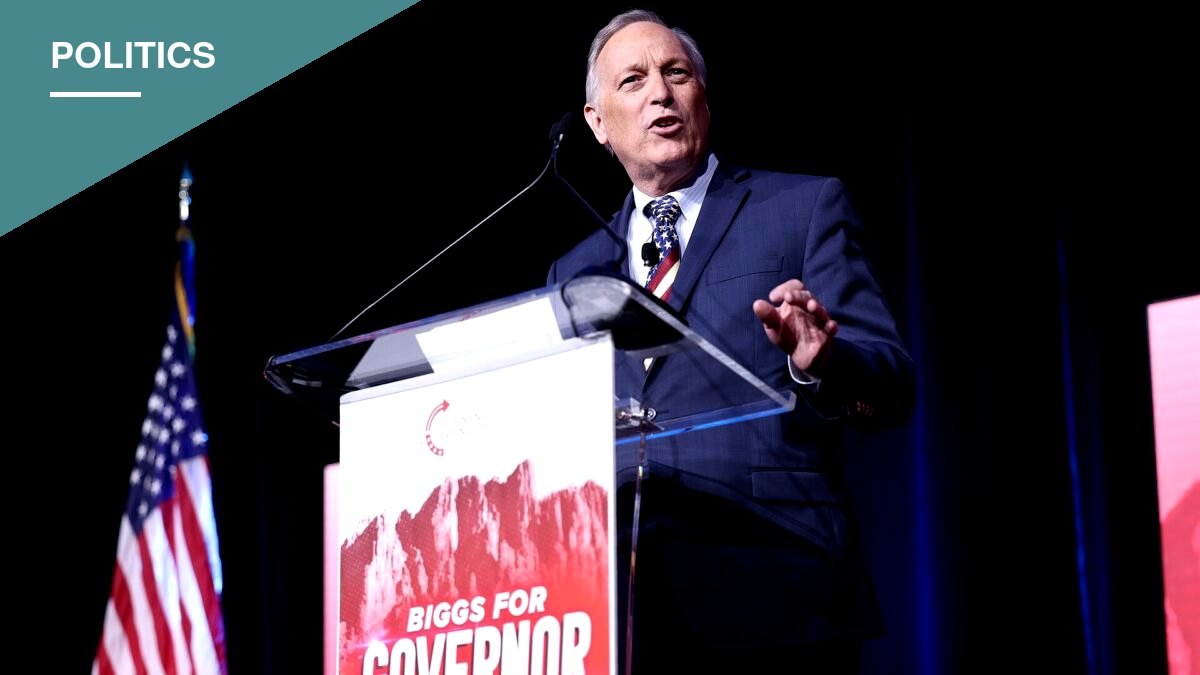
Arizona offers a clear example of what’s on the line. Although President Trump carried the state in 2024, Democrat Gov. Katie Hobbs has repeatedly vetoed conservative-backed legislation on election integrity, vaccine mandates, and other issues passed by the Republican-controlled state House and Senate. Hobbs is seeking reelection against Republican Andy Biggs, a member of the U.S. House Freedom Caucus.
The state’s top election post is also contested. Democrat Secretary of State Adrian Fontes faces Republican Alex Kolodin, a member of the Arizona Freedom Caucus. Fontes has been the subject of lawsuits over his conduct as elections chief; last year a state appellate court ruled he violated Arizona law when drafting the 2023 election rulebook that guides local officials on mail ballots and voter registration.
Arizona’s attorney general race pits Democrat incumbent Kris Mayes against Republican State Sen. Warren Peterson. Mayes has pursued an ongoing legal effort against Arizona’s 2020 Trump electors, a case critics describe as using the office to target political opponents.
Arizona voters will also decide other statewide offices, municipal races, and ballot initiatives in 2026.
Beyond Arizona
Arizona is one of many states holding consequential down-ballot elections in 2026. Georgia, Iowa, Michigan, Nevada, Ohio, Pennsylvania, and Wisconsin—all presidential battlegrounds—have key state offices on the ballot, as does North Carolina, which will hold state legislative elections and a state Supreme Court race.
These races determine not only who writes a state’s laws but who enforces them and who runs its elections—authority that shapes daily life well beyond whatever happens in Congress.
Congressional control remains significant, and the consequences of a Democratic-controlled Congress are real. But the governments closest to voters carry their own weight, and the 2026 cycle offers Americans a direct chance to decide who holds that power in their own states.

