

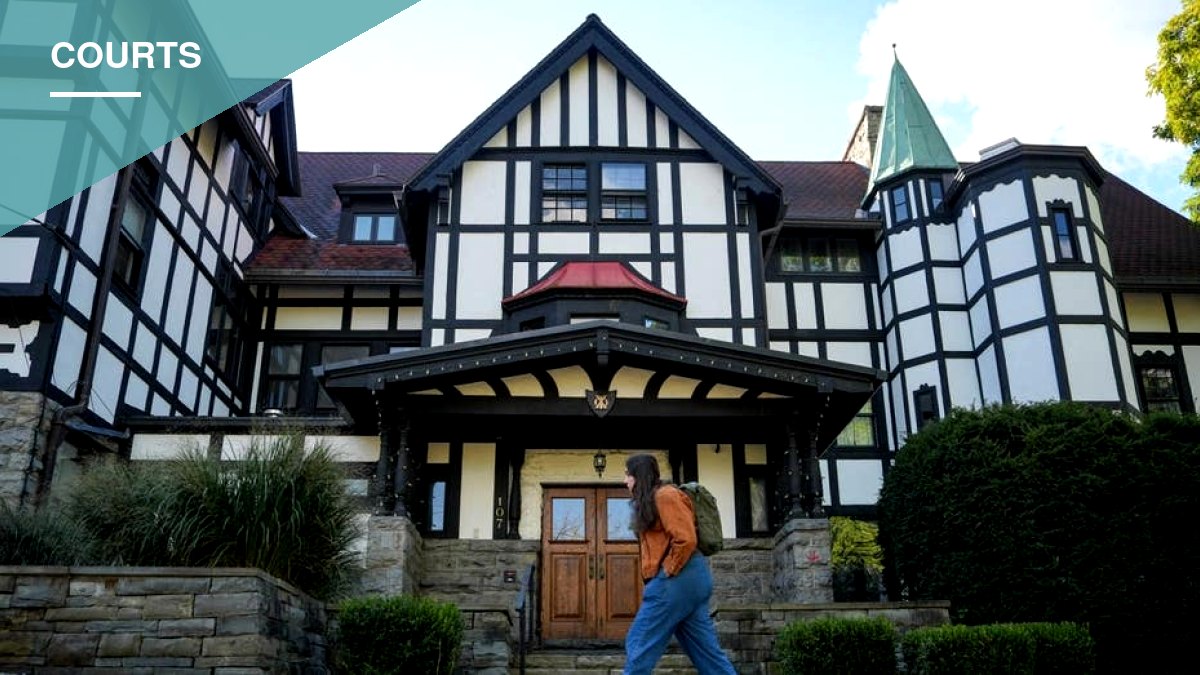
A New York judge has ruled that the former Cornell University student suing members of the Chi Phi fraternity over rape allegations may continue to identify herself in court only as “Jane Doe,” while cautioning that anyone who threatens or harasses people connected to the case could face federal prosecution.
State Supreme Court Justice Phaedra Perry-Bond issued the order Friday in the civil case, which is being heard in Tompkins County. Doe had told the court that being publicly named could expose her to “retribution and retaliation,” damage her social life and career, and bring shame on her family. She also said she fears her family could be put in danger if her identity became known, and that she has “experienced extreme anxiety, depression, and insomnia” since the alleged assault.
None of the defendants opposed her request to keep using a pseudonym, according to the order.
Justice Perry-Bond found that Doe’s privacy interests outweighed the usual presumption that court cases be conducted in the open, pointing to “the notoriety of the allegations” and “the widespread reports of certain malicious actors’ behavior in attempting to threaten and retaliate against anyone tangentially involved in this case.”
In an unusual addition to the order, the judge warned that harassing or threatening Doe, the defendants, or the attorneys handling the case could amount to a federal crime carrying the risk of prosecution. She also said allowing Doe to proceed under a pseudonym would protect her identity without resorting to broader restrictions, such as sealing the case file or closing the courtroom to the public.
While Doe’s name will stay out of public filings, the individually named defendants will continue to be identified. The judge did say that sensitive personal details about the defendants, including home addresses, phone numbers and email addresses, should also be shielded, and she invited the parties to propose a joint arrangement extending similar protections to defendants and others tied to the case.
The underlying allegations
Doe filed the lawsuit in September, accusing seven former Chi Phi fraternity members of drugging and raping her overnight on Oct. 19, 2024, into the following morning. The complaint also names the fraternity, Cornell University, and the bar Doe visited that night.
According to the complaint, Doe was already intoxicated when she arrived at the fraternity house, where she alleges the men pressured her into taking ketamine and other substances. The accused men have denied wrongdoing; some say any sexual activity was consensual, while others deny any involvement at all.
Cornell suspended the fraternity on Nov. 8, 2024, the same day Doe reported the allegations to campus police, the complaint states.
A reopened criminal investigation
Tompkins County’s local prosecutor, Matthew Van Houten, initially declined to bring criminal charges, saying Doe’s sworn statement from November 2024 did not allege she had been drugged against her will or gang-raped. Van Houten has said that statement described her participation in drug use and sexual activity as “voluntary, conscious, and consensual.”
CBS New York later obtained transcripts of Cornell police interviews with Doe conducted Nov. 14 and 15, 2024, in which she told investigators, “I can say with 100% confidence I was raped.” Van Houten has said he was never given the full transcript. Late last month he announced his office was reopening the investigation after finding that allegations in Doe’s civil lawsuit differed from her earlier sworn statement.
Days after Van Houten reversed course, Gov. Kathy Hochul removed him from the case, citing a lack of confidence in his judgment, and appointed state Attorney General Letitia James as special prosecutor.
That appointment has become its own flashpoint. Several defendants have sought James’ removal, alleging bias tied largely to a social media post she made shortly before her appointment, which they say showed sympathy for Doe. On Thursday, James filed a response arguing the defendants lack standing to challenge her appointment and that, regardless, the governor has the authority to name a special prosecutor.
A separate motion from one defendant, a former fraternity member, asks the state Supreme Court to bar James from any future grand jury proceedings, arguing her public comments have prejudiced potential jurors and compromised the fairness of the process. That motion remains pending.

