

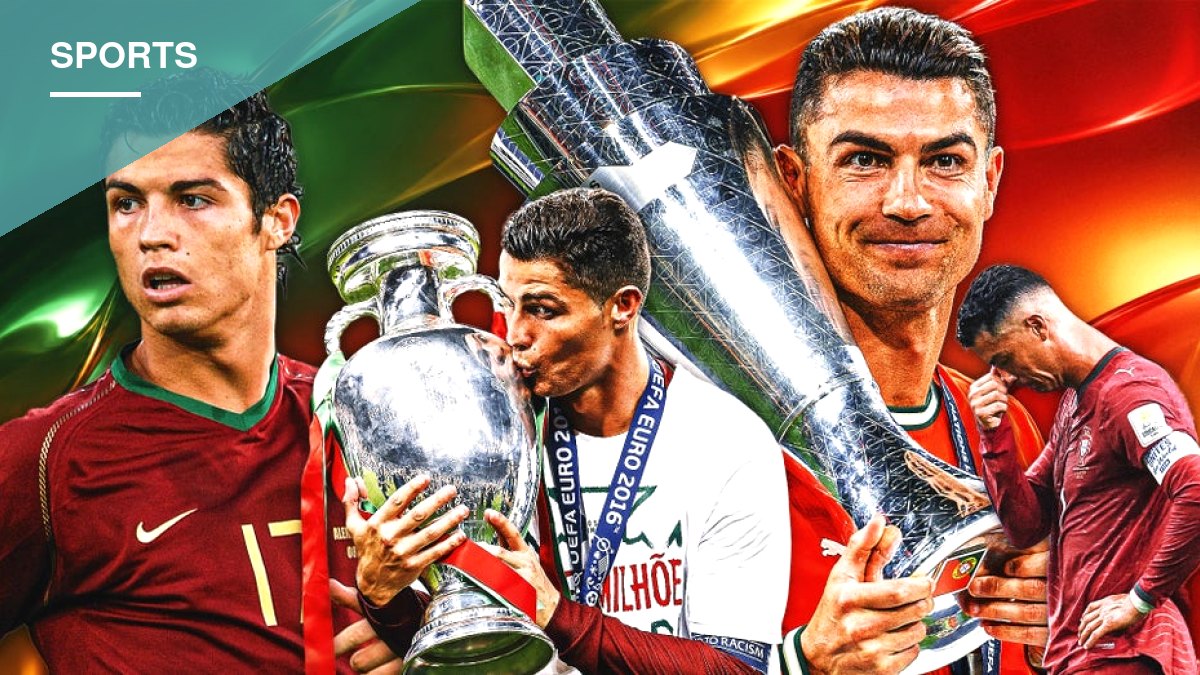
Cristiano Ronaldo is retiring from international football with Portugal, ending a 23-year run that produced more goals and more caps than any player in the history of the men’s game.
Ronaldo finishes his Portugal career with 146 goals in 234 appearances, the most international caps of any male player on record. He scored at least one goal for Portugal in every calendar year from 2004 through 2024, a stretch of 23 straight years.
His tournament résumé is similarly unmatched. Ronaldo is the only player to appear in six European Championships, and alongside Lionel Messi and Guillermo “Memo” Ochoa, one of only three men to feature in six World Cups. Messi and Ronaldo are the only two players to have appeared in every match of each World Cup they played. Across the Euros and World Cup combined, Ronaldo scored 25 goals, a record no other player holds.
Ronaldo led Portugal to its first major trophy in 2016, when the team beat host nation France 1-0 to win the European Championship. He never won a World Cup, a gap in his record that persisted through six tournament appearances with the national team.
His final stretch with Portugal was marked by friction. Ronaldo had a reported altercation with national team manager Jorge Jesus after leaving a previous training camp, which he followed with a lengthy statement posted to social media.
A career built on numbers
Ronaldo, a five-time Ballon d’Or winner, was born on the island of Madeira and left home at age 12 to join Sporting CP’s youth academy in Lisbon. At 15, he was diagnosed with tachycardia, an abnormally fast heart rate, and underwent surgery to correct it before going on to build the career now ending at the international level.
He continues to play club football for Al-Nassr in Saudi Arabia, where he is pursuing 1,000 career goals.
Ronaldo’s full name is Cristiano Ronaldo dos Santos Aveiro; his father named him Ronaldo after former U.S. President Ronald Reagan.
His retirement from the national team closes out a rivalry with Messi that spanned nearly two decades and is widely regarded as one of the defining individual rivalries in the history of sport.

