
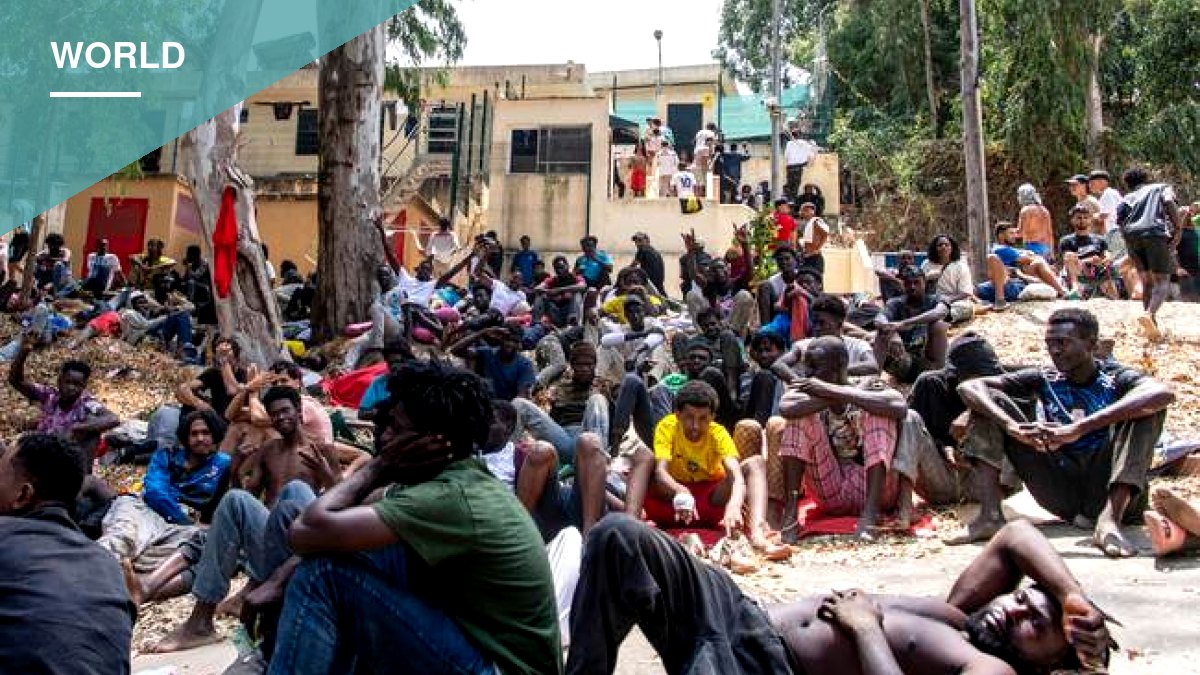
Nearly 3,200 migrants arrived in Spain’s Canary Islands over a three-day span this week, prompting the national government to declare a state of emergency and move to transfer new arrivals to the mainland.
The Canary Islands, roughly 60 miles off the West African coast, have for years served as a primary entry point for migrants making the Atlantic crossing in small, often overcrowded boats. On Saturday alone, around 1,580 people reached the islands aboard 15 vessels, setting a new single-day record. Spain’s Maritime Rescue Service said it had assisted 1,324 people in that period, with most landing on El Hierro, the smallest of the inhabited Canary Islands and home to a population of roughly 12,000.
One boat that arrived Saturday carried 240 people, including 12 women and 36 children, according to authorities. Most of those aboard came from Senegal, Gambia and Guinea.
In response to the surge, Spain’s central government has allocated a €15.8 million emergency package intended to help move migrants off the islands and onto the mainland, easing pressure on local infrastructure in places like El Hierro that are poorly equipped to absorb thousands of new arrivals in a matter of days.
The scale of the recent influx — nearly matching the population of El Hierro itself in migrant arrivals over three days — has reignited debate in Spain and across Europe over how national governments should respond to sustained irregular migration by sea, and what obligations, if any, follow once migrants reach European shores.