

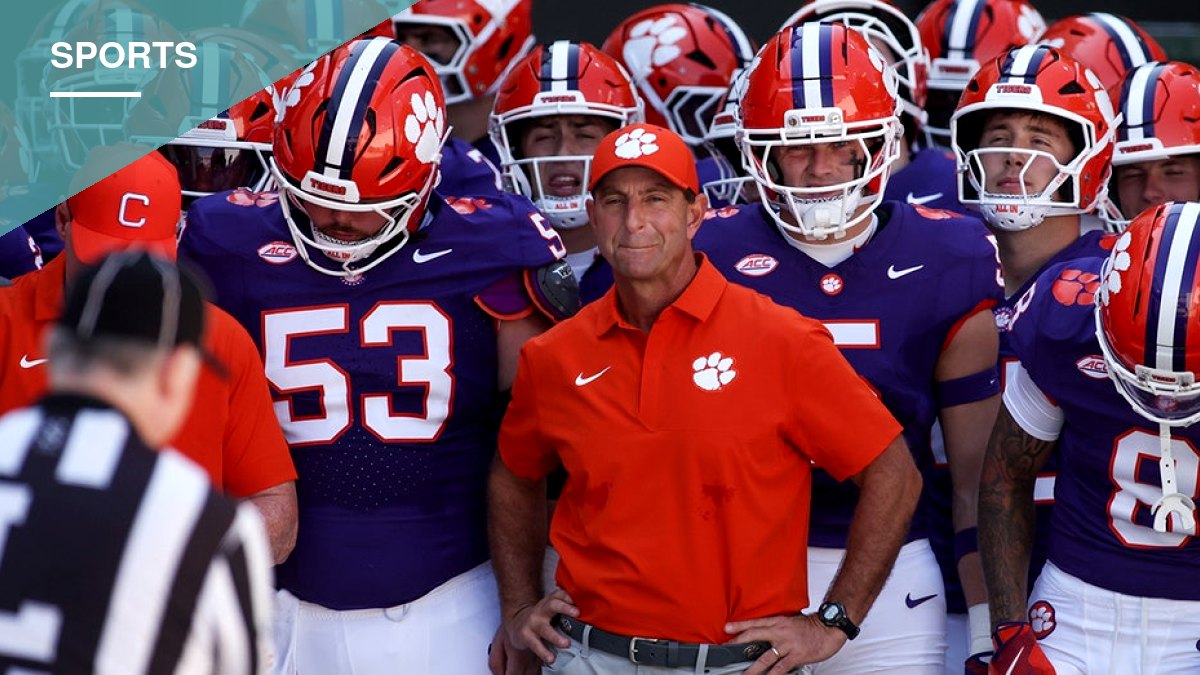
A 20-10 road win over Duke on Friday night did little to quiet speculation that Dabo Swinney’s tenure as Clemson’s head football coach is nearing its end, despite the result snapping a run of frustration for the program.
Clemson entered the game 6-4, coming off a loss to Georgia Tech, and had struggled to generate offense throughout the 2026 season. The win over the Blue Devils was seen by some as a potential turning point heading into 2027. But a closer look at recent college football history suggests the opposite may be true.
Swinney, a two-time national championship-winning coach, has faced mounting criticism for his reluctance to make full use of the transfer portal as rival programs across the sport adapted their roster-building strategies around it. That decision has been widely cited as a central factor in Clemson’s decline from perennial College Football Playoff contender to also-ran status in the ACC.
History offers several examples of coaches notching a notable win shortly before being dismissed. Last year, Billy Napier’s 1-3 Florida team upset a top-ten Texas squad in Gainesville. That win bought Napier roughly two weeks before he was fired ahead of Florida’s bye week.
Jimbo Fisher was fired in 2023 following a blowout win over Mississippi State, with his team holding the same 6-4 record Clemson carried into Friday’s game. And in 2006, Larry Coker, who had won a national title at Miami in 2001, was fired shortly after a win over a top-20 Boston College team that secured bowl eligibility for the Hurricanes late in the season.
A championship pedigree has not historically shielded coaches from dismissal once a program’s trajectory turns. For Clemson, the offensive issues that have defined the season were still evident even in Friday’s victory, with the Tigers managing only a ten-point fourth-quarter surge to secure the win.
Based on that pattern, Friday’s win may not represent stability for Swinney, but rather a familiar precursor to a coaching change.

