
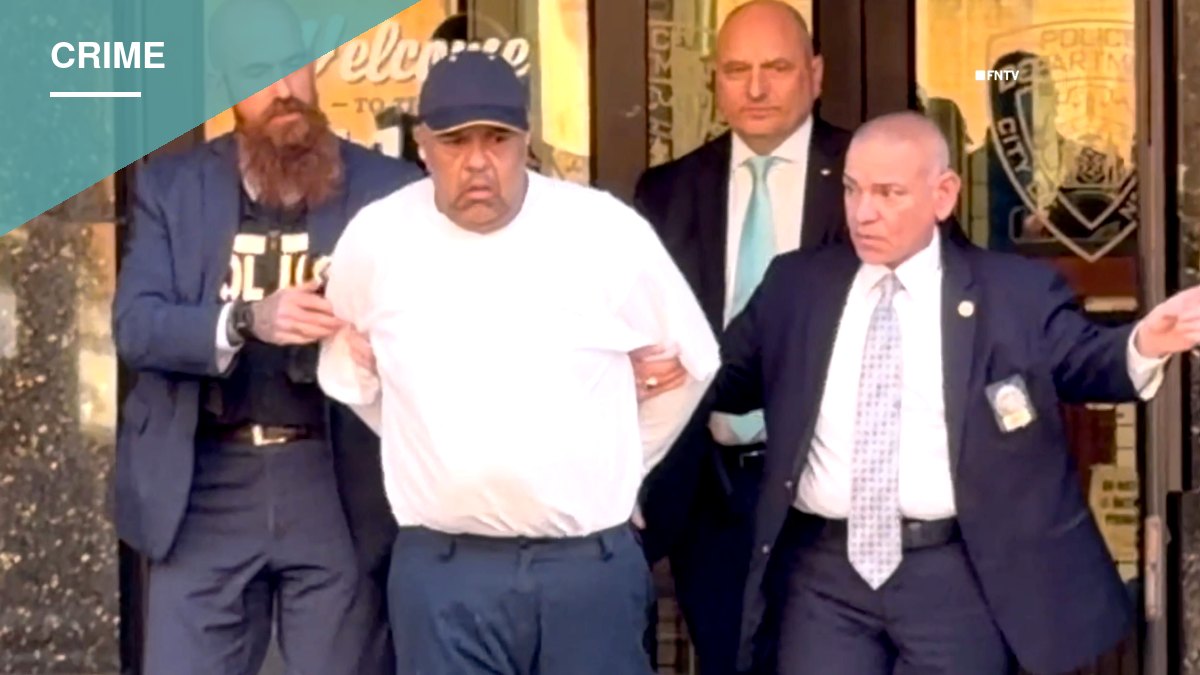
A South Carolina man has been indicted in the nearly two-decade-old murder of a Queens woman, after investigators say advanced genetic genealogy testing and a discarded cup linked him to blood found at the crime scene.
Javier Segarra, 47, is accused of beating Martha Vega, 51, with a hammer and strangling her to death in 2007, according to the Queens District Attorney’s Office. Vega was found dead in the bathroom of her Ridgewood apartment on Sept. 10, 2007. Prosecutors said there were no signs of forced entry.
“For almost two decades, Martha Vega’s murder went unsolved, but she was never forgotten,” Queens District Attorney Melinda Katz said in a statement.
Prosecutors said Segarra’s mother was friends with Vega, and that he occasionally did odd jobs for her. At the scene, investigators recovered two blood samples — one belonging to Vega, the other to an unidentified man — along with DNA recovered from under the victim’s fingernail.
The case went unsolved for years until May 2022, when the Queens DA’s office and the NYPD partnered with the forensic genealogy firm Othram Inc. to build a genetic profile from the unknown male’s blood. Using that profile, the DA’s cold case unit constructed a family tree that eventually pointed to Segarra, who by then was living in Newberry County, South Carolina.
In May, NYPD investigators traveled to South Carolina and surveilled Segarra before recovering a cup he had thrown away, prosecutors said. DNA from the cup matched the sample collected from the 2007 crime scene.
Othram’s genealogical techniques have been used in other high-profile cases, including the identification of Karen Vergata as the eighth known victim of Long Island serial killer Rex Heuermann, according to a report.
Segarra was arrested on Nov. 4 and extradited to New York, where he was arraigned Tuesday on a murder indictment and pleaded not guilty. He was remanded into custody.
His attorney, Garnett Sullivan, said he plans to examine the DNA evidence used in the investigation. Sullivan said Segarra told police during an interview that he knew Vega but denied killing her. According to Sullivan, Segarra worked as a security guard in New York for several years before more recently working as a cleaner in South Carolina.
“Advances in DNA technology helped identify the suspect who has now been indicted for murder,” Katz said. “I empathize with families who struggle, sometimes for years, without knowing what happened to their loved ones.”