
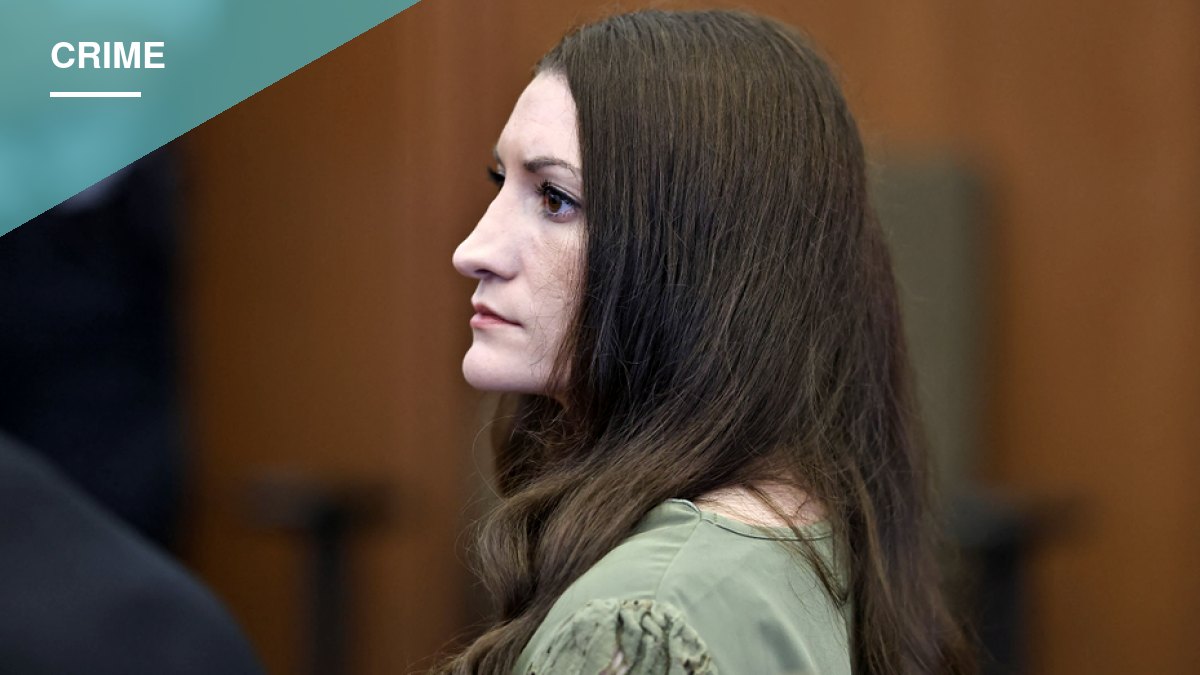
The Massachusetts Supreme Judicial Court has refused to pause the murder retrial of Lindsay Clancy, rejecting a request from Plymouth County prosecutors who wanted proceedings halted while the state’s highest court weighs a double jeopardy challenge from her defense team. Jury selection is set to begin March 29.
Clancy, 36, is charged with strangling her three young children — Cora, Dawson and Callan, all under age 6 — at the family’s home in January 2023. Her first trial ended in a mistrial on Sept. 4 after jurors deadlocked 11-1, prompting Judge William Sullivan to discharge the panel.
Assistant Plymouth County District Attorney Melissa Johnsen had filed a motion Monday arguing it would be “ambitious” to expect the full court to rule on the double jeopardy appeal before jury selection starts. “The full Court will presumably determine whether such a retrial will violate the defendant’s double jeopardy rights,” Johnsen wrote. “As such, it makes little sense to move forward with proceedings intended to bring the defendant to a trial, where this Court may ultimately decide that a retrial is barred by double jeopardy.”
The Supreme Judicial Court denied the motion without explanation.
Clancy’s attorneys, Kevin Reddington and Martin Weinberg, opposed any delay, telling the court “she wants to keep her trial date.” They also pointed to the human cost of waiting, noting “the cost of a stay would fall on Ms. Clancy, who is held without bail.” Prosecutors, for their part, had argued a pause would “forego any additional expense and effort” already underway in trial preparations.
Double Jeopardy Claim at the Center
Clancy’s lawyers argue in their pending appeal that Sullivan declared the mistrial unnecessarily and that putting her through a second trial would violate her constitutional protection against being tried twice for the same alleged crime — a safeguard at the heart of American due process.
Jack Lu, a retired Massachusetts judge, had previously told Fox News Digital he considered the prosecution’s request for a pause reasonable, citing the tight timeline. “The prosecution’s position is probably based on the difficulty of deciding a full bench appeal and getting ready for trial No. 2 so quickly,” Lu said. “I see this as a reasonable request, and the parties have not even publicly stated, after setting the actual trial date, that they will really be ready.”
The case also carries a long-term wrinkle: Judge Sullivan is due to retire in June 2027 upon reaching Massachusetts’ mandatory judicial retirement age of 70.
With the high court’s denial, both sides now head toward jury selection next month while the double jeopardy question remains unresolved before the same court.