

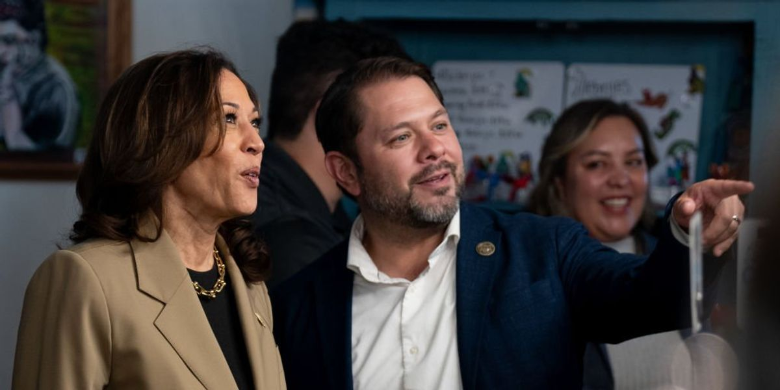
Rep. Ruben Gallego (D-AZ), currently running for a U.S. Senate seat against Republican Kari Lake, might soon face revelations about his personal life that could shake up the race. Gallego, who is leading Lake by as much as 13 points in recent polls, is under scrutiny as the Arizona Supreme Court has ruled to unseal his 2017 divorce records. This decision could bring potentially damaging information to light, just as early voting has begun.
The move to unseal the records was initiated by The Washington Free Beacon, which filed a motion in January to make the details of Gallego’s divorce from his ex-wife, Phoenix Mayor Kate Gallego, public. The couple’s divorce has drawn attention not just because of their public roles but also due to the circumstances surrounding it—Gallego left his wife when she was nine months pregnant, raising eyebrows about what might be contained in the sealed records.
On Wednesday, just days after Kari Lake publicly questioned, “Arizona deserves to know what he’s hiding,” the Arizona Supreme Court ruled that the divorce records must be released. This decision comes after months of legal back-and-forth, with Gallego and his ex-wife fighting to keep the documents sealed. The records are expected to be made public by the end of the week, sparking speculation about what they could reveal.
The Free Beacon has pointed out the unusual secrecy surrounding the Gallegos’ divorce. While divorce records are typically available to the public in Arizona, the entire docket of Gallego’s divorce has been sealed—an extremely rare occurrence in the state. The fact that both Ruben and Kate Gallego are public figures has fueled interest in the case, with many questioning why these records were kept from public view in the first place.
Adding to the intrigue, the couple’s divorce was filed not in Maricopa County, where they lived, but in Yavapai County, a decision that has raised further questions. Arizona law generally requires divorces to be filed in the county where the couple resides, making this choice of venue highly unusual.
For Rep. Gallego, the timing of this decision could not be worse. As the 2024 Senate race heats up, this revelation has the potential to impact voter perception, especially in a tight race against a high-profile opponent like Kari Lake. The fact that Gallego’s campaign has integrated aspects of his personal life, including his divorce, into his political narrative makes the content of these records all the more relevant to the public.
Kari Lake and her campaign have wasted no time in highlighting the potential fallout from this development. Lake tweeted just days before the ruling, hinting at Gallego’s past: “What’s he hiding? Arizona deserves to know.”
Gallego and his ex-wife have fought hard to keep the divorce records under wraps, citing concerns about privacy and the potential impact on their minor child. Despite these arguments, Yavapai County Superior Court Judge John Napper ruled in July that the records should be unsealed, allowing Gallego the opportunity to propose redactions.
Gallego’s legal team proposed a number of redactions, but Judge Napper rejected many of them, ordering a version of the record to be filed publicly. Gallego appealed the ruling, and in late July, the state Court of Appeals granted a temporary stay, halting the release of the records while the appeal was being considered.
However, this stay was lifted on October 17, prompting Gallego’s lawyers to seek intervention from the Arizona Supreme Court. In their argument, the couple’s lawyers insisted that unsealing the records would cause irreparable harm to their privacy and safety rights.
In a unanimous decision, the Arizona Supreme Court rejected the Gallegos’ request to keep the records sealed. Justice Clint Bolick, writing for the court, stated, “The court concludes that the Gallegos have not established a strong likelihood of success on the merit. Nor have they established irreparable harm with any degree of specificity if the stay is not granted.”
This decision paves the way for the records to be unsealed in the coming days, just as early voting for the Arizona Senate race has begun.
Attorneys for The Washington Free Beacon argued that the public has a right to access these records, especially given the high-profile nature of both individuals involved. Michael Edney, the attorney representing the Free Beacon, stressed that the media and voters need access to the records before Election Day: “That process will mean the media and the electorate get nothing from these presumptively public records until after all votes are cast.”
Edney further argued that Rep. Gallego should not be entitled to special privileges in keeping the records sealed, especially since he is a public figure running for higher office. He noted that the press and the public have a “heightened First Amendment interest” in the court records of elected officials.
With the Arizona Supreme Court’s ruling, Rep. Gallego will have to brace for the release of the divorce records, which could contain information damaging to his Senate bid. While Gallego has been urging voters to submit early ballots, the unsealing of his personal records could change the dynamics of the race as voters gain access to new information about his past.
As the clock ticks down to Election Day, the forthcoming revelations could either solidify his lead or give Kari Lake the ammunition she needs to close the gap.

