

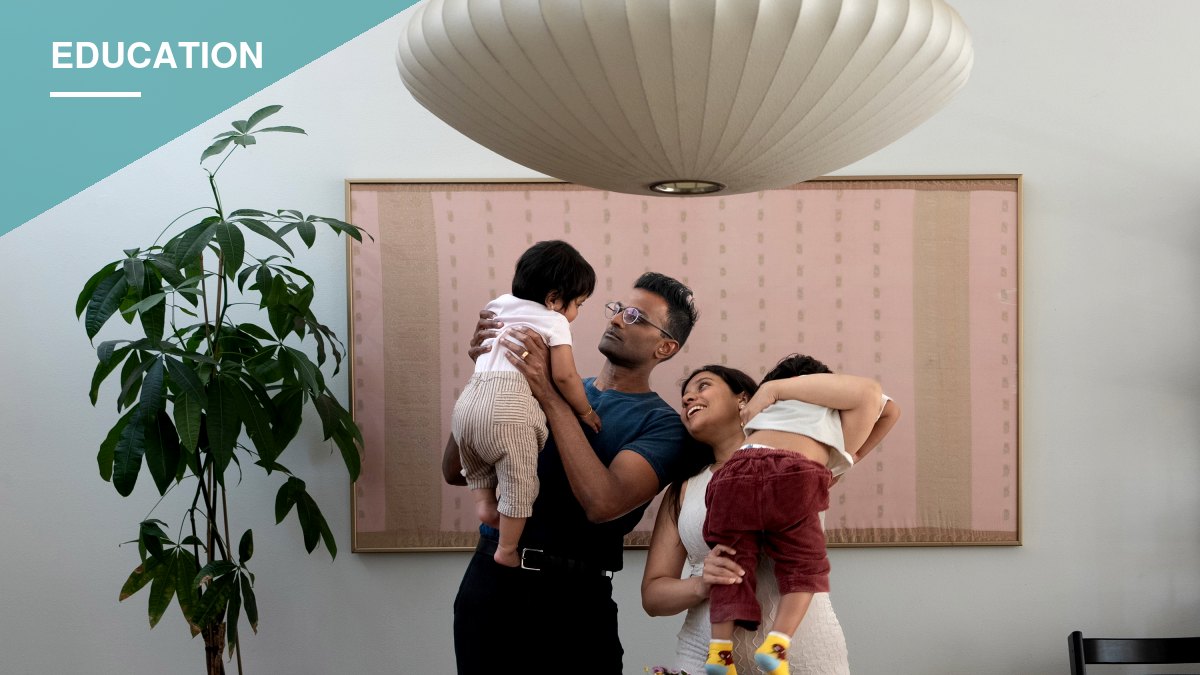
A growing number of Silicon Valley families are pulling their children out of traditional classrooms and building custom, AI-assisted homeschooling programs instead, part of a broader national shift away from institutional education.
Mrugesha Sathappan, a 32-year-old mother of three in San Francisco’s Nob Hill neighborhood, is among a small but expanding group of Bay Area parents experimenting with tech-driven home education for preschool and elementary-age kids. She says the goal is giving children the “agency” to adapt to an uncertain future.
“I just want to be able to pay as much attention as possible to what my kids are learning, what are the values they’re learning — whether that is, being adaptable, being kind, being useful,” Sathappan said. “It’s not so much about getting a job in the future. It’s more about how do I make this individual adaptable to whatever comes next.”
A typical day for her preschool-age son includes about 20 minutes of phonics or math, paired with projects and outings to museums, parks or tech offices, sometimes alongside other homeschooled children. Sathappan and her husband, investor Kartik Sathappan, have started a meetup group for families pursuing similar paths.
The couple uses AI to build custom phonics and STEM games and organizes what they call “child led” field trips. Kartik described his son’s recent interest in rockets: “He recently picked up being into rockets. So we just bought him like a rocket kit … and we’re going to build this rocket that can go like, 500 ft into the air. You can’t really do when you’re in school.”
The Sathappans argue that conventional schools can stifle creativity through repetitive tasks and long stretches of sitting still, rather than the hands-on problem-solving they believe builds independence.
A National Trend
San Francisco AI researcher Brady Neal, who also homeschools, put it plainly: “Schools can be disrespectful of kids’ time, and [parents] want their time to be used widely.”
Kartik Sathappan, 34, also has a financial interest in the movement as an investor in alternative education companies through his fund, Families Fund. He says he’s seeing a rising number of ordinary parents who got an unusually close look at their kids’ schooling during the COVID pandemic and decided to take it on themselves.
The numbers back up the shift. According to the nonprofit EdChoice, homeschooling has grown from about 3% of American children in 2019 to more than 6% today, making it the fastest-growing form of alternative education nationally. In California specifically, public school enrollment dropped by 612,000 students between 2015 and 2025 as charter schools and

