

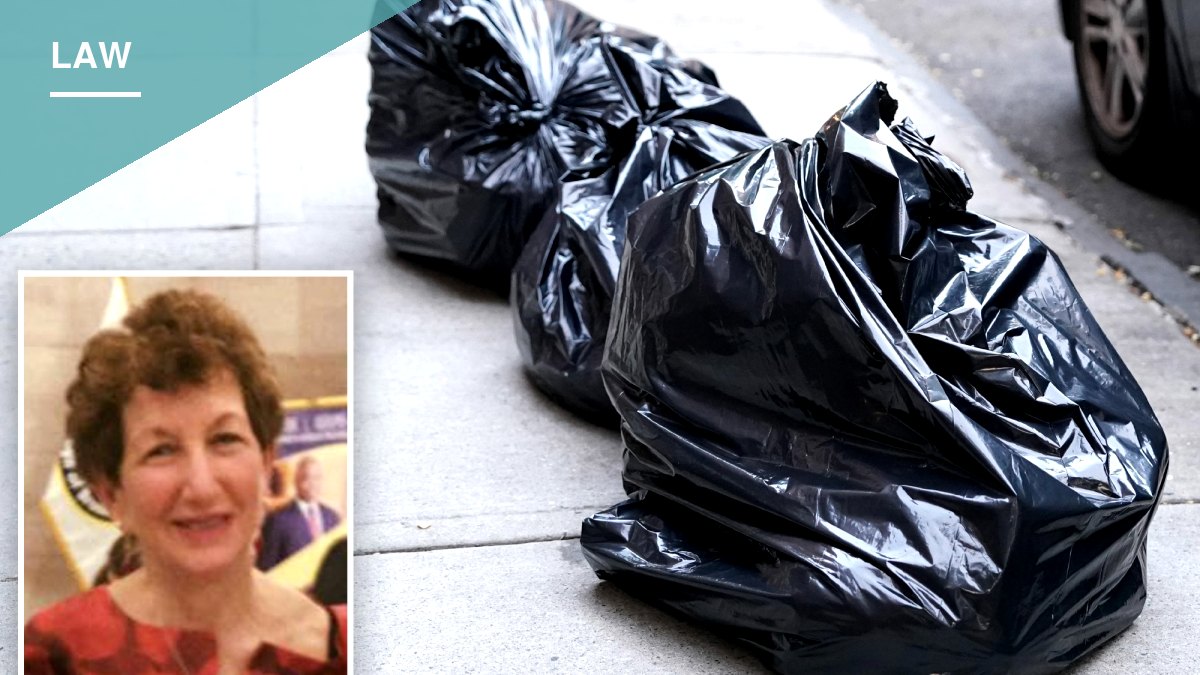
A Brooklyn judge has been formally admonished by New York’s judicial ethics watchdog after spending nearly two years invoking her title to avoid paying $150 in sanitation fines.
The New York State Commission on Judicial Conduct found that Justice Katherine Levine, a Kings County Supreme Court judge since 2008, repeatedly cited her judicial office while fighting the Office of Administrative Trials and Hearings (OATH) over three minor trash violations issued at her Borough Park home, where she has lived since 1996.
According to the commission’s release Monday, the trouble began in March 2024 when sanitation workers found a “large accumulation” of napkins, papers, egg cartons and other trash in her driveway. Rather than pay the $50 mail-in fine, Levine contested the ticket.
“i plead not guilty,” she wrote in an online submission ten days later. “I am a supreme Court Justice in Kings County and went to work at 10 am.”
OATH found her guilty anyway, and she did not pay. The following spring she received two additional fines for leaving her trash receptacles uncovered. She did not respond to those tickets until the fall of 2025.
By then, the commission found, Levine had invoked her judicial status at least eight separate times. In an October 2025 voicemail to the administrative court, she identified herself by title and said, “I have trials every day in Supreme Court.” In an email sent from her official judicial account, she wrote, “I cannot come down and sit in OATH for 10 hours as I am a trial judge in Supreme Court,” while asking to settle a balance that had grown to $650 after she missed earlier hearings.
On another occasion she wrote, “I am a supreme court justice and I vacate default judgments all the time in the name of equity and justice.”
OATH responded that it does not offer settlements and that Levine “must follow OATH rules and protocols as everyone must do.” Levine then demanded to speak with a supervisor, closing one email in all capital letters: “HOW DO I PAY IT AND HOW MUCH IS IT.”
The commission concluded that Levine’s “unnecessary and repeated references to her judicial office created the appearance that she was inappropriately seeking special treatment.”
“Invoking judicial office to avoid paying a fine undermines public confidence in the integrity of the judiciary and suggests that judges are exempt from rules that apply to everyone else,” said commission administrator Robert Tembeckjian. “The Office of Administrative Trials and Hearings was right not to give special treatment to a judge, and Judge Levine accepted responsibility for her conduct by agreeing an admonition was appropriate.”
Levine, who had a clean disciplinary record prior to this episode, “openly and repeatedly expressed her remorse and embarrassment” and accepted the admonishment, the commission said, noting that she recognized her repeated references to her title could reasonably have been seen at OATH as an attempt to secure favorable treatment on her summonses.
Her attorney, David Godosky, said Levine “regrets that she referenced her position while addressing a frustrating issue with a city agency,” and that she was “candid and cooperative” throughout the inquiry.
The fines have since been paid, according to OATH records.

