

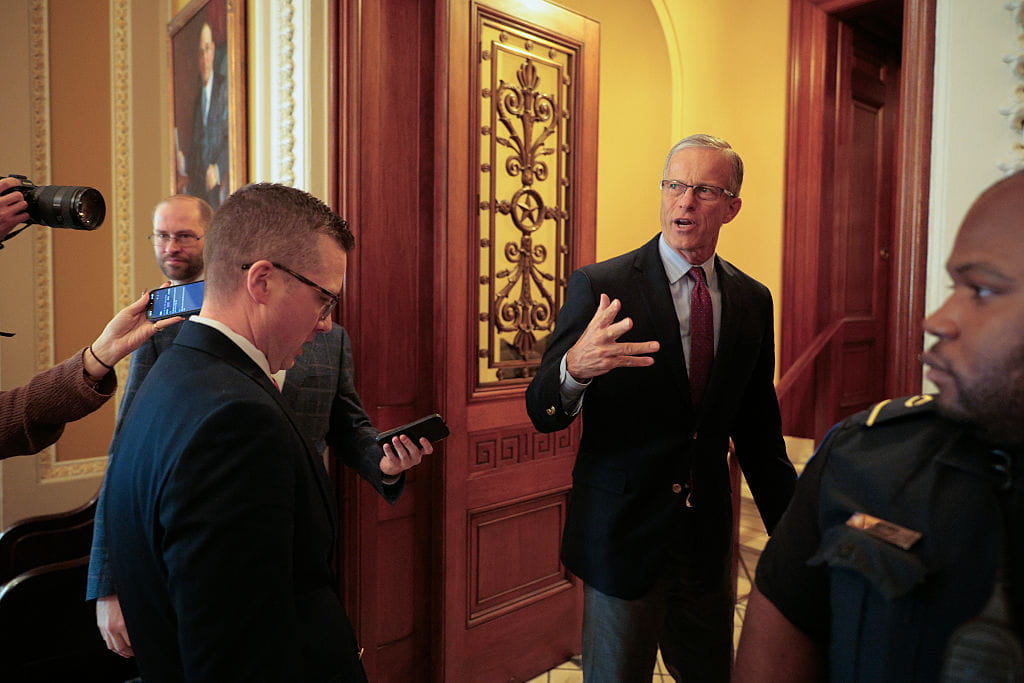
The Senate cleared five full funding bills and a two-week continuing resolution for DHS, but the deadline to finish appropriations slipped by and six spending measures remain unresolved, leaving lawmakers scrambling to sort out funding and priorities before September.
The deadline to pass the six remaining spending bills to keep the federal government funded through September came and went last night, and the job remains unfinished. The Senate did pass five full funding bills and a continuing resolution (CR) to fund the Department of Homeland Security (DHS) for two weeks while lawmakers negotiate a short-term deal. That limited CR kicks the can down the road and keeps uncertainty alive for agencies and states counting on stable appropriations.
Continuing resolutions are familiar tools, but a two-week patch for DHS is unusually brief and risky. Agencies need predictable funding to plan contracts, grant distributions, and operations, and a short CR fuels instability. For DHS specifically, a tiny stopgap means border enforcement and critical homeland programs will face repeated pauses unless negotiators reach a quick agreement.
From a Republican viewpoint, these last-minute fixes demonstrate why Congress should pass full-year appropriations on time. Republicans argue that CRs encourage bloated spending and avoid accountability because they remove the deadline pressure that forces votes on priorities. Full appropriations let lawmakers debate specific reforms and hold agencies accountable, instead of rolling everything into a hurried compromise.
This split approach in the Senate undermines that ideal. Passing five bills while leaving six unresolved shows partial progress, but not the discipline conservative policymakers want. It also leaves the political field open for leadership to trade away conservative priorities in backroom deals in order to secure a final package before the next shutdown scare.
The two-week DHS CR elevates border security as the immediate flashpoint. Republicans insist short CRs do nothing to deter illegal crossings or provide sustained funding for Customs and Border Protection and Immigration and Customs Enforcement. If DHS funding is only temporary, boots-on-the-ground operations and strategic investments get deferred, and the department cannot execute long-term border enforcement plans.
There are real fiscal stakes tied to how Congress finishes these bills, and conservatives emphasize spending restraint. A rush to finalize remaining appropriations opens the door to omnibus packages that combine high-priority and low-priority items without rigorous scrutiny. Republicans worry that such omnibus outcomes increase discretionary spending and lock in programs that would otherwise face cuts or reforms.
The practical consequences go beyond abstract budget numbers. Federal workers, defense contractors, grant recipients, and state programs all face uncertainty while appropriations hang in the balance. Repeated short-term CRs also raise costs and complicate hiring and procurement, which is exactly the kind of inefficiency fiscal conservatives want to eliminate.
What happens next depends on which side insists on structured negotiations and which side yields to last-minute bundling. Lawmakers will have to decide whether to use the remaining time to fight for tougher fiscal terms and clearer priorities or to accept another sprawling agreement that keeps short-term peace at the cost of long-term discipline. The clock is short, and the choices made in the days ahead will determine whether Congress holds the line on spending and security or settles for another temporary patch.

