

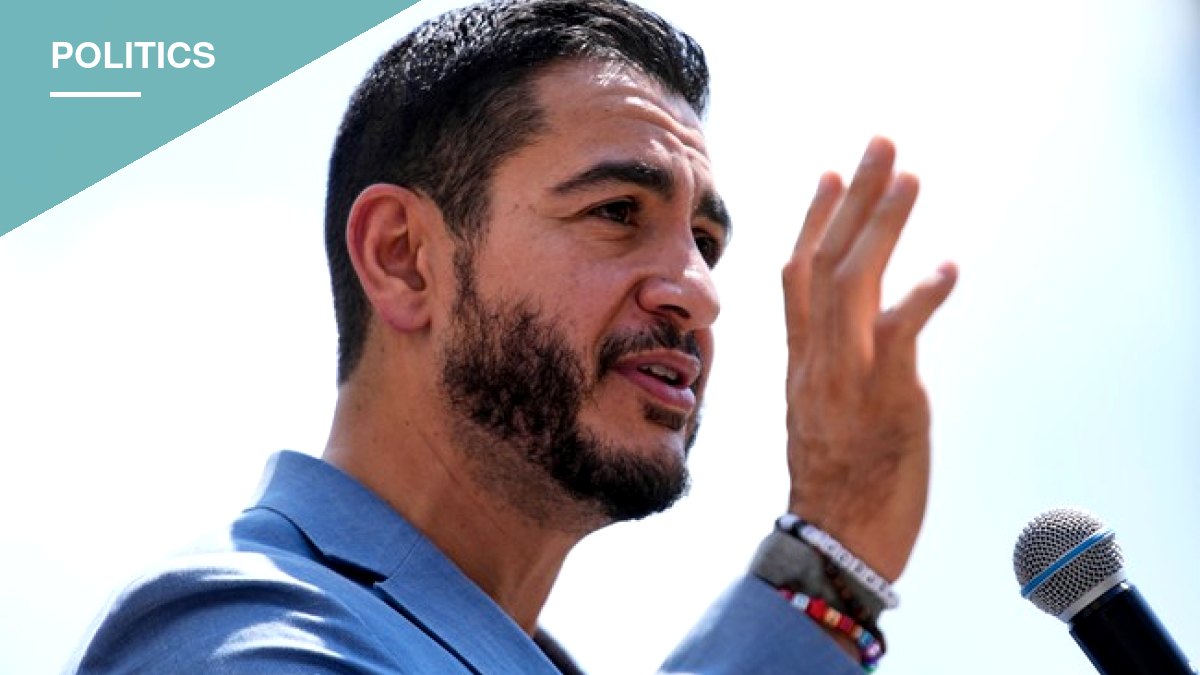
Michigan Democratic Senate candidate Abdul El-Sayed is facing criticism after telling supporters, “I’d rather have an economy that makes 1,000 millionaires than one billionaire,” in remarks that have circulated widely online.
El-Sayed argued that most billionaires don’t put their money toward starting new businesses, saying instead that they park it in the stock market, which he described as “just investing in other billionaires.” He claimed the “top seven stocks were making money” while everyone else was “dipping.” He used that argument to call for taxing billionaires’ “excess money” and redirecting it toward schools, infrastructure, healthcare and childcare.
The comments drew comparisons to New York City Mayor Zohran Mamdani, who has said it is government’s job to deliver residents a “dignified life” by meeting their “needs,” though El-Sayed’s remarks did not go as far as Mamdani’s framing.
Critics cite the numbers
CNN commentator and Salem Media host Scott Jennings responded by posting that the ratio of millionaires to billionaires in the United States is roughly 23,600 to 1, noting the country has nearly 24 million millionaires against roughly 1,000 billionaires. Critics argued that disparity reflects an economy that already produces far more millionaires than billionaires, undercutting the premise of El-Sayed’s statement.
Supporters of that view also pointed to U.S. real median household income reaching a record $87,460 in 2025, alongside an official poverty rate of 10.2 percent, described as a historic low.
Critics further argued that billionaire-owned companies generate jobs and products beyond stock-market holdings. They cited Elon Musk’s SpaceX initial public offering, which reportedly created 4,400 millionaires among employees including electricians, janitors and cafeteria workers, as an example of wealth creation extending to ordinary workers.
Opponents of El-Sayed’s proposal also noted that even a 5 percent tax on billionaire wealth, a figure that has circulated in similar proposals, would not cover the full scope of programs he has proposed, suggesting additional taxes on other income groups would likely be necessary.
El-Sayed has also been a vocal critic of billionaire influence in politics, while his campaign has received contributions from wealthy donors, including some based outside Michigan, a point his critics have highlighted as inconsistent with his stated position.

