

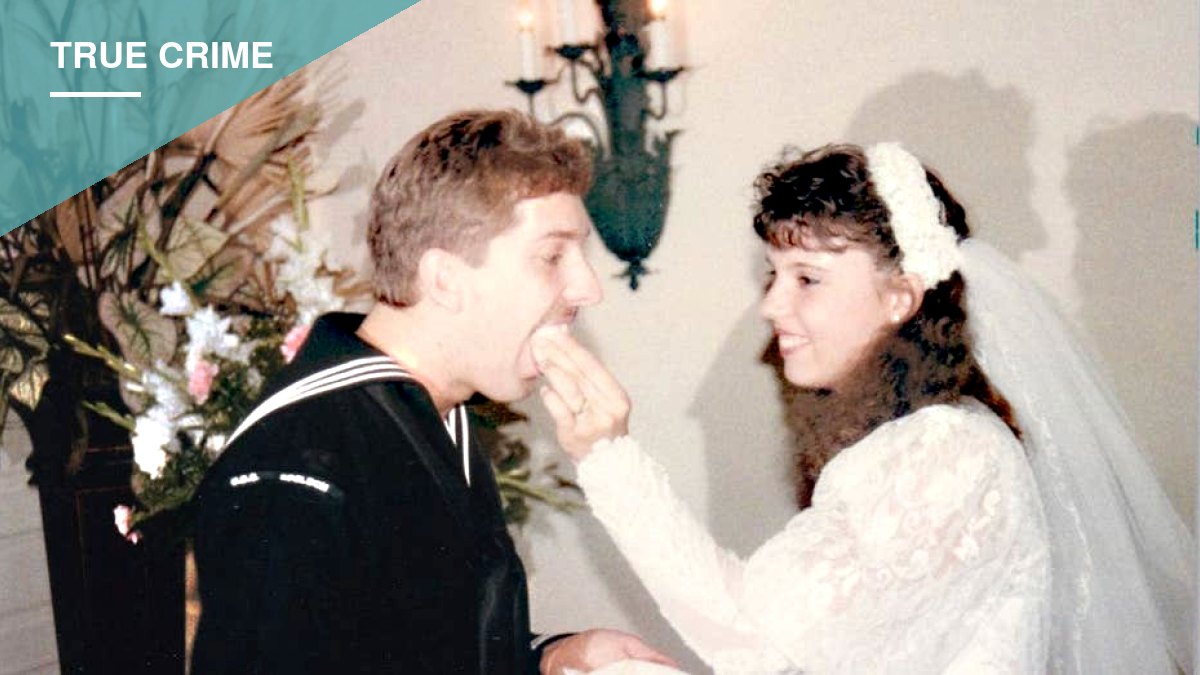
Bonnie Lou Gower was married to Richard “Marc” Evonitz for eight and a half years. For most of that time, she had no idea her husband would later be identified as a serial killer responsible for the deaths of at least three young girls, including one killed while they were still married.
Gower is now revisiting that history alongside Kara Robinson Chamberlain, who survived 18 hours of captivity and torture after Evonitz abducted her in 2002, in Investigation Discovery’s docuseries “The Serial Killer Connection.” The two are working together to examine whether Evonitz may be connected to other unsolved cases.
“When I initially learned about [his crimes] and I told people, honestly their first response is, ‘Well, obviously you knew. How could you not have known?'” Gower told Fox News Digital. “That was my very first question to the FBI. ‘How could I not know this? How could I not know I was sleeping next to somebody for eight and a half years that was doing this?’ And of course, they assured me that there’s no way I could have known.”
Looking back, Gower said there were things she never questioned at the time. Evonitz always insisted on staying behind when she traveled to visit family, saying he had to work. She later learned he had actually taken time off during those trips.
“One of the reasons he never came with me was because he said he was working,” Gower said. “And then, I come to find out, he had actually taken off work on the days that I was out of town. But at the time, I wasn’t at all concerned about leaving him behind. I was just going and visiting my family. It definitely makes you look at everybody and everything now, whether you can trust someone’s words or actions.”
A marriage that began at 17
Gower met Evonitz, eight years her senior, in South Carolina. He was the older brother of a friend and would visit while on leave from the U.S. Navy. At age 16 he asked her on a date, and they married in August 1988, when she was 17 and he was 25.
“You think you know who you are when you’re 17, but I really don’t think I did,” Gower said. “I don’t think I had a handle on that. And I was relatively sheltered. I was very naïve, very trusting, taking everything at face value. I think he knew that.”
During the marriage, Gower sometimes suspected infidelity, but Evonitz told her it was all in her head, and she believed him. As the couple moved from Maine to San Diego to Virginia, he gradually isolated her from friends and family.
“No one ever thinks that their significant other is going to be a serial killer,” Chamberlain told Fox News Digital. “I think worst case, and this is something that she expressed to me, he was having an affair. No one ever thinks your spouse is out murdering someone. He kept that part of himself very tightly controlled and didn’t show it to the people he was closest to.”
After Evonitz left the Navy, financial strain deepened tensions in the marriage. Gower said he grew prone to mood swings and “rages” and frequently criticized her weight; she was also uncomfortable with his interest in bondage, according to the docuseries. Even so, she said she never saw him as capable of hurting her, and walking away came only after years of mounting unhappiness.
“I was concerned for his safety when he said he was going to take the gun and kill himself,” Gower recalled. “I never feared for my own life.”
“When I left, I felt like I was leaving for no real good reason,” she said. “[But] I wasn’t happy.” According to Gower’s TikTok, the couple was married from August 1988 to January 1997; multiple reports indicate the divorce was finalized in 1998.
The crimes come to light
On June 24, 2002, 15-year-old Chamberlain was at a friend’s home in South Carolina when Evonitz pulled into the driveway, approached with pamphlets and asked if her parents were home, then held a gun to her neck and forced her into a storage container in his car. At his apartment she was repeatedly sexually assaulted and restrained to a bed. After hours of torture, she freed a hand from handcuffs with her teeth, unclipped a leg restraint and fled while Evonitz slept, reaching two men who took her to police.
Chamberlain led officers back to the apartment, but Evonitz had fled. Police tracked him to Sarasota, Florida, where he died by suicide as they closed in. He was 38.
Evidence recovered from his South Carolina apartment, his former Virginia residence and his vehicle linked him to three unsolved murders. On Sept. 9, 1996, Evonitz abducted 16-year-old Sofia Silva from the front steps of her home in Spotsylvania County, Virginia — where he and Gower had been living. Her body was found roughly five weeks later in neighboring King George County. On May 1, 1997, sisters Kristin “Kristi” Lisk, 15, and Kathryn “Kati” Lisk, 12, vanished after returning home from school; both had been sexually assaulted and strangled, and their bodies were found five days later in the South Anna River.
Gower learned of these other victims only months after Chamberlain’s abduction. “It felt like it wasn’t real at all,” she said. “It felt like this was something that happens in the movies. This wasn’t real life. It was very hard to believe that he could hurt anybody. He had never hit me or physically abused me.”
Searching for more answers
Gower has given investigators a timeline of Evonitz’s movements during their marriage, including dates, locations and old calendars, as potential cold cases are examined. “Of course, he wasn’t always where I thought he was,” she said.
Chamberlain has been investigating whether Evonitz could be tied to other unsolved crimes dating back to the 1980s, tracing his movements through his Navy years and the decades before her own abduction.
“I genuinely think that there is a level of escalation that we see between an indecent exposure [incident] and then three homicides in approximately nine months and then a break before me that is unexplainable to me,” Chamberlain said. “Everything’s possible and nothing has been confirmed. It’s a frustrating place to be, but I will not stop searching.”
Chamberlain said she learned while working on the docuseries that Evonitz’s DNA profile is not in CODIS, the FBI’s national database, though authorities in Spotsylvania County still hold a blood sample that can be compared against evidence in other cases. She hopes it will eventually be entered into CODIS to allow broader comparisons.
“I genuinely believe that there’s no way he only murdered three girls and kidnapped me,” she said. “I don’t think that there’s a world in which that’s true.”
While making the series, Gower also learned Evonitz had kept a photograph of her from when she was 11 years old — years before they began dating — hidden behind another framed picture. She said it was not a photo she had taken with her and that she never knew he had it. “It’s disturbing enough that he would have 11-year-old me in a picture behind something,” she said.
Decades later, Gower says she still has not found a way to reconcile what she lived through. “I don’t think you ever make sense of it,” she said. “There’s no tidy little box to put it in to make it make sense. I’m still grappling with it. I’m still processing.”
This story discusses suicide. If you or someone you know is having thoughts of suicide, contact the Suicide & Crisis Lifeline at 988 or 1-800-273-TALK (8255).

