

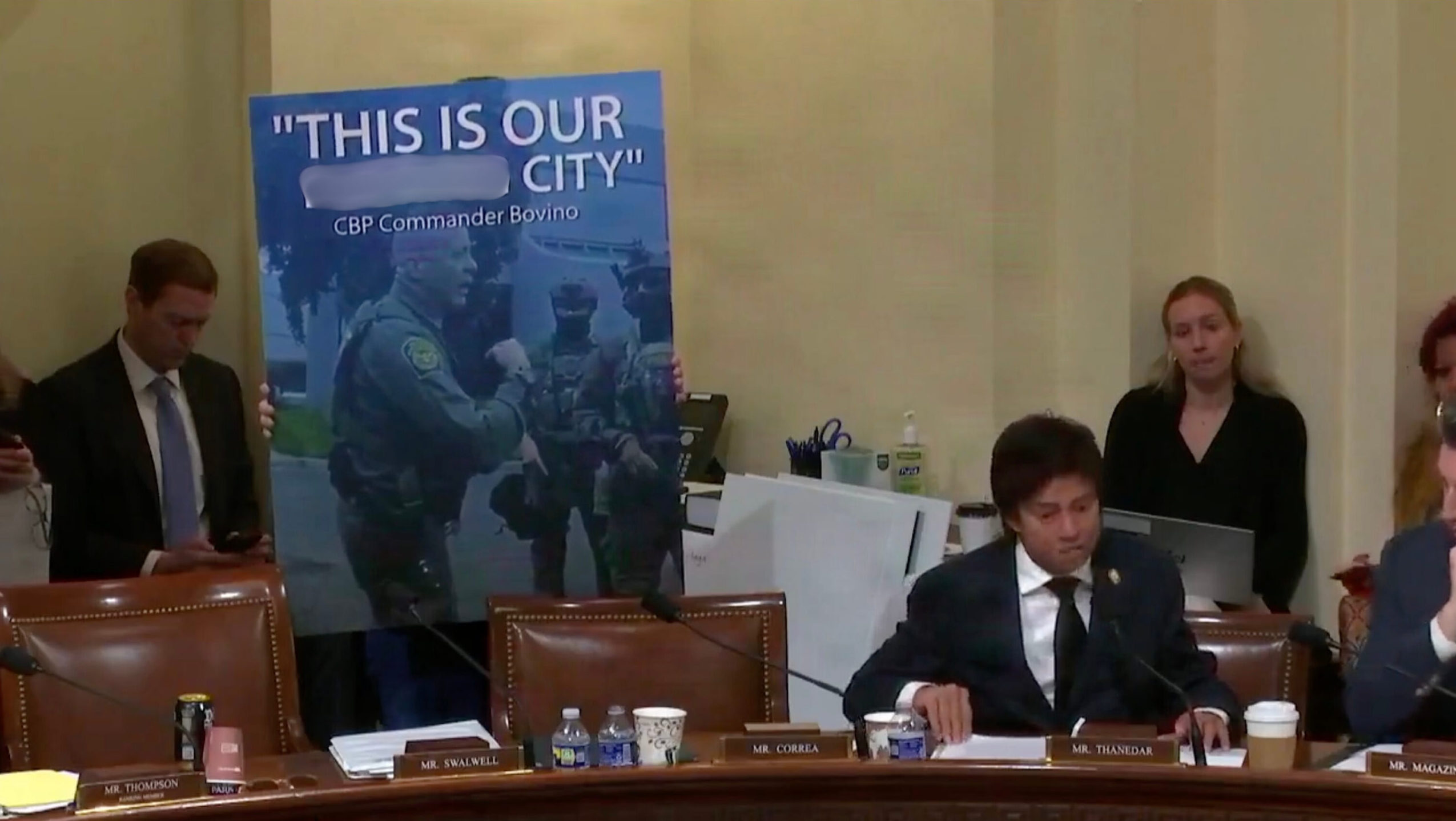
Foreign-born Rep. Shri Thanedar threatened to prosecute political rivals during a committee hearing, naming Customs and Border Protection Commissioner Rodney Scott and signaling a partisan willingness to use legal power against opponents.
Foreign-born Rep. Shri Thanedar openly threatened to prosecute his political enemies this week, and the moment landed with a thud in a tense committee room. During a hearing Tuesday, Thanedar, who struggled to speak English at times, singled out Customs and Border Protection Commissioner Rodney Scott and warned of legal action once President Donald Trump is out of office. The exchange looked less like oversight and more like a threat aimed at intimidating officials who enforce the law.
The hearing itself focused on border security, but Thanedar’s comments quickly shifted attention to a different point: the potential for political prosecutions. Republicans watching saw a clear signal that some Democrats are ready to turn law enforcement into a political weapon. That reality raises real questions about the separation between legitimate oversight and partisan vendettas.
Rodney Scott serves as the face of on-the-ground border enforcement, and his role makes him an easy target for politicians who favor open borders. Threats aimed at a commissioner charged with enforcing federal law risk chilling honest enforcement decisions. When regulators and law enforcers fear political retribution, policy choices can become second-guessing exercises driven by politics rather than public safety.
The optics were rough for Thanedar. Struggling with English in a high-pressure hearing underscored how little room there is for slip-ups when lawmakers try to lead complex oversight. That weakness mattered because the substance of his threat was stark: a promise of prosecution tied to a change in political power. For opponents, that promise felt like a preview of what a Democratic resurgence could mean for federal officials who don’t fall in line.
From a Republican perspective, the bigger issue is precedent. If one party treats criminal prosecution as a tool to punish political foes, the result will be selective enforcement and a double standard. Good governance depends on even-handed investigations and prosecutions based on evidence, not political convenience. Turning justice into a partisan instrument corrodes trust in both institutions and officials tasked with protecting the public.
Democrats often frame aggressive oversight as accountability, but the line between oversight and weaponization is real and measurable. Republicans argue that investigations should be transparent, legally grounded, and insulated from partisan retaliation. When lawmakers cross that line and openly threaten enforcement officials, it erodes the expectation that the rule of law applies equally to everyone.
The hearing also highlighted how politicized the immigration debate has become. Border agents and agency heads operate in a role that is inherently fraught, balancing law enforcement with humanitarian concerns. Add threats of prosecution to that mix and it becomes harder for dedicated professionals to do their jobs without fear of legal or political punishment.
What unfolded in that committee room will not stay there. Video clips and quotes will get replayed, and opponents will use the footage to argue that one party plans to weaponize the Department of Justice and other agencies. Republicans see this as a warning shot: if political prosecutions become a norm, we will see an uneven application of justice that favors those in power and punishes the rest.
The exchange also raises practical questions about how Congress should conduct oversight going forward. Lawmakers can and should press agency officials on policy failures and seek reforms, but the line must remain clear: oversight is not a substitute for criminal prosecution, and criminal prosecutions must be based on law and evidence rather than partisan score-settling. Expect this episode to fuel debates about ethics, independence, and the proper limits of political influence over law enforcement.

