

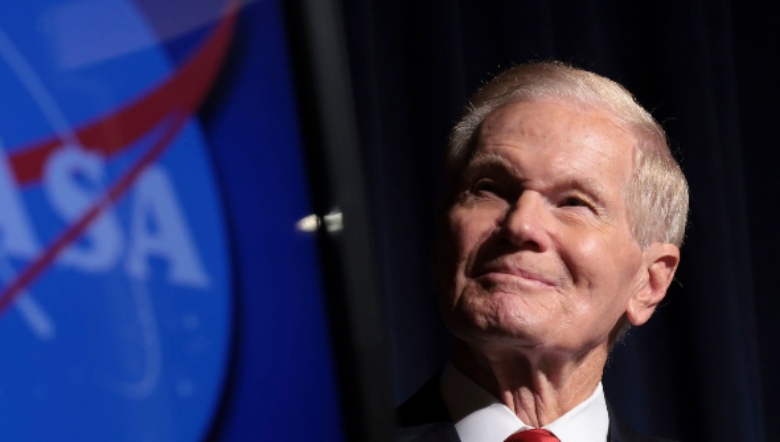
NASA, the renowned agency responsible for space exploration, has been grappling with budget shortfalls, leading to staff layoffs and the cancellation of key space programs. Despite this financial strain, the organization has spent millions of dollars on grants promoting diversity, equity, inclusion (DEI), and environmental justice. Critics question whether these expenditures are diverting resources from NASA’s primary missions, such as Mars exploration and maintaining advanced space telescopes.
Since 2020, NASA has awarded roughly $10 million in grants and contracts to advance DEI and environmental justice, according to federal spending records. The funding allocations come at a time when the agency is facing a significant financial shortfall, amounting to billions of dollars, which threatens some of its most critical space exploration projects. This financial strain has forced NASA to make tough decisions, including laying off hundreds of employees working on Mars missions and scaling back the funding needed to sustain its multibillion-dollar space telescopes.
The allocation of millions of dollars toward these social initiatives raises questions about NASA’s priorities. Should an organization primarily known for its pioneering work in space exploration be focusing on social justice programs, especially during a period of financial turmoil?
One of the key areas of NASA’s spending has been environmental justice, a movement that seeks to ensure that all communities receive equitable protection from both natural and human-induced environmental hazards. NASA’s official webpage explains its commitment to this cause, stating, “The environmental justice movement focuses on ensuring communities receive equitable protection from natural and human-induced environmental hazards. It embodies the principle that all communities should be heard and represented in decision making.”
These grants aim to study the impact of environmental hazards on underserved and marginalized communities. For example, NASA approved $150,000 in funding for Columbia University to support research pairing “earth observations and socioeconomic data” for environmental justice work in New York City. The grant provides an opportunity for students to use NASA’s data in projects that examine the disproportionate environmental impacts experienced by racial minorities in urban areas.
Another notable example is a $250,000 grant awarded to the city of Los Angeles as part of NASA’s Predictive Environmental Analytics and Community Engagement for Equity and Environmental Justice (PEACE) program. The program focuses on addressing the agency’s observation that “people of color often face higher exposure to air pollutants.” Through this grant, NASA provides the city with pollution data to be shared in ways that consider cultural and community-specific needs. This initiative aims to help local governments engage with diverse populations on environmental justice issues.
While promoting environmental justice and equity are commendable goals, NASA’s significant financial challenges make these expenditures controversial. Critics argue that NASA should focus its limited resources on its core mission—exploring space and advancing scientific understanding—rather than diverting funds to social programs.
NASA is no stranger to budgetary challenges. In recent years, the agency has struggled to maintain adequate funding for ambitious projects such as the Artemis mission, which aims to return humans to the moon, and the Mars Sample Return mission, designed to bring back samples from the Red Planet. The agency’s inability to secure the necessary funding has led to delays, layoffs, and the potential cancellation of key programs.
The Washington Post reported that NASA’s financial struggles have been particularly hard on the Mars missions, where hundreds of employees have been laid off due to budget constraints. Moreover, NASA has expressed concerns about its ability to maintain the James Webb Space Telescope, a groundbreaking project that has provided unprecedented insight into the universe. Without sufficient funding, NASA’s ability to push the boundaries of space exploration may be severely compromised.
Despite the criticism, many defend NASA’s investment in environmental justice and equity initiatives, arguing that these programs are in line with the agency’s broader mission. They contend that studying the Earth’s environment and the impact of climate change on vulnerable populations is essential for the well-being of future generations. Moreover, NASA’s technological advancements can provide valuable data that local governments and organizations need to address critical environmental challenges.
Supporters also point out that NASA’s mandate is not limited to space exploration but also includes understanding and protecting the Earth. By promoting environmental justice, the agency is contributing to global efforts to address the effects of climate change and environmental degradation on marginalized communities.
The debate over NASA’s funding priorities highlights the tension between its role as a space exploration agency and its broader environmental and social responsibilities. As NASA faces growing financial challenges, questions about the balance between its core mission and its commitment to social initiatives will likely continue to arise.
In the meantime, NASA must find ways to navigate its budgetary woes while maintaining its commitment to both space exploration and social responsibility. Whether the agency can strike that balance effectively remains to be seen, but for now, its financial decisions have sparked a heated debate about the future of space exploration and the role of social justice in scientific research.


3 Comments
NASA needs to turn the entire space program over to SpaceX and then stay the hell out of the rocket business!
Obama and Biden messed up everything in the federal government. They put in all their Muslims and weirdos in places like the FBI, the CIA, and NASA.
you are correct .. vote .. Trump / Vance 2024