

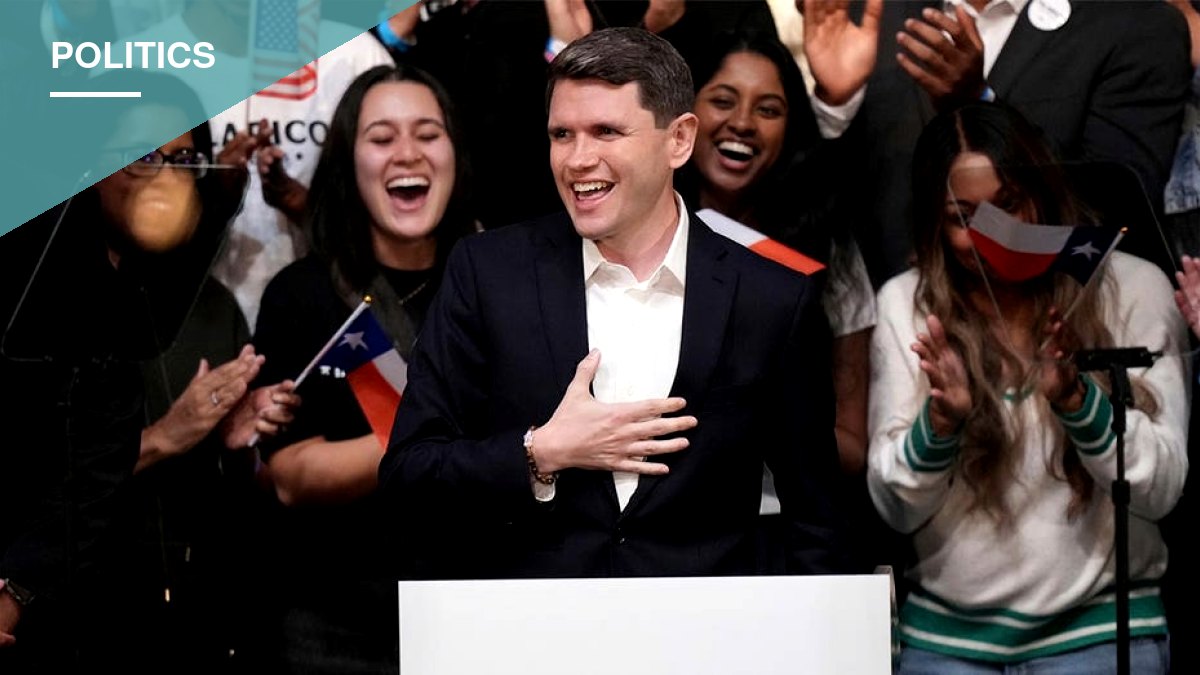
A sweeping Democratic victory in the 2026 midterms swept new senators and governors into office across Texas, Kansas, Michigan, Colorado, Nevada, Wisconsin and Florida — and the morning-after television coverage of those winners has drawn scrutiny from media critics who say the tone shifted sharply once results came in.
In Texas, Sen.-elect James Talarico appeared on ABC the morning after his win, where host George Stephanopoulos asked him to explain what he meant by pursuing a “politics of love.” Talarico responded: “Yeah, I think we are all tired of this politics of division, this politics of hate, this politics of fear. I’m tired of being pitted against my neighbor. I’m tired of being told to hate my neighbor.”
On CBS Mornings, hosts turned their attention to Kansas Sen.-elect Adam Hamilton, a Methodist megachurch pastor. Norah O’Donnell asked him, “I know you have promised to bring the biblical Golden Rule to D.C., as you have said, ‘Do unto others as you would have them do unto you.’ Have you been to Washington? That place is pretty cutthroat. How are you going to do that?” Co-host Gayle King added that “so many people are really happy to hear you talk about decency and kindness, pastor,” saying viewers were “sick of … the vulgarity, the crassness,” and that people were “touched” to learn he starts his day in prayer. Co-host Nate Burleson called Hamilton “a vessel for the Lord” and “a bridge for the people.”
Coverage of El-Sayed’s win
Michigan’s Sen.-elect Abdul El-Sayed was widely described across networks as the first Muslim elected to the U.S. Senate. ABC’s Mary Bruce reported he won “after President Trump launched Islamophobic attacks on his faith.” CBS’s Nikole Killion said El-Sayed “shot back at his critics, including his GOP opponent, Mike Rogers,” calling the race “one of the ugliest campaigns” and accusing opponents of “trying to divide voters by mocking his name and his faith.” NBC’s Ryan Nobles described a “bitter and contentious campaign” in which “Republicans accus[ed] El-Sayed of anti-Semitism after his criticism of Israel,” with the Democrat also facing “personal attacks over his faith, including from President Trump.” PBS’s Liz Landers said El-Sayed won “withstanding ugly campaign attacks on his faith, including when the president called him a jihadist.”
The same coverage largely did not mention that El-Sayed had campaigned alongside podcaster Hasan Piker, who once said “America deserved 9/11,” or that El-Sayed had signed a petition calling for a crackdown on media figures in Egypt tied to the Muslim Brotherhood.
Who made the “historic firsts” lists — and who didn’t
PBS NewsHour anchor Geoff Bennett ran through a list of “historic firsts” from election night, including Colorado’s Melat Kiros, described as the first Generation Z woman elected to Congress. That recap did not include Florida’s Byron Donalds, a Republican who became the state’s first Black governor. It also did not mention Nevada’s Aaron Ford or Wisconsin’s David Crowley, both Black Democratic governors-elect.
Separately, National Public Radio interviewed Hasan Piker on the morning after the election, describing him as a “progressive” influencer popular with young men. Piker told NPR that “virtually every locality, every state, every House district decided to punish the Trump administration and the Republican Party for the death and destruction it’s brought about all around the world,” and said the results pleased him after it “almost felt like this country was far more vicious, far more racist than it actually was.”
The coverage patterns were highlighted in a Fox News opinion column by media critic Tim Graham, who argued the tone of interviews with winning Democrats stood in contrast to the networks’ coverage of Republicans during the campaign.

