

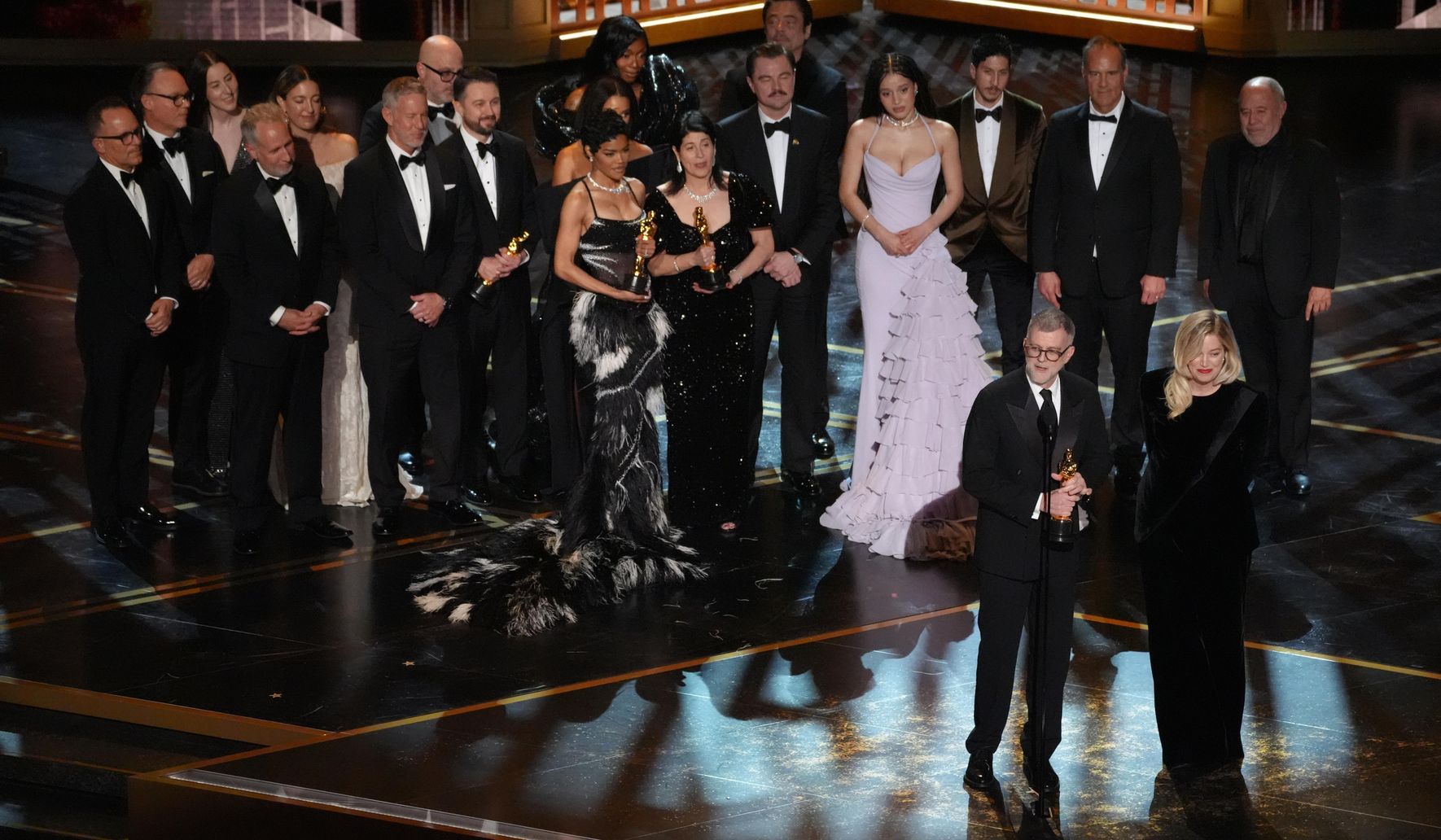
Paul Thomas Anderson’s “One Battle After Another” was crowned best picture at the 98th Academy Awards, handing Hollywood’s top honor to a comic, multi-generational American saga of. The win marked a big moment for a filmmaker known for bold, character-driven stories and for a movie that mixes humor with family drama. The ceremony felt like a recognition of intimate storytelling amid a year of grand spectacle.
The victory for “One Battle After Another” highlighted how a small-scale story can cut through awards season noise and land at the top. The film’s blend of comedy and generational conflict gave voters something emotionally recognizable yet refreshingly specific. Audiences and critics had already been talking about its sharp dialogue and layered performances for months before the show.
Paul Thomas Anderson’s track record with character-focused films set expectations, and this project delivered on his reputation for deep, textured scenes. The direction is patient without being slow, letting small moments accumulate into meaningful arcs. That balance helped the picture resonate both on the page and on the screen.
The cast carried the film with performances that feel lived-in rather than performative, anchoring the story’s humor in truth. A mix of veterans and rising actors gave the film breadth across generations, making family dynamics feel immediate. Those performances were central to the film’s emotional engine and its awards momentum.
On a technical level, the movie pairs intimate camerawork with a warm production design that supports the narrative without calling attention to itself. The score and sound design work together to underline emotional beats, often in subtle ways that reward repeat viewings. Editing choices kept the pacing brisk while preserving the film’s conversational heart.
The Academy’s choice signals a willingness to honor films that prioritize character and craft over blockbuster spectacle. That doesn’t mean large-scale films were ignored, but it does show the voting body still values storytelling grounded in human detail. For filmmakers, it’s a reminder that clarity of vision and execution can triumph even in a crowded field.
Industry reaction ranged from surprise to admiration, with many appreciating the film’s tonal control and layered script. Festival buzz earlier in the year had hinted at this outcome, but awards season is always unpredictable until the envelopes are opened. The celebration felt like recognition for a movie that grew steadily rather than exploding onto the scene overnight.
Box office and streaming numbers only tell part of the story; word of mouth and critical consensus helped sustain the film’s visibility. In an era of instant content turnover, a steady climb can be more durable than a single week of headlines. That slow-burn success is often the sign of a movie that rewards attention.
For Paul Thomas Anderson, the win is another chapter in a career defined by risk-taking and a refusal to chase easy formulas. He’s built a resume on deep character studies that sometimes polarize viewers yet never feel generic. This award underscores that a distinct directorial voice still carries weight in today’s landscape.
The ceremony itself provided moments of levity and heartfelt speeches, with the winning team emphasizing collaboration and craft. Industry veterans and newcomers both used their time to point to the work behind the scenes, from wardrobe to mixing, that makes a film whole. That collective acknowledgment reinforced how many hands it takes to bring a vision to life.
Moving forward, expect renewed interest in the film from viewers who missed it in theaters and from cinephiles who track award winners. Its win will likely influence programming decisions, retrospectives, and future projects for the cast and crew. For now, the movie stands as an example of how close attention to story and character can lead to the highest recognition in the industry.

