

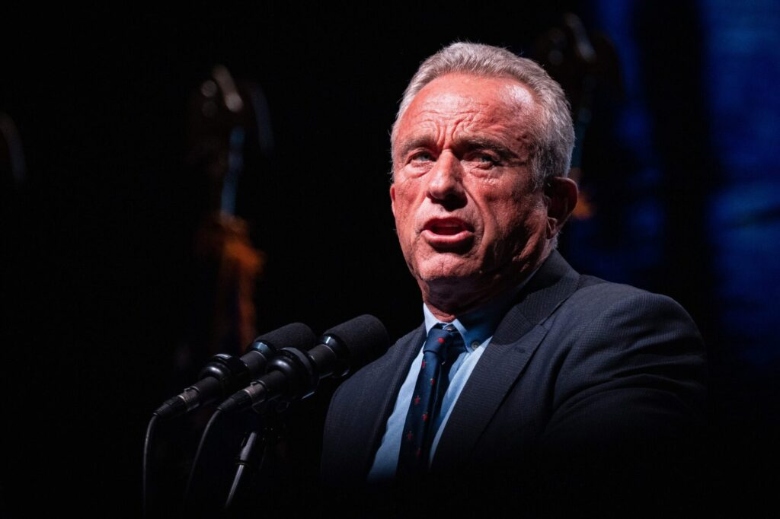
Robert F. Kennedy Jr. has placed Big Pharma squarely in his crosshairs, pledging bold reforms to dismantle what he calls the “agency capture” that has corrupted the U.S. healthcare system. In a recent statement, Kennedy detailed an ambitious agenda aimed at reducing pharmaceutical industry influence, enhancing transparency, and holding the medical establishment accountable for misleading the public.
One of Kennedy’s primary objectives is to end direct-to-consumer pharmaceutical advertising on television, which he argues has enabled Big Pharma to dominate public discourse and manipulate healthcare priorities.
“With a stroke of the pen, you can change back the rule that allows pharmaceutical advertisers to do direct-to-consumer ads on television,” Kennedy said. “That’s why we have this entrenched agency capture—not only of Congress but also of the media.”
Kennedy noted that pharmaceutical companies provide a significant portion of revenue for major news networks, effectively controlling much of the information disseminated to the public.
“75% of the revenues for those evening news shows, or, you know, Anderson Cooper, is coming from Pfizer and other pharmaceutical companies,” he explained.
Kennedy argues that this advertising is a major factor driving up healthcare costs, contributing to America’s status as one of the most expensive and least effective healthcare systems in the world.
“We spend three times more than any other country for pharmaceutical drugs because of all this advertising, and we have the worst health outcomes,” he said, pointing out that the U.S. ranks 79th globally in health outcomes.
Kennedy’s plan goes beyond media reform. He vowed to increase transparency in vaccine safety by unlocking the CDC’s vaccine safety database, which he claims has been deliberately hidden from public scrutiny.
“The CDC has a vaccine safety database that’s kept in a lockbox like Fort Knox,” Kennedy said. “I’ll open up that database on day one.”
He believes this database holds critical information linking vaccines to various health conditions, including diabetes, peanut allergies, and neurological disorders. Kennedy’s promise to release this data aligns with his long-standing criticism of vaccine safety oversight, a central issue in his platform.
Kennedy also plans to take legal action against prominent medical journals, accusing them of colluding with pharmaceutical companies to mislead the public. He specifically called out The New England Journal of Medicine, The Lancet, and JAMA, alleging that they have become tools of a “racketeering syndicate.”
“You guys are collaborating with the pharmaceutical industry to lie to the American public about the efficacy and safety of these products,” Kennedy said. “We are going to sue you both civilly for damages and criminally for fraud.”
He contends that these journals have played a key role in perpetuating false narratives about pharmaceutical products, contributing to the erosion of public trust in the healthcare system.
Kennedy believes the President has the authority to implement many of these reforms without Congressional approval. He criticized both former President Trump and President Biden for failing to take decisive action against the pharmaceutical industry during their terms.
“I’m not intimidated by the agencies. I know how they work, and I know how to change them,” Kennedy asserted. “Most of those changes, you do not need Congress for—the President can do them directly.”
Kennedy’s plan reflects his broader mission to unravel the influence of entrenched bureaucracies, which he believes prioritize corporate interests over public health.
Kennedy’s platform includes a comprehensive list of reforms—”100 things” on his to-do list, as he puts it—designed to dismantle the regulatory capture that has compromised U.S. healthcare. His vision includes:
- Banning pharmaceutical ads on television.
- Releasing previously hidden vaccine safety data.
- Suing medical journals for alleged collusion with Big Pharma.
- Restructuring federal health agencies to prioritize public welfare.
Kennedy’s proposals have sparked intense debate, with supporters praising his commitment to transparency and critics questioning his focus on vaccine safety. Nevertheless, his bold rhetoric and detailed plan signal a transformative approach to healthcare policy, should he ascend to the presidency.
“This isn’t about small changes,” Kennedy said. “This is about taking on a system that has been rigged against the American people for decades.”
As the 2024 election approaches, Kennedy’s promises to confront Big Pharma and “unravel the agency capture” could galvanize voters who feel disillusioned by the current state of U.S. healthcare. Whether his proposals can withstand political opposition and industry pushback remains to be seen.
.@RobertKennedyJr outlines his plan to eliminate pharmaceutical ads on TV, ensure transparent access to federal health databases, and put an end to corrupt practices within the medical journal industry.
“I’m not intimidated by the agencies. I know how they work and how to change… pic.twitter.com/HBgbTxz8bj
— KanekoaTheGreat (@KanekoaTheGreat) November 15, 2024


1 Comment
This it great news. We all pay too much for our prescriptions for our health.