

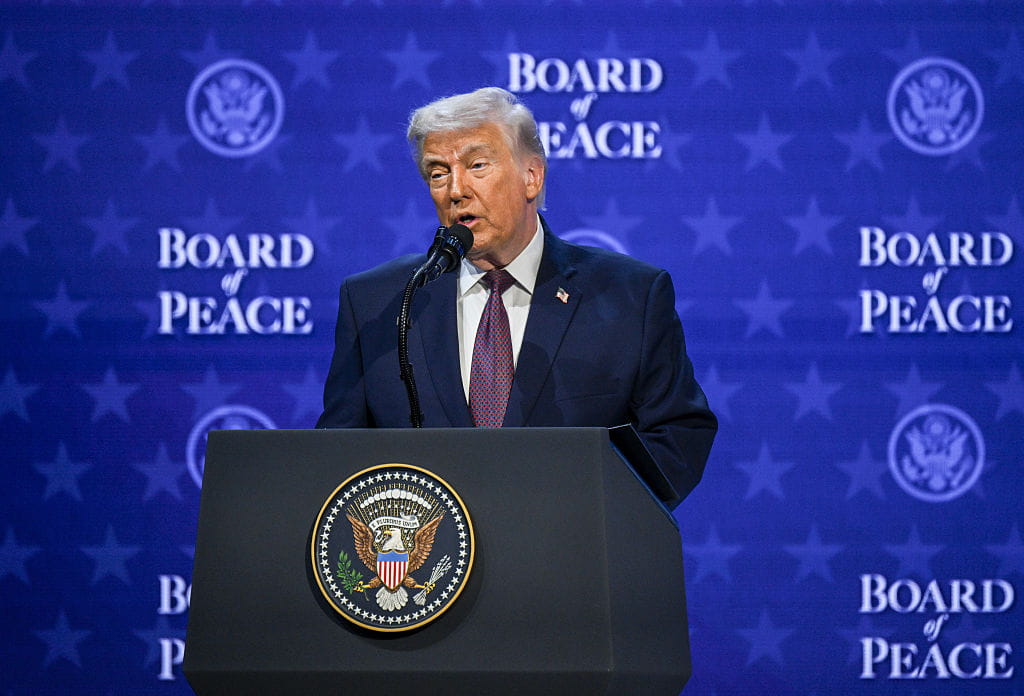
President Donald Trump signed the Charter of the Board of Peace in Davos after his World Economic Forum speech, advancing a White House 20-point plan agreed in October 2025 aimed at ending the Gaza conflict.
In Davos, following his address at the World Economic Forum, President Trump formally signed the Charter of the Board of Peace. The move builds on a 20-point plan the White House finalized in October 2025 to seek an end to the Gaza fighting. The administration frames the charter as a practical tool to turn diplomatic agreements into enforceable outcomes.
The plan itself is organized in three parts, and the first of those parts was the ceasefire. That initial step was meant to halt the immediate bloodshed and create space for negotiations, and the charter is intended to help institutionalize the commitments made. The signature in Davos underscored the president’s push to move from rhetoric to enforceable measures on the ground.
Supporters in the GOP view this as the kind of clear, action-first policy conservatives should back: use strength and leverage to secure concrete results. They argue that diplomacy without teeth fails the people it claims to protect, and that the charter gives the U.S. a stronger hand in demanding compliance. From this angle, signing the document in an international setting sends a signal that American leadership remains central.
Critics raised predictable objections about international oversight and the potential for mission creep, but Republican defenders say those concerns miss the point. The charter is positioned as a mechanism to ensure that ceasefires hold and that any follow-up steps are conditional, tied to verification and consequences. For policymakers who prioritize stability, the emphasis on clear triggers and accountability is a selling point.
Practical challenges remain, including how to verify compliance, who enforces the rules, and how to protect civilians while avoiding open-ended commitments. The administration insists the charter is designed to work with partners and local actors rather than replace national responsibilities. Republicans skeptical of open-ended multilateralism see this approach as a way to leverage alliances without relinquishing control.
Domestically, the move plays to audiences that want decisive action paired with American oversight. By signing the charter in a high-profile international forum, the president aimed to combine visibility with substance, signaling that U.S. policy is both assertive and organized. That messaging resonates with voters who favor firm leadership and expect tangible results from foreign policy initiatives.
On the ground in the region, success will hinge on cooperation from multiple parties and the willingness of local leaders to accept external conditions. The charter’s real test will be whether its provisions are practical enough to survive the first months of implementation. For Republicans who backed this effort, early enforcement and quick wins will be essential to maintain credibility.
The broader lesson Republicans draw is that negotiations must be backed by credible enforcement if they are to stop violence and produce durable outcomes. The charter aims to put that lesson into practice by converting diplomatic promises into a framework with teeth. If the administration can show measurable progress, it will strengthen the case for using similar approaches in other complex conflicts.
Regardless of immediate results, the Davos signing marks a clear shift toward an organized, policy-oriented effort from the White House. It is a statement that American leadership will try to set the terms and stick to them, rather than drifting into vague commitments. How the charter performs in coming weeks and months will determine whether it is seen as a turning point or merely another diplomatic gesture.

