

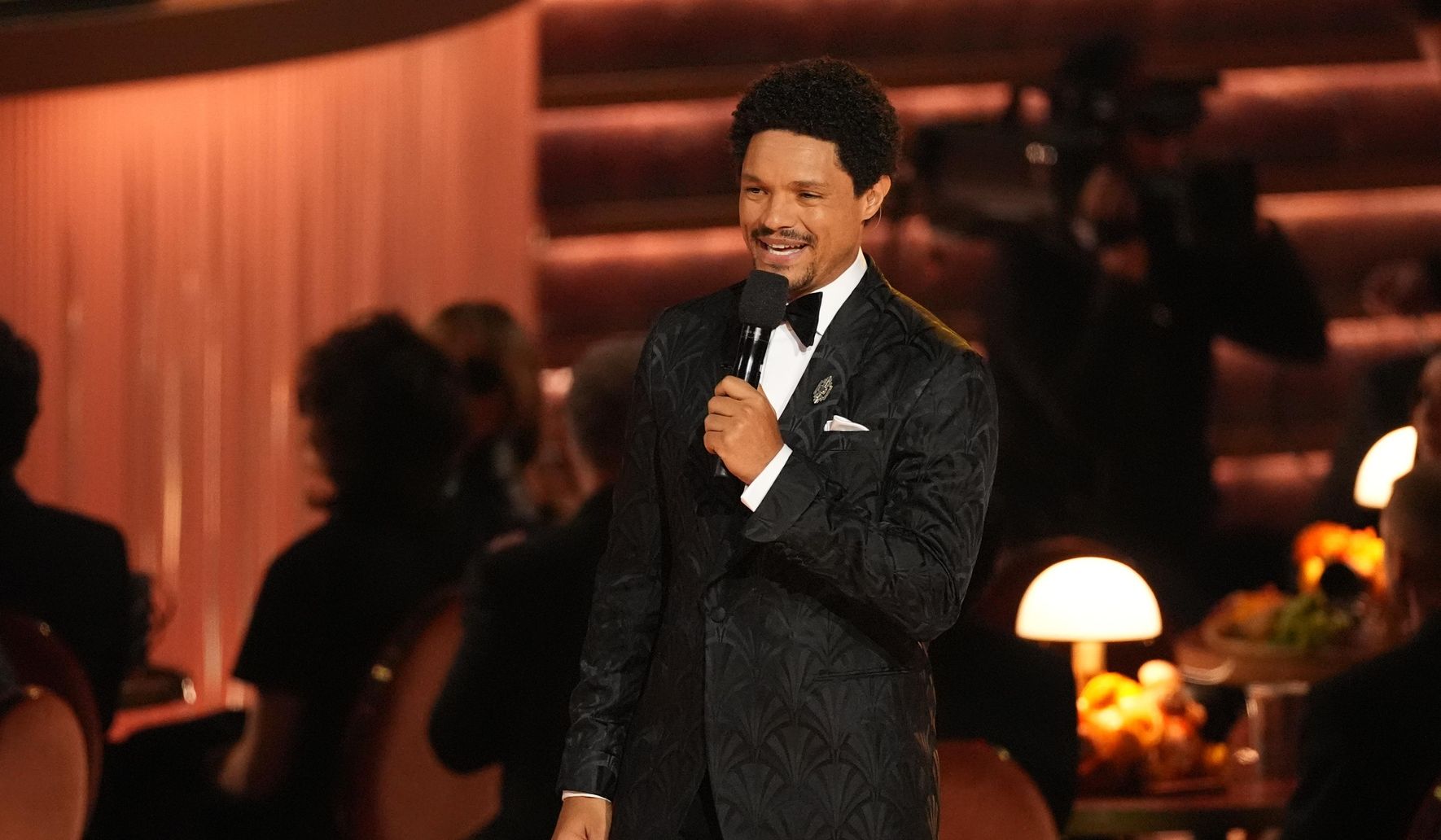
President Trump on Monday threatened to sue Trevor Noah over a joke the comedian made during the Grammys linking Mr. Trump to deceased sex offender Jeffrey Epstein, and the exchange has reopened debates about satire, reputation, and accountability.
The moment at the Grammys reignited a familiar clash: a high-profile entertainer used a punch line that implicated a political figure in a scandal tied to a real criminal. Trevor Noah’s gag landed on a stage watched by millions, and President Trump responded by threatening legal action. That reaction moved the dispute out of late-night snark and into the realm of possible courtroom consequences.
This is about more than a joke. From a Republican viewpoint, there’s a basic principle at stake—citizens and leaders deserve protection from false implications that can damage reputation and influence. Comedians routinely push boundaries, but when an offhand line hints at criminal associations, it changes the nature of the audience’s perception. Defending one’s name matters, especially when media platforms amplify a claim without context.
Trevor Noah performs on a commercial stage, and those platforms carry responsibility even when the intent is comedic. Jokes that suggest ties to an actual convicted sex offender are not mere opinion; they can be heard as assertions by viewers who don’t parse nuance. That makes it reasonable for public figures to push back, including by threatening lawsuits, to set limits on careless accusations. The pushback isn’t a demand that comedy be neutered, but a reminder that words have consequences.
The Grammys choice to include political jabs also highlights how entertainment and politics are tangled in today’s culture. Audiences expect performers to be provocative, and hosts often test the line to get a buzz. But that buzz can turn into a liability when a joke blurs the line between satire and allegation. Republicans argue that standards should be higher when public accusations touch on criminal conduct.
Legal threats are a blunt instrument and not always the best public-policy tool, yet they serve a purpose. A credible threat of litigation forces media and performers to consider whether a swipe crosses into defamation. In a polarized environment, courts remain the neutral arena to sort fact from fiction. Conservatives often see lawsuits as a necessary corrective when facts are ignored and reputations are at stake.
There’s also a double standard in how complaints are treated depending on political alignment. When conservative figures have pushed back against similar jabs, reactions from mainstream outlets have varied widely. That inconsistency fuels the argument that media power can be weaponized against certain voices while excusing the same conduct from others. Fairness in cultural criticism would mean equal scrutiny regardless of the political stripe of the target.
Comedians should be able to lampoon public officials, but parody relies on an assumed gap between fiction and reality. When the joke equates a living public figure with a convicted criminal, it erodes that gap and risks misleading viewers. From a conservative standpoint, protecting the difference between satire and allegation helps keep public debate honest and prevents cheap reputational damage from becoming the norm.
The Grammys incident also matters because it brings Epstein back into the conversation in an inflammatory way. Jeffrey Epstein’s crimes and the fallout are real and serious, and invoking his name carries weight. Republicans point out that referencing Epstein casually for the sake of a laugh trivializes victims’ experiences and weaponizes a tragic story for partisan or entertainment gain.
At the end of the day, the controversy puts choices on display: entertainers deciding what to say, networks deciding what to air, and public figures deciding how to respond. For conservatives, defending a reputation and insisting on accountability for public assertions are not attacks on free speech but defenses of straightforward fairness. The Grammys joke may land with some, but the backlash reminds everyone that words on a big stage can have real, lasting consequences.

