

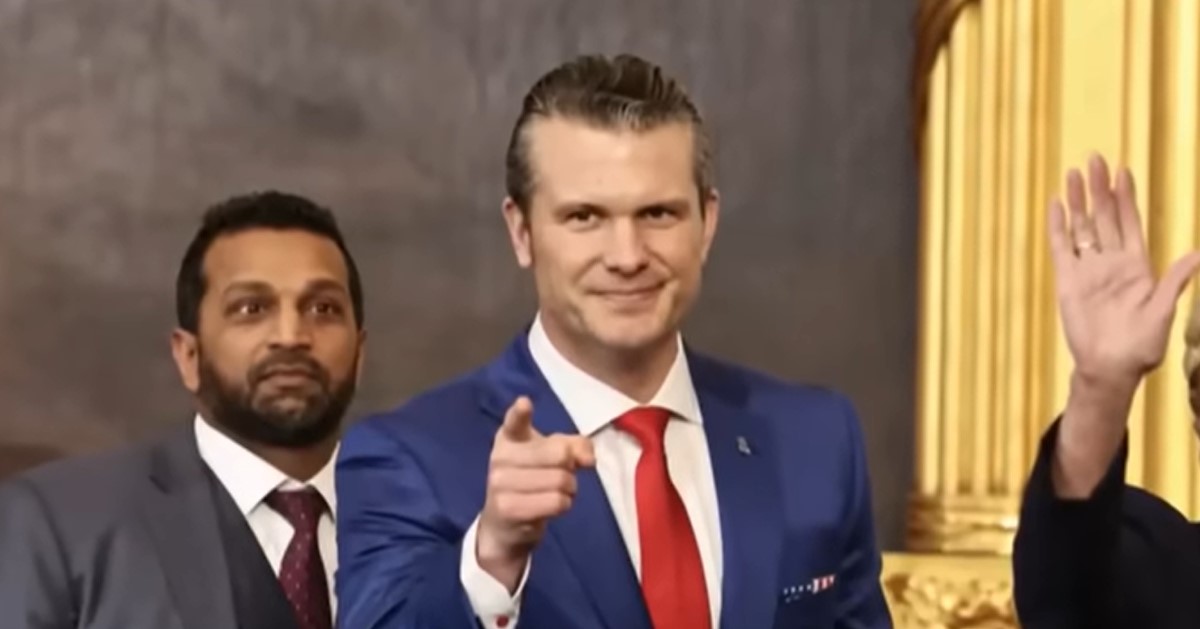
Sen. Mark Warner publicly urged the removal of Pete Hegseth, accusing him on national television of a pattern of disrespect toward uniformed service members and mishandling sensitive information, a charge that raises questions about partisanship, accountability, and how we protect the people who protect us.
On a recent TV appearance, Sen. Mark Warner called for Pete Hegseth to be fired, saying Hegseth has shown disrespect toward the military and allegedly mishandled classified or sensitive information. The accusations were aired on MS NOW’s The Last Word, where Warner detailed incidents he believes warrant immediate action. Republicans should hear these claims but also insist on a fair, evidence-based response rather than a spectacle.
Warner alleged one episode involved Hegseth discussing strike details over an unclassified channel, an act the senator says put troops and pilots at risk. That claim, reportedly flagged by the inspector general, is serious if true and demands a clear review. Still, any inquiry must avoid being a tool of partisan advantage or a headline-driven trial by TV.
Warner didn’t spare the rhetoric, describing Hegseth’s demeanor toward uniformed personnel as dismissive “from the outset.” He singled out an alleged instance of sharing operational details with family members, which Warner framed as reckless. Republicans can agree that leaks or careless disclosures are unacceptable while also pushing back on politically motivated theater.
The senator also criticized Hegseth’s conduct during a lecture at Quantico, saying it humiliated the service members present. Warner praised the professionalism of those in uniform and implied Hegseth could learn from their restraint. From a conservative view, defending the military’s honor is not a partisan luxury but a national necessity.
Warner went further, suggesting senior officials at agencies like the NSA and Defense Intelligence Agency were removed for not aligning with the administration’s preferences. That accusation hints at politicized personnel moves inside the national security apparatus, a troubling idea whether you agree with Warner or not. If true, it would be a constitutional problem; if false, it would be a smear.
Quoting Warner directly, “We have had this pattern from Pete Hegseth where I feel like he has treated our uniformed military with disrespect from the outset, when he was casual and not my words, but the inspector general put troops in harm’s way and pilots in harm’s way when he put information about the strikes in Yemen out on an unclassified line, frankly, to members of his own family.” Those are forceful words that demand documentation, not just applause or condemnation.
Warner doubled down with another pointed line: “And then we have this incident again, where this guy has a lot of bravado until I believe mistakes were made and he is now trying to run from that responsibility.” That critique paints Hegseth as bold in rhetoric but evasive in accountability. Conservatives should oppose arrogance that endangers personnel while resisting summary punishment based on sound bites.
The exchange also touched on language and optics, with Warner criticizing phrases like “fog of war” as dismissive when used by leaders to explain mistakes. Words matter in leadership and perceptions of respect shape morale inside the force. Republicans emphasize both strength and respect for troops; sloppy talk or cavalier behavior can erode trust if left unchecked.
Warner raised concerns about Admiral Frank Bradley’s judgment in a related matter, though his primary target remained Hegseth. That wider net suggests Warner sees systemic problems rather than a single misstep, but sweeping claims need thorough substantiation. Political rivals often expand narratives to gain leverage; conservatives should insist on precise facts before supporting removal.
For those who prioritize a strong, competent military, the allegations are alarming no matter who makes them. If Hegseth has knowingly endangered operations or disrespected service members, accountability is required, not political theater. At the same time, calls for firing should not substitute for a formal review that protects both classified information and individual rights.
There’s also a political layer at work: a Democratic senator publicly seeking a Republican appointee’s ouster carries predictable partisan overtones. Republicans should defend due process and the chain of command while welcoming legitimate oversight that is evidence-based. The goal must be to protect troops and preserve institutional integrity, not to win a press moment.
As this unfolds, Republicans should press for clarity from inspector general findings and any formal reviews before endorsing drastic outcomes. Procedural fairness, transparency where possible, and a refusal to weaponize the military for partisan gain are the right approach. Let investigators do their job and let the public see the facts without spin, then act on solid evidence rather than headlines.

