

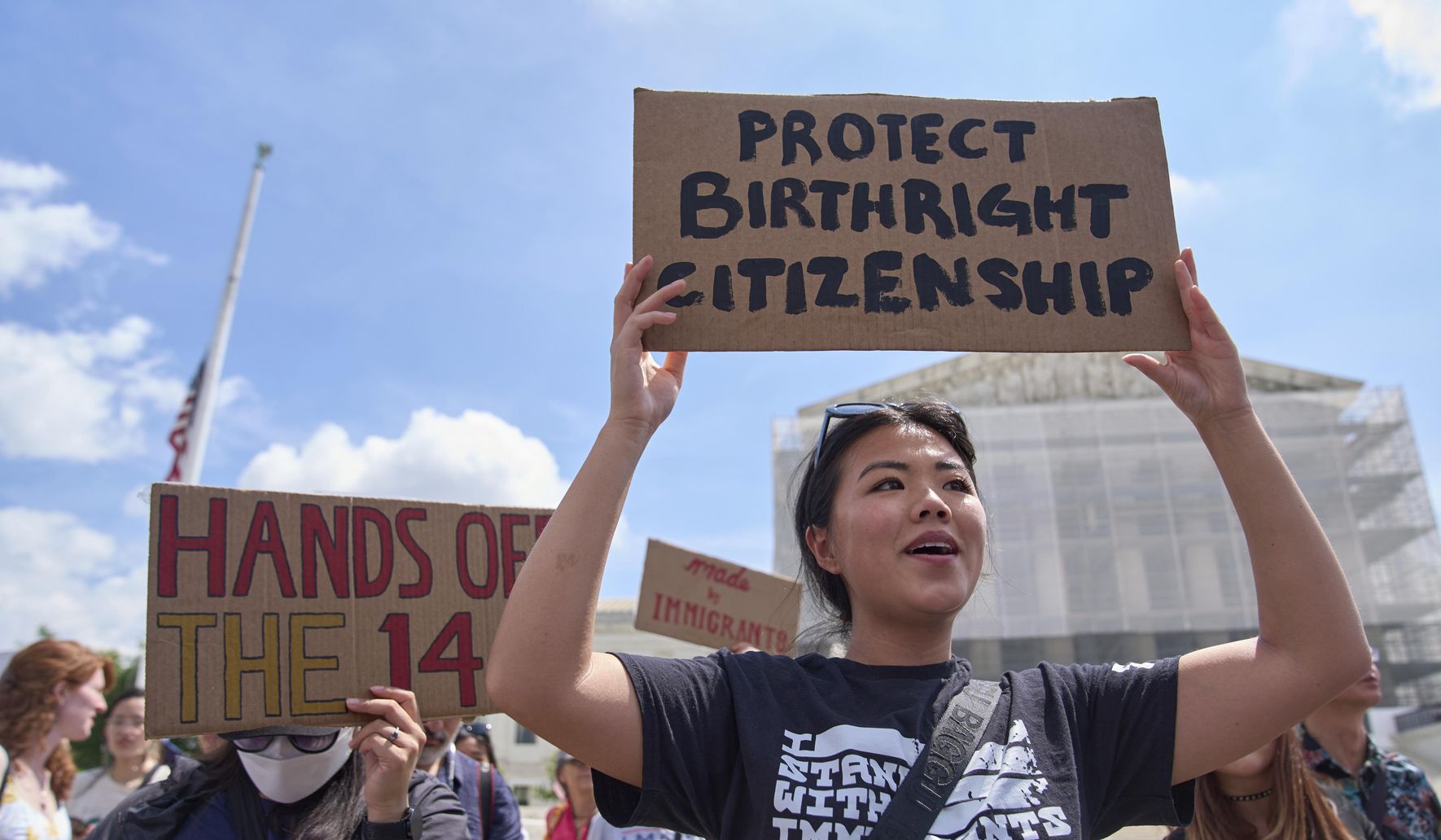
The debate over birthright citizenship has landed at the Supreme Court, centered on a 160-year-old constitutional gap and President Trump’s executive order, with legal and political stakes that could reshape immigration policy and federal authority.
For decades the Citizenship Clause of the 14th Amendment has been read broadly, but the exact scope of “subject to the jurisdiction thereof” has never been settled by clear, modern precedent. That unresolved language creates a gray area that now sits at the center of a high-stakes legal fight. Conservatives argue this ambiguity gives courts and the political branches room to clarify who qualifies for automatic citizenship at birth.
President Trump’s executive order attempts to limit automatic citizenship for children of those in the country unlawfully, claiming the 14th Amendment does not guarantee blanket birthright status. Supporters say the order restores the original understanding of national sovereignty and immigration control. Critics counter that the Constitution was meant to guarantee citizenship for almost anyone born here, and they warn of chaotic consequences if the rule changes suddenly.
The case forces judges to wrestle with historical practice, statutory interpretation, and the balance of powers between the executive branch and Congress. Republicans often frame the dispute as one of policy and practical governance rather than abstract rights. The question is not only who counts as a citizen but who gets to set that standard moving forward.
Legal advocates for the administration point to long-standing distinctions in citizenship law that exclude children of foreign diplomats or occupying troops, arguing those exceptions show the clause was never intended as an absolute. They press textual and historical evidence to show a narrower reading is plausible and consistent with sovereign control. That line of argument supports the idea that an executive order can prompt a clarifying judicial ruling when Congress has not acted.
Opponents warn that rolling back birthright citizenship would create immediate legal chaos for millions of Americans and their families, and they stress the stakes for civil rights and equal treatment under the law. They cite the plain language of the 14th Amendment as a bulwark against unilateral executive changes. The political reaction across the country shows how deeply this issue resonates beyond courtroom theory.
The Supreme Court’s decision will matter not just for one policy but for how far the president can go when Congress has not passed new statutes. A ruling that backs the executive could open the door to broader immigration controls carried out by the White House. A ruling that limits executive authority would reinforce judicial and congressional roles in setting citizenship rules going forward.
Republicans who support the executive order see an opportunity to restore policy discipline and ensure citizenship rules reflect sovereignty and lawfulness. They argue that unchecked automatic citizenship under current readings has incentivized unlawful entry and strained public services. Their message frames the dispute as a constitutional fix to a long-running policy failure rather than a partisan power grab.
Whatever the outcome, the case is likely to be litigated on multiple fronts after the high court speaks, with Congress, state governments, and lower courts reacting to the ruling in real time. Lawmakers could try to legislate their preferred standard, but partisan gridlock makes legislative answers uncertain. The Supreme Court’s role in resolving this 160-year-old gap will shape not only immigration policy but the scope of executive action for years to come.

