
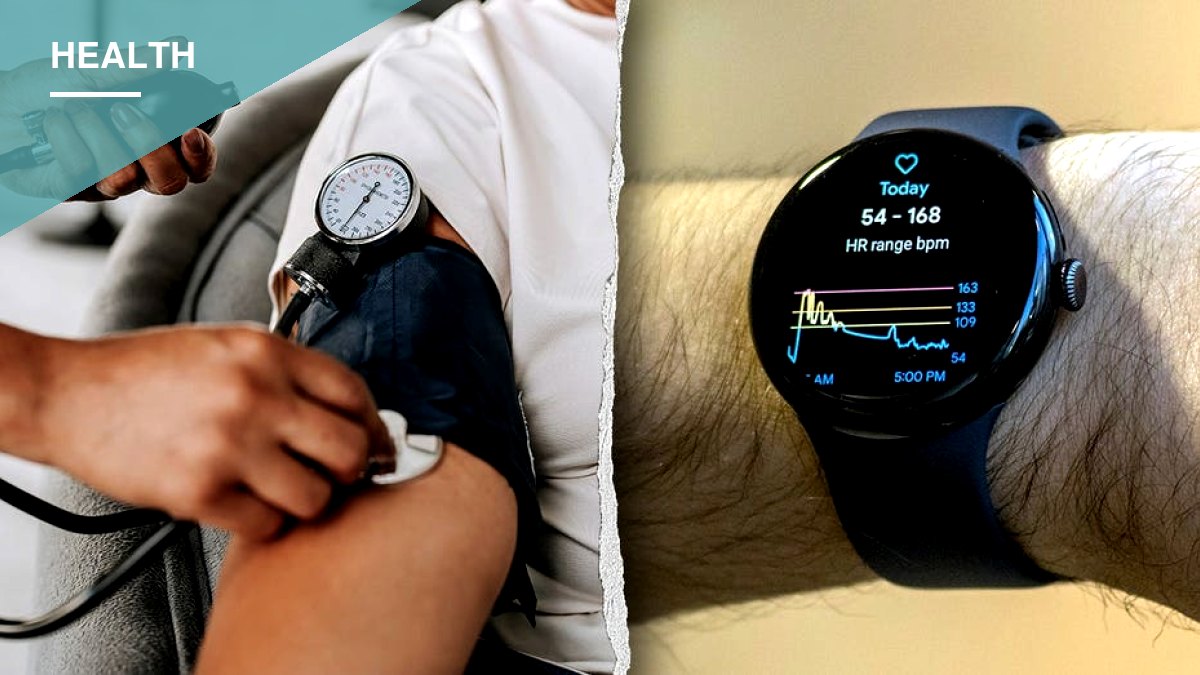
Google researchers have demonstrated an artificial intelligence system that can flag signs of high blood pressure using the sensors already built into consumer smartwatches, according to a study published in the journal Nature. The system works passively, without requiring calibration against a traditional blood pressure cuff.
High blood pressure, often called the “silent killer,” can go undetected for years because it typically produces no symptoms. The World Health Organization estimates more than one billion adults worldwide live with hypertension, many without knowing it. Left untreated, it raises the risk of heart attack and stroke.
Google’s system relies on two existing smartwatch sensors: an optical sensor that tracks blood volume changes under the skin, similar to standard pulse-tracking technology, and a motion sensor sensitive enough to detect tiny vibrations generated by the heartbeat. The AI analyzes both data streams over several days, combines them with the wearer’s height, and estimates the likelihood of sustained high blood pressure. It does not generate a specific reading like 120 over 80.
How the study was conducted
Google developed the system with researchers from Beth Israel Deaconess Medical Center and Harvard Medical School. The underlying AI was trained on nearly 500,000 hours of smartwatch sensor data collected from 2,109 consenting participants. It was then tested in a clinical study of 196 participants across five U.S. locations, none of whom had known cardiovascular disease or were taking blood pressure medication.
Participants wore a consumer smartwatch for seven days while researchers compared the AI’s findings against 24-hour ambulatory blood pressure monitoring, a cuff-based test doctors use to confirm hypertension diagnoses.
For comparison, in-office blood pressure screenings identified 55.3% of participants as having hypertension. The difference between the smartwatch’s initial screening results and the office-based screening was not statistically significant, according to a Nature Portfolio summary of the findings.
Researchers also examined a smaller subgroup of 48 people who had elevated readings at their initial doctor’s visit. Within that group, the AI correctly identified 78.4% of those with ongoing hypertension and correctly ruled out the condition in 90.9% of those who didn’t have it.
A real gap in detection
Despite those results, the system missed a meaningful share of people who actually had hypertension — by one estimate, roughly one in three. Google has said the experimental system needs testing on larger populations before its reliability can be fully established, and the company has not announced plans to turn it into a commercial diagnostic tool.
That caveat matters because Google already offers a related, more limited feature. Since September 2026, eligible Pixel Watch 3, 4 and 5 owners have had access to blood pressure trends through the Google Health app, offered at no additional subscription cost depending on region. The feature analyzes pulse and movement data to deliver a monthly assessment such as “High” or “Not high.” Google is explicit that this consumer feature cannot diagnose hypertension, cannot produce actual systolic or diastolic numbers, and should not be used to adjust medications or treatment. A “Not high” result does not guarantee normal blood pressure.
Apple has taken a similar but separate approach. Its FDA-cleared hypertension notification feature, available on Apple Watch Series 9 and later and Apple Watch Ultra 2 and later, uses 30 days of optical heart sensor data to flag patterns associated with chronic high blood pressure. Apple likewise warns the feature cannot diagnose the condition and may miss cases, and it recommends users confirm any alert with a traditional cuff and a doctor.
What this means for consumers
Both companies’ guidance points to the same bottom line: a smartwatch alert is useful information, not a diagnosis. The American Heart Association recommends validated automatic upper-arm monitors for home measurements, since they tend to be more accurate than wrist or finger devices. Google advises users who get a “High” trend result to check their blood pressure twice daily for a week and share the readings with a physician.
Anyone experiencing warning signs such as chest pain or difficulty breathing should seek immediate medical attention rather than waiting on a smartwatch assessment. And regardless of what a wearable device reports, routine blood pressure checks with a doctor remain the standard way to catch hypertension before it causes lasting harm.