

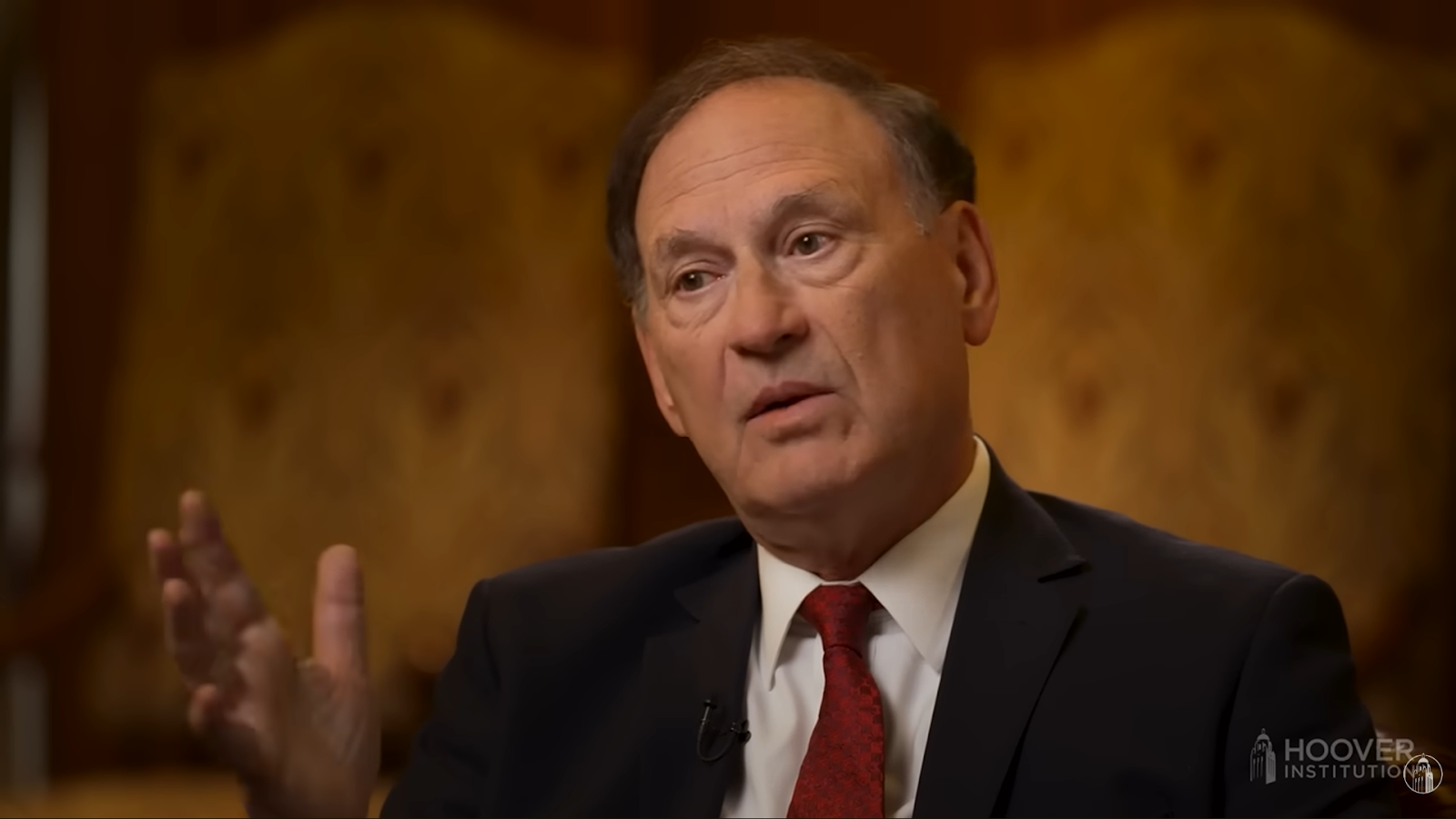
Justice Samuel Alito has reached a 20-year mark on the Supreme Court, and this piece highlights 10 notable statements that capture his approach, tone, and legal instincts over two decades.
Two decades on the bench have made Justice Alito a familiar voice in conservative jurisprudence, and his remarks often reveal the reasoning behind those votes. He brought a steady, plainspoken perspective to the Court that many conservatives value for its clarity and restraint. These 10 quotes are selected to reflect that style and the themes he returned to most.
Alito’s words frequently circle back to originalism and textualism, the ideas that the Constitution and statutes should mean what they meant when written. That theme appears in his opinions and in offhand observations alike, and it helps explain why he is a reliable conservative presence. For Republicans who favor limits on judicial activism, those lines are welcome and familiar.
Another hallmark visible in these quotes is a focus on individual freedom and religious liberty, areas where Alito often pushed to protect personal conscience and institutional autonomy. He approached those topics with a clear doctrinal frame rather than political rhetoric, and his phrasing aimed to keep analysis tethered to precedent and text. That approach kept the debate legal rather than purely partisan.
The collection also highlights his attitudes toward federal power and separation of powers. Alito has been skeptical of unchecked federal reach and attentive to the proper roles of Congress, the executive, and the judiciary. Those concerns show in the way he framed disputes, often urging courts to respect the limits the Constitution imposes on government.
Across cases, his writing can be brisk and unapologetic, willing to call out what he sees as overreach by lower courts or by the other branches. He tends to write for clarity first and persuasion second, which makes his sentences compact and to the point. That discipline is part of why his lines read well outside legal circles.
Critics often portray him as rigid, but the quotes collected here show a jurist who values consistency and legal logic over novelty. Where critics see stubbornness, supporters see fidelity to text and history. From a Republican perspective, that fidelity is not a flaw but the foundation of legitimate judicial work.
These passages also reveal his courtroom persona: measured, occasionally dry, and focused on legal mechanics rather than theatrical flourishes. He did not seek headlines with florid prose, and when he pushed back it was usually with careful legal reasoning. That demeanor can frustrate opponents but reassures conservatives who want predictability and legal seriousness.
His influence stretches beyond any single opinion because the language he used helped set the tone for several conservative majorities. Even when he did not write the opinion of the Court, his separate statements often steered the debate or offered a framework others followed. For those tracking the Court from a conservative viewpoint, these quotes map a coherent judicial philosophy.
Picking just 10 lines over 20 years is necessarily selective, but the samples chosen illustrate the core themes Alito emphasized: text, history, federalism, and individual rights. Each quote is a small window into the reasoning that shaped major rulings and smaller, principled votes alike. Together they create a portrait of a justice who prizes constitutional boundaries and a restrained role for judges.
Readers who follow the Court will recognize how these statements fit into bigger debates about law and liberty without needing theatrical framing. The quotes stand on their own as expressions of a jurist who wanted law to guide outcomes rather than politics to decide them. Whether you agree with him or not, his two decades on the bench left a distinct imprint on the Court’s conservative wing.

